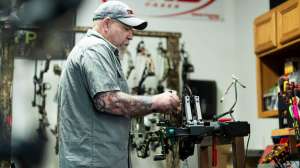

One of the top goals of any archery pro shop should be to grow the world of archery. Likely, that means attracting a steady flow of new customers through your doors, then ensuring they return again and again. Done right you’re building lifelong archers and customers — an easy enough concept to grasp, yet a huge challenge in our changing instant-gratification world.
How do the most-successful shops attract and keep new customers when today’s archery gear is merely a click away on a smartphone? We found that some answers include mixing in a heavy dose of top-shelf old-school service with some new-school social media marketing.
First Impressions Are Critical
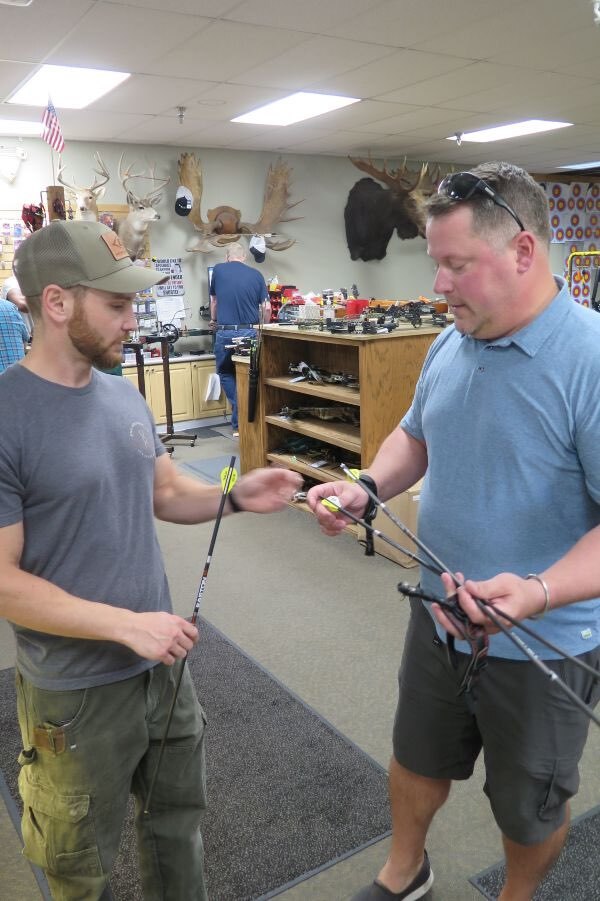
What should new customers walking through your door for the first time see and feel to make that experience a great one? One thing stands out, says John Schaffer, owner of Schaffer Performance Archery based in Burnsville, Minnesota.
“It starts with listening closely to the customer, and I think that’s a mistake a lot of shops make,” Schaffer said. “Lots of shop employees just start barraging a customer with information, or telling him information that’s only important to you. It starts with asking the right questions; often, rookie sales guys will start blasting information at the customer without knowing what the customer is really looking for.
“Start with simple questions, ‘Have you ever shot archery? Are you looking to shoot recreationally or is this for hunting? Their budget might be another question, but budget is the least important. If someone says, ‘I’m thinking about getting into archery,’ the goal should be getting a bow in their hands in a couple minutes. The most important thing is to get a bow in their hands so they can envision owning the thing.
And whether they are a rookie or experienced, we make it clear from the get-go, when they walk out, they will be set up perfectly, they will be shooting better than they ever thought they could, and that they will be set up for success. You’ve got to paint that picture. New customers, that’s what they want to hear.
“Right from the get-go, we assure them that they will be successful, and you help them to visualize that success. A barrier in our industry is people have doubt right out of the gate; they don't know if they can do it. So it’s important to tell them they will get the right bow in their hands, they will be happy, and will have success with whatever they decide to buy. People need to hear that. It should be an experiment for them, but not for us. We know they will be happy when they leave.”

Smiling Faces Get Rewarded
“The first thing a customer needs to see is a guy or gal smiling, they need to be greeted,” said Dan Ellyson, co-owner of A-1 Archery in the town of Hudson, Wisconsin. “Tell them, ‘Hi, how are doing?,’ acknowledge that they exist. And then, how is your inventory? Is it well displayed, is your shop clean, and do they have the ability to walk around the shop and not look at dusty old product?
“You need to give them a good experience, because first impressions are so important. And it can be difficult. If they come here about 5 p.m. during peak sales season, there are going to be 12 people standing out front. They need to see a smile. Then it’s about being a good salesman, selling the business, selling the shop to them.
“I always tell my staff, I’ll do everything in my power to get new customers in here, then it’s your job to keep them. Teamwork makes the dream work.”
Schaffer agrees that people skills are critical, and hires employees accordingly.
“Communication skills are number one,” Schaffer said. “When we hire people here, I’ve never really hired anyone with experience in the archery industry. I would rather take somebody with no archery experience; I prefer to train everybody from ground zero. That way you don't have to break any old habits, and we can start them out the ‘Schaffer way,’ from day one.
The Schaffer way, as John explains, is all about consistency. As in, how his staff handles customers and sales, various aspects of technical work, and more. Everyone must be on the same page.
“We’ve had very few employee problems or bad hires, and most of our guys have been here for a long time,” Schaffer said. “Jason is closing in on 20 years. But you’ve got to take care of your employees, and a large part of that is the margins on your products. Those margins are becoming less and less every year. So in order to maintain profits to keep a healthy staff and healthy store in business, you have to emphasize the service, and the service needs to be charged accordingly.”
Should You Post Prices?
With service being such a large and critical part of his business, Schaffer was asked if his shop posts a schedule of prices for various tech work jobs. “We don’t post our prices, and the primary reason is there are so many different situations, that it’s difficult to ‘blanket post’ prices,” he said. “It’s kind of like taking your car to a mechanic. We explain the situation and what it will take, and everybody’s got to be on the same page. And that’s worked well for us. We’ve rarely had any opposition; there’s rarely any surprises.”
What Marketing Works Best?
New customers walk into your shop for varying reasons, and for A-1 Archery, a big reason is the shop’s social media presence. For the past few years A-1 has been working with an annual advertising/marketing budget of about $35,000 to $45,000, and a big part of that spend is the $20,000 per year allocated to social media. That pays a social media specialist who once worked with Ellyson, who he trusts and whose work has produced the views and likes that helps keep A-1 customer interest humming. “With that $20,000 annual spend, what I’m going to get is one posting per day on Facebook, and we’ll also use that content in Instagram, and we focus on videos,” Ellyson said. “So when you see our social media, you’ll see a photo and read a comment, and there will be a link to a video. A video can be anywhere from 10 seconds to 30 seconds.”
Ellyson says the social media content he strives for includes a steady barrage of tech tips, bow and gear maintenance reminders, and things such as hunting and archery tips, with more occasional posts announcing new products, sale items or gear closeouts. A-1 intentionally minimizes posts that focus on selling product.
“I don’t want all my content to be sell-sell-sell,” Ellyson said. “You’ve got to mix some fun stuff in there, that’s interesting and engaging. People get tired of always being sold.”
Downplaying Bowhunting?
“You’ll also rarely see a kill photo on our social media,” Ellyson continued. “Now, if we get a really neat photo of a kid who shot their first deer, or a monster buck, that stuff needs to be shown. But bowhunting is separate from archery, in my opinion. We feel like we want to grow archery, and archery is also for non-hunters, which can include some women and kids. It’s not a ‘woke’ mindset, but we’ve built our shop to be an archery shop, and it’s not always about the kill. “Everything we’re selling, from treestands to ground blinds and more, it already is about hunting. So it didn’t make sense to just post tips for hunting when you’re trying to grow the world of archery.”
Ellyson says his shop made the conscious decision to adopt an “archery” versus “bowhunting” philosophy about six years ago, and while he had some initial concerns, they have since been dispelled.
“Initially I was worried that people might think we don’t know how to kill stuff,” he said, “but it didn’t work out that way. I can’t tell you it’s the right way for every archery shop to do it, but it’s working for us.”
There is plenty of proof A-1’s current philosophy is working nicely. “Right now we have from 50 to 70 women in our womens’ leagues, and most don't hunt,” Ellyson said. “But we want to be sure to engage them on our social media platforms. Why? They are an ally. Women like to talk about stuff; they’re very good for business. And they feel comfortable coming in here. They want to explore archery.”

Stellar Service Still Rules
“Probably much like everybody else, over the years, we’ve done about everything when it comes to marketing and advertising: billboard, radio ads, TV ads, the Internet,” Schaffer said. “We’ve had varying levels of success with all those campaigns. However, without any doubt, attracting and retaining customers in any archery pro shop ultimately comes down to one thing — providing the best service possible. “We strive to be the best in the world at our shop. Every single day, we have multiple people, who have never been in here before, tell us, ‘I’m here because my buddy had a great experience, and he sent me in here.’ All other advertising pales in comparison to the number of customers who come in because of a recommendation or a reference from somebody else. It’s just a reminder of how powerful it is, to take care of every customer who comes in the door, whether it’s something small like a peep sight rotation, or a big bow purchase.”
Where Shops Go Wrong
“I think one of the problems with new customers is some shops focus too much on the dollars,” Schaffer explained. “Customers are willing to pay for good service and good products, you just have to show them the benefits.
“I also think it’s easy for people who work in the industry to fall into a trap of being technical and geek out on product features. Most customers don't do that. It’s not as important to the customer, versus will they be able to use the thing, do well with it, and have a good experience. If they want to talk tech, go ahead, but most customers don't care about that.”
Selling the Dream
Schaffer continued: “One of my good friends, a sales rep in the industry, told me many years ago, ‘We sell dreams.’ And I think that’s important advice. It tells you that selling the experience and selling the dream and putting that customer on the mountain, or in the treestand, it's better than talking about the specifications of the products to death. Putting them at the local archery range with their kids, just having fun shooting together — that vision is more important than the product specs.”
Sidebar: Building a Powerful Social Media Plan
Interested in developing a strong social media marketing plan to lure more customers to your shop? Following the successful A-1 Archery blueprint might be advisable. For A-1 it starts with hiring a specific person to man the role, although in some cases it might make sense for a current shop employee to assume this role. Just know that doing it right will likely require a good bit of an employee’s work week. “A-1 could not do what we do on social media if we did not hire someone specifically for that role,” Ellyson said, of the time and focus he believes is necessary.
Ellyson says that the critical skills required for a social media manager include being proactive and punctual, and delivering consistent, measurable results.
As examples of those skills, once per week a text message goes out to A-1 employees detailing when the social media manager will be arriving at the shop for a team meeting/filming session that will help build social media content for the coming week. The text is designed to be the spark for employees to begin thinking about what each would like to contribute. During a typical 90-minute meeting, the team identifies what it would like to talk about on film, including season-specific tips and upcoming sales. Ellyson said he has now made prepping for those weekly meetings part of his daily routine, a great tip for all involved.
“I’m programmed now, to where I have a running list of notes on my phone that I add to as the week progresses, things that I can talk about on film. And really, most every time you talk with a customer here, there’s a video to be made. Maybe it’s a question someone has on the benefits of mechanical versus fixed heads, or the advantages to the different ways vanes can be fletched. That’s all great content.”
As far as measuring the results of A-1’s Facebook and Instagram posts, Ellyson said Google offers plenty of analytics that will show very specifically how each post performed. But Ellyson, who admits to just rudimentary knowledge of specific analytics, believes just one of them tells him what he needs to know.
“I can tell by using Facebook manager, how many Likes and Shares a video will get, but the most powerful thing to me is the total views, that’s how I gauge how important a specific post is. It tells me they have watched it for a certain amount of time.”
And then there are the neat little encounters that show just how far-reaching and impactful social media can be.
“The coolest story I’ve heard in a while happened just a few weeks ago. A young man walks into our shop (Hudson, Wisconsin), he’s got a Mississippi drawl, and he says, ‘I want to talk to Little John.’”
Ellyson then went to retrieve his employee who often appears in A-1’s Facebook posts, offering up technical archery tips. Ellyson couldn’t help but overhear the conversation between the two. “When Little John turned that corner and came into view, that guy’s face was just smiling. He said, ‘I’ve watched every one of your videos on Facebook, and I told myself, if I was ever in this area I wanted to come and meet you.’”
“Social media is crazy,” Ellyson continued. “It’s outreach, and very powerful when people like what you have to say. It circles back to, don’t just shove sales down their throat.”
When summing up the overall success of A-1 social media plan, Ellyson touched on one specific aspect — those daily posts that instantly show both new and current customers what is happening at A-1 on any given day or week.
“Consistency is the biggest part. If I could sum it up in one word, the thing that makes our social media program work, it’s being consistent.”