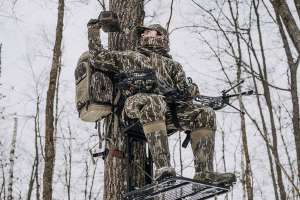

Crossbow hunting has been steadily gaining popularity across the United States, yet until recently it has remained one of the least understood segments of the bowhunting market. While ample research exists on bowhunters as a whole, far less attention has been paid specifically to crossbow users — an increasingly influential group within today’s hunting landscape. That knowledge gap has made it difficult for agencies, industry partners, and conservation organizations to design fully informed recruitment, retention and reactivation strategies for bowhunters.
To address this need, the Archery Trade Association, in partnership with Responsive Management, has released a new national research study examining the role of crossbow hunting in the United States and its implications across the broader hunting and archery landscape. Titled, “Crossbow Hunting in the United States: Understanding Crossbow Hunters’ Participation, Characteristics, and the Factors That Contribute to Their Retention in Hunting,” the study represents the most comprehensive examination of crossbow hunters to date.
Developed through a collaboration between ATA and Responsive Management and funded by a Multistate Conservation Grant (F25AP00345) from the U.S. Fish and Wildlife Service — jointly administered with the Association of Fish and Wildlife Agencies — the research draws on more than 10,000 completed surveys from licensed bowhunters across 13 states. Those states represent all four regional fish and wildlife agency associations, ensuring that the findings reflect geographic and regulatory diversity across the country.
The timing of the study is especially relevant. Crossbows are often favored by older hunters, a trend that aligns with broader demographic shifts. According to the U.S. Census Bureau, one in six Americans was age 65 or older in 2020, and that proportion continues to grow. As hunters age, many look for ways to remain active in the field, and crossbows can offer an accessible option that extends hunting participation later into life.
However, the study also challenges common assumptions. Initial findings reveal that crossbow use frequently begins much later in a hunter’s life, often after years — or even decades — of participation with firearms and vertical bows. Rather than replacing other methods, crossbows are commonly added to an already diverse hunting portfolio. The data also shows high levels of continued engagement among crossbow hunters, including participation in multiple hunting methods, sustained equipment investment, and strong overall retention within hunting.
Regulatory structures add another layer of complexity. While some states restrict crossbow use to hunters over a certain age or with specific qualifications, many others allow general use during archery seasons. As a result, crossbows may also serve as an entry point for novice or first-time hunters in certain regions, making them relevant not only to retention but also to recruitment efforts.
Beyond participation patterns, the research provides detailed insight into crossbow hunters’ equipment ownership and spending, harvest rates, regulatory perceptions, hunting preferences, and demographic characteristics. Regional and state-level findings allow agencies and industry stakeholders to better understand how crossbow use varies across the country and how it interacts with traditional archery equipment and seasons.

Decisions Based on Data
This study gives agencies and the industry a clearer understanding of who crossbow hunters are, how they participate, and why they remain engaged. By better understanding this segment, we can make more informed decisions that support hunter retention and long-term participation.
The implications for R3 efforts are significant. By grounding outreach, season structure decisions, and marketing strategies in objective, data-driven insight, agencies and organizations can better serve both crossbow hunters and the broader bowhunting audience. More refined R3 strategies have the potential to strengthen agency–hunter relationships, support long-term participation, and ultimately help boost hunting license sales.
This new study builds on a long history of collaboration between ATA and Responsive Management. The two organizations partnered on one of the first nationwide bowhunting participation studies in 1999 and followed with a major market study in 2017 that examined bowhunter avidity, species pursued, equipment use and purchasing behavior. Those efforts have become foundational resources for the R3 community. The new crossbow-focused research represents the next step in understanding an evolving bowhunting market.
Accessing the Results
The complete study is available at archerytrade.org under the Education menu for nonmembers. ATA members can also access it, and other conservation studies and documents, through the ATA Resource Library at archerytrade.org/resource-library. For agencies, manufacturers, retailers, and conservation partners alike, the findings offer a timely and essential roadmap for engaging today’s crossbow hunter — and for shaping the future of bowhunting participation nationwide.
If you’d like to discuss the crossbow study, contact Jennifer Mazur, ATA’s senior director of Outreach and Education, at jennifermazur@archerytrade.org or (507) 233-8139.
Photos by Dave Maas