
Yes, overhead costs help reduce the bite of taxes. But that same overhead is also reducing the profits possible from the tactical retail shop or business. While overhead is often ignored, now might be a good time to think about its role in both the operation’s profitability and its survivability.
Overhead is defined as, “Ongoing business expenses not directly attributed to performing a service or creating and selling a product.” In other words, overhead expenditures do not directly generate profits, although they are vital to a tactical retailer.
Overhead and More Overhead
Tactical retailers, especially those dealing with firearms, face significant challenges, made even worse with complex regulations. Overhead can cut into the already low profit margins in the following ways, as a few examples:
* Rent or mortgage payments for the operation’s physical facility, utility bills and general maintenance are all significant overhead costs.
* Inventory — the cost of acquiring tactical accessories, along with firearms and ammunition — is a major expense, significantly contributing to the low profit margins of many tactical retailers.
* Security, especially high for tactical retailers, is necessary to protect inventory and prevent thefts.
* Insurance costs are high. While insurance is necessary due to the nature of the business, premiums can often be reduced if some security measures are in place.
* Compliance costs add to overhead, as the cost of adhering to the strict regulations and state-specific fees and taxes can be expensive.
* Technology doesn’t come cheap. Costs for point-of-sale systems, software for inventory management and maintaining an online presence are integral overhead expenses.
Coping With Overhead Costs
Strategic cost-cutting can help lower overhead costs, but it is not about getting “cheaper.” Instead, strategic overhead cost-cutting helps ensure an operation is ready for growth. It focuses on the aspects of the business that are controllable, while freeing up resources to fund infastructure and future growth.
Among the methods many tactical retailers use to manage overhead are:
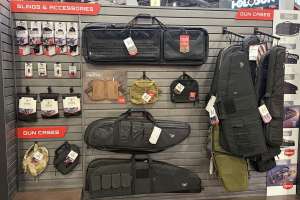
* Increasing higher-margin sales. Relying on accessories with their traditionally higher markups, along with used firearms, which are usually accquired less expensively, is a rewarding strategy.
* Taking advantage of the drop-shipping programs offered by some distributors allows a tactical retailer to sell products without holding them in inventory. This reduces storage costs and the financial burden of holding stock.
* Utilities, including electricity, gas, water, phone and internet services, can be reduced. Mobile phones, long distance and internet use should be reviewed on a regular basis, not only to determine the levels of services required, but also for potential cost savings from switching to lower-cost plans.
* Supplies. Many retailers lock up or carefully track consumption of supplies. Another option is to incentivize employees to reduce usage and create a thriftier business environment. Campaigns to curb energy, such as turning lights off or switching to LED bulbs, are effective cost-cutting strategies.
* Services. It may seem counterintuitive to pay large sums for an accountant or tax professional to do the operation’s bookkeeping. Overhead accounting or bookkeeping costs can be reduced by doing some or all of those chores in-house. However, while they’re often a big investment, those professionals will be more likely to find deductions that may have been overlooked, so don’t skimp too much in this area.
* Wages: While competitive compensation is necessary to attract workers that are skilled and who understand the products and services offered, offering performance-based incentives can improve productivity and reduce employee turnover.
* Licenses: Compliance and licensing fees are also an important factor in managing overhead. Complying with federal and state regulations can add 5% to 10% to a tactical retailer’s operating costs. They are, however, essential to the operation’s legal compliance.
* Security and insurance: Security measures and insurance are interrelated and indispensable. High-end security systems and comprehensive insurance policies will protect the operation’s physical assets and its reputation. Implementing insurance and security reviews can result in optimal insurance coverage at competitive rates.
* Offering additional services: Many firearms dealers and tactical retailers manage their overhead costs by adding services, such as gunsmithing, training classes or a shooting range to generate additional revenue and attract customers to their businesses.
Don’t Forget Inventory Management
One of the biggest expenses for tactical retailers is inventory. For many tactical retailers, particularly those dealing in high-quality goods, inventory procurement can represent as much as 40% of operating costs.
Improving inventory management can be as simple as using sales data to stock popular items and reduce purchases of slow-moving inventory with a goal of freeing up capital. Effective inventory management involves not only purchasing but also tracking and rotating stock in order to meet fluctuating demand. Reviewing supplier contracts regularly can ensure competitive pricing on inventory.
Staff Reductions
Many employers associate “cutting overhead” with “firing people.” While the easiest way to cut costs is often cutting workers, it can also be the most expensive in the long-term. Fortunately, there are more creative ways to reduce labor costs.
Workers might consider part-time employment or take unpaid leave. The operation could investigate freelance workers and contract staff to reduce overhead costs while still maintaining staffing requirements.
Rather than firing workers only to have to eventually replace them with someone else, consider reshaping their role and investing in training them to contribute in other ways. With a “fluid” staff, the operation can continue maximizing their value while avoiding the financial drain of new hires and low morale.
Other strategies include evaluating whether workers are underutilized or finding work that could be done by a less costly resource. And, beginning at the beginning, if new employees are needed, hire someone with multiple strengths.
Marketing Pays, Not Costs
Few tactical retailers seem to realize that advertising and/or marketing pays. However, if sales and marketing costs are dragging the operation down, seeking less expensive ways to market is an option. The operation can, for example, boost marketing by increasing use of social media.
Scaling back on promotion doesn’t mean compromising on marketing. Posting more often on Facebook, YouTube, X, TikTok and Instagram is an economical option. Writing blog posts and articles can increase traffic to the operation’s website and business. Offering incentives for referrals or social media reviews — and recruiting brand ambassadors, those so-called “influencers” — are among the ways of expanding the customer base on a smaller budget.
Going Paperless
In today’s business world, the use of paper has been steadily decreasing. Distributing information via the internet and other digital means offers a business many advantages. Not only can the business reduce its carbon footprint, but it can also eliminate many paper costs entirely.
Going paperless is a great way for any tactical retailer to reduce both clutter and costs. Important documents can be stored in the cloud or on disks, and contracts can be signed electronically, all the while helping the environment.
Going paperless means no more expenditures for paper or ink cartridges. You might even be able to eventually throw your printer away, or donate it to produce a tax write-off.
More Slashing Overhead
Additional ways to find savings within an operation’s overhead include:
* Negotiate or renegotiate contracts with vendors, even the operation’s landlord, to ensure the best possible prices. And don’t forget multi-year contracts for additional savings.
* Optimize software subscriptions. Regularly review the operation’s software needs, cancel unnecessary subscriptions and, wherever possible, use open-source alternatives (as long as the meet your security needs).
* Outsourcing tasks such as accounting or HR that are not central to the business can reduce the need for full-time staff and associated costs.
* Energy-saving. Investing in energy-efficient appliances and encouraging employees to conserve energy for cumulative energy bill savings may be old-hat, but it can drastically slash overhead costs.
* Investing in training can increase employee efficiency and reduce the need for costly overtime and outside consultants.
Cutting Costs Can Backfire
There is no question that cutting costs can improve a tactical retailer’s profit margins and sometimes is the only option for surviving. This is particularly true when a business has no control over inputs such as labor, materials, etc. and its prices/fees.
If a tactical retailer has already cut obvious waste items, the next steps should be evaluated carefully. Going down to one printer makes no sense if an employee must spend a couple of minutes several times an hour retrieving his print job from across the building. Consolidating two locations to one may not make sense if shipping costs or staff travel times will increase.
It’s not unusual for an action to have unintended consequences. Some are pretty obvious and should come to mind quickly, but there are traps to avoid first. After that, look at the overhead cuts that won’t have much impact if you’re wrong about the cut.
Overhead and the Big Picture
While many tactical retailers will focus on the big-picture objectives, the best opportunities for improving the business may lie with smaller changes. After all, creating a functioning, profitable business doesn’t always come from revolutionary ideas or making dramatic cuts to overhead costs.
Regularly tracking overhead expenses is extremely effective in forecasting and investing in essential operating expenses. Efficient management of overhead costs, relying on vendor negotiations, digital automation and targeted marketing can avoid overspending and drive growth for every tactical retailer.