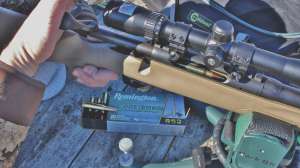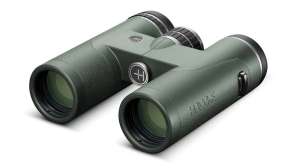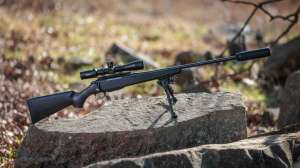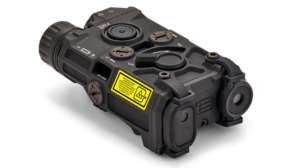

The biggest two influences on optic designs over the past several years have been the military and the rise of PRS competition.
On the tactical side, the requirements of military snipers drove the development of very interesting optics such as the Leatherwood ART, Unertl 10x, Leupold M3A Ultra, and many others. Now we are seeing another push from military and PRS competition that is driving leading edge innovations from brands like Eotech and Sig Sauer with clarity and features that represent the cutting edge of optics innovation.
We have never had better premium optics, and new U.S. tariffs will spur immediate optics sales for 2025. Industry insiders noted serious concerns that since nearly 100% of optic components are globally sourced, this could significantly raise prices for some China-dependent companies. The entire optics market from cameras, binoculars and scopes are wholly dependent on global suppliers that will be impacted by the tariff increases. If customers are not buying their ultimate optic, binoculars, spotting scopes, and camera equipment now, they may not be able to afford it next year.

Influence of Military & Competition
Though many are familiar with military use of brands like Nightforce, Kahles, Trijicon, US Optics, Burris and others, there are many more brands delivering similar premier-tier clarity and features than ever before. Nearly all optics now have “tactical” features.
Many argue that PRS competition’s accuracy requirements surpass the needs of even elite military snipers. PRS can be incredibly challenging due to all the various ranges, target sizes, movement, magnification adjustments, and awkward positions required in delivering precision shots. This not only advanced the clarity of the optics, but also features like turret and reticle designs supporting very fast transitioning shots. The result of PRS influence on design was a technically better tactical optic.
Major Optics Design Changes
From the 1950-1990s scopes pretty much looked the same with 1-inch tubes and drastically oversized objectives and small capped turrets that required a coin to adjust. In only 20 years that changed drastically thanks to tactical and competitive needs:
- Zero Stop and marked turrets were speed and precision adjustment advantages.
- Fast side focus knobs replaced adjusting the objective bell for faster focus adjustments in competition.
- Tube size increased from 1 inch to 30mm/34mm, improving reticle adjustment range, light transmission and strength.
- Scope tubes are still getting larger — did you know Swarovski offers a 40mm scope tube?
- Illuminated reticles became essential within a decade, aiding low-light shooting.
- Throw levers popularized by 3-Gun deliver rapid magnification adjustments.
- Specialized long-range reticles allow instant holdover shots and corrections.
- Electro-optics capabilities deliver rangefinding, electronic leveling, GPS, image/video capture expanding optics functionality.
- Lens manufacturing advances delivering higher precision, and coatings deliver unprecedented clarity.

PRS Competitions Sell Optics
Despite all the innovations, it is still difficult for dealers to help customers understand that optic quality is more important than the firearm. Guns are sexy, but optics can be a harder sell unless the customer is educated or experienced with what premium optics can deliver. This is where PRS competitions have helped sell optics. Competitors see first hand where another competitor can clearly see miraged targets at extended distances while they cannot with their less expensive optic. As one competitor noted to me, there are so many great competitors with epic rifles, many matches are now coming down to who has the best optic and can see the targets better/faster. Most competitors note the optic is the most important equipment investment. After all, if you can’t see what you are shooting at, you most certainly will not hit it.
Optics are Tied to Globally Tariffed Manufacturers
With optics, it is also important to understand that there are globally only about eight glass and optic manufacturers with the specialized equipment for making optic lenses, applying the coatings and the precision scope components. Almost all optics are completely made, boxed and shipped by these overseas companies. Brands can provide the optics specifications that fit the target MSRP and margins and they are delivered as ready-to-market optics.
Most premium optics brands are made in the same factories. Yes, this means even the elite U.S.-made brands are still buying Japanese, German, Chinese or Philippine glass and components even if they are assembling the scopes in the U.S. This means that due to the tariff increases and optic brands’ dependency on buying from these highly specialized optic manufacturers, we could see optics prices in 2025/2026 increase significantly depending on where they are made. Even the elite designed, engineered, assembled in the U.S. brands are still using global components so there are no safe havens on the price increases. For dealers this is both a stocking opportunity to build late year margin and a relevant marketing push for optics sales now.
Japanese and German “glass” lenses and optics still remain as the premium option, with Philippine “glass” optics being the second choice, but there is always overlap or exceptions.
Pushing the High-End Optic Higher
Brands like Primary Arms, Hawke, Athlon, Apex, and Riton are pushing their flagship optics tier further into the $1000-plus range with clarity/features based on elite-tier Chinese, Philippine, or even Japanese components that are competing with the clarity of big military brands.
Exceptions like Tangent Theta have their own class-leading lens grinding operation in Canada for its $4,500-$6,500 hand-assembled scopes with customizable configurations. Quality has a price. Having looked through Tangent Theta optics out to 1000-plus yards, they have a quality unlike any other optic, but the waitlist and cost is prohibitive. Most customers will need to compromise on an optic that is about 10% of that price.
Long-Term Optics with Notable Performance
All the below lifetime warrantied optics have clarity and features that overdeliver comparative to their price range. All have been tested over the last year and have delivered exceptional usability, performance and optical clarity for their respective price ranges.
Athlon ARGOS BTR GEN3 6-24X50 APRS11 FFP IR MIL - $475
The ARGOS features higher quality Chinese components, however the performance offers exceptional clarity for the price, plus illuminated reticle, IR illumination setting, FFP, along with a sophisticated Mil-Tree reticle, side focus and a great turret design.
Primary Arms GLx 3-18x44 FFP Riflescope - Illuminated ACSS Apollo Reticle $799
For the entry-level competitor who has already spent far too much on a rifle that still needs an optic, the GLx 3-18 is a perfect option that sits in a nice sweet spot of clarity, practicality, features and affordability. Primary Arms leverages high-quality Philippine glass and optics coatings to deliver the clarity of a $1,200-plus optic, but without the cost. Primary Arms has built a reputation on innovative, durable and clear optics with some class-leading features like return to zero turrets, 180 MOA of adjustment, and Auto-Live illumination technology. This is a shockingly clear optic for the price.
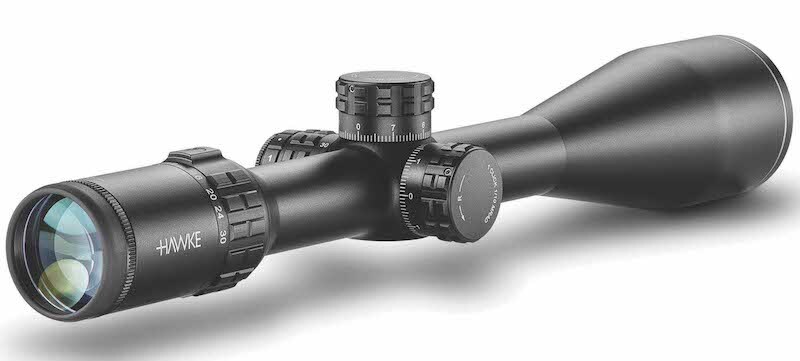
Hawke Frontier 30 SF 5-30x50 Mil Pro Reticle - $1,099
Unique focus down to 10 yards allows for precision rimfire use. Leveraging the most cutting edge coatings and highest quality Chinese components, the Frontier delivers clarity that surpasses some Japanese and German-based optics without the $500-$1,000 premium. The line is also tested to be recoil-proof to .50-BMG. This is Hawke’s elite tier and it is extremely impressive with a function tree grid reticle.
Bushnell Elite Tactical 3.5-21x50 DMR3 Riflescope G4P Reticle $1,500 - Japanese glass
The legacy of the Bushnell Elite was a go-to preferred option for thousands of precision shooters as an optic praised for its clarity, reticle design, robust build quality and short tactical form factor. The Elite series is still well represented in PRS. Unique traits include elite premier Japanese components, very forgiving eye-box and focus, wide field of view, a very usable and wide magnification range and highly adjustable 25-yard-to-infinity focus adjustment. The expense of illumination was removed in favor of higher quality glass and the G4P reticle. At this price it delivers every bit as much clarity as $2,000-plus optics. Though now under new ownership, Bushnell is still delivering lifetime warranty on optics.
Athlon CRONUS BTR GEN2 UHD 4.5-29×56 APRS6 FFP IR MIL - $1,875
Featuring a massive 6.4x magnification range, the CRONUS is the Athlon flagship optic notably built in the same Japanese factory as several military contract optic brands. Based on testing, these optics match the performance of $2,000-plus optics at 1,000 yards. The CRONUS is a shining example of how any optic company can deliver elite tier optics if they choose to take the step.
Sig Optics - TANGO-DMR 5-30X56MM (FFP) - Japanese glass
The TANGO6 scope delivers on its electro-optics promise combining extra-low dispersion and high transmittance Japanese glass for superior light transmission and clarity. Its LevelPlex Digital Anti-Cant System features a user-selectable digital level for precise reticle alignment at +/-0.5° or +/-1.0°. Motion-activated illumination ensures enhanced battery life by powering on/off automatically. It’s also IPX-7 waterproof rated with a wide 30-MOA adjustment and resettable zero, zero-stop, and lockable function at any position.
EOTECH Vudu 3.5-18x50 SFP - $2,049.00
This is an elite-tier optic with the best Japanese lenses and coatings available in the market paired with the same tier of build quality and aberration-free clarity across the full magnification range. I have not tested an optic under $2,500 that equals the clarity of the Vudu line.The 3.5-18 magnification range is a bit more flexible for a wider span of hunting and competition. The ergonomics are some of the best in the industry with very simple and intuitive controls. The Vudu is a good reminder that the more clear the optic is, the less magnification you actually need to see the target, but a 5-25 model is available as well.