
Gackle, North Dakota, lies in the heart of the prairie pothole region — well off the well-beaten path of Interstate 94. It has all the charm of most small towns in Roughrider Country, a state with a population just shy of 800,000. That Gackle lies smack in the middle of the Central Waterfowl Flyway and is a virtual duck factory is a bonus — its agricultural landscape dotted with depressional wetlands that serve as a breeding ground for local ducks and a stop-over for those migrating from points farther north during the fall.
This region is a mecca for waterfowl hunters of every imaginable walk of life, accompanied by hunting dogs of every imaginable breed. They travel from all points on the compass to experience the annual ritual of the waterfowl migration, providing an economic boon to the state’s rural municipalities. This fact has not been lost on the inhabitants of Gackle — a community with a population of 282. Each year, for more than two decades now, they have hosted the Gackle Duck Fest — an event that draws teams of competing hunters and pairs them with local landowners. The result is an influx of revenue for the community and a fun factor that’s off the charts.
Brooks Zenker, a local who was passed the baton three years ago, is instrumental in organizing the event. “Duckfest was developed as a way of bringing local landowners and visiting hunters together and to benefit the community,” he says. “We always get a lot of nonresident hunters for the waterfowl opener, so it seemed like a no-brainer,” he said. “We’re not a registered 501(c) (3), so everything goes back into establishments in the community — the volunteer fire department, care center, country club, senior center, etc. You’ve got 130 hunters who come out here for this event, so it’s a pretty big deal. Four-person teams compete for prizes donated by the sponsors, sporting goods retailers and local businesses, and more importantly, bragging rights — with the top six teams placing. Everyone who places in the top six gets a prize, and first place winners get a new shotgun. Along with the top six teams, the top six landowners are awarded prizes, too.”
The scoring system is unique, explains Zenker. “To keep it as fair as possible, we wait until all the teams have checked in their birds at 1 o’clock in the afternoon,” he said. “Then we roll dice to determine the number of points [awarded] for each species. So, say you have 10 mallards, and they roll a six. You’ve got 60 points. Or you might not get so lucky and come in with 25 blue-wing teal and they roll a one, which is exactly what happened to one team this year! Sometimes it just doesn’t work out. But it’s the only fair way to do it [so teams] don’t target species.”
Duckfest is a huge town affair, says Zenker, drawing locals and visiting teams for two fun-filled nights out on the town. “On Friday night we do a chili feed, on Saturday night we host a prime rib dinner and then we do a raffle that’s open to the public,” he said.
It’s also a great way for companies and sporting goods retailers to connect with their customers. “Our biggest corporate sponsors are Federal and Jack Daniels, who donate products,” said Zenker, “but we also get donations from Scheels, Gun & Reel Sports and other retailers and local businesses.”
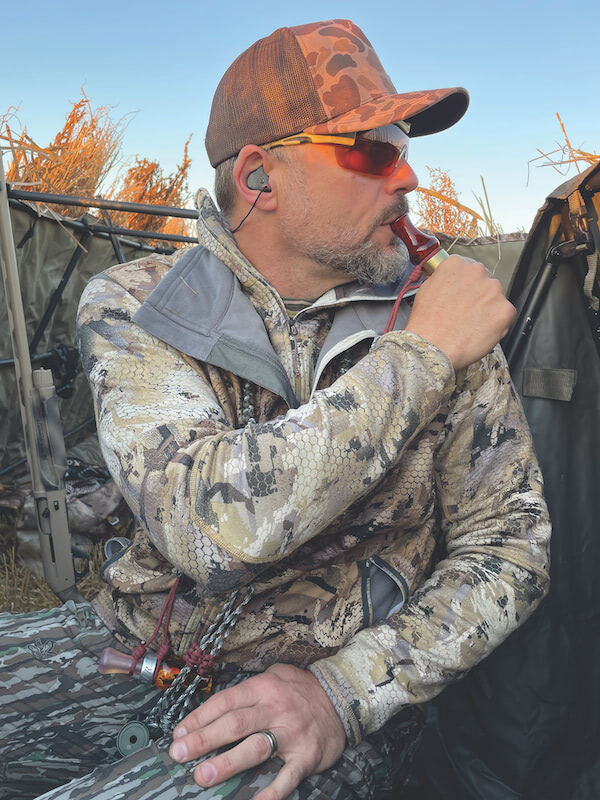
Events such as Duckfest are a great way for local and regional shooting sports retailers to gain recognition and create good will with their customers, by attending and donating products. It also provides a great proving ground for companies such as Federal Ammunition, whose representatives have been attending the event for more than a decade. It allows them to get hands-on feedback from its consumers and field test new products in real world conditions. This year I tagged along to enjoy the festivities and to experience, firsthand, the launch of the ammo maker’s newest waterfowl load — Ultra Steel. And while we did not compete as one of the 32 teams, we spent two mornings in a field blind and did reasonably well. There were the typical missed shots — failing to get the lead right, failing to get the yardage right — but when we were on, the results with the new Federal load were devastating.

The Evolution of a Shotshell
From concept to completion, new product introductions go through an evolutionary process — from notes scratched on paper to tested/finished products on the store shelf. Dan Compton, GPL Director/Shotshells at Federal Ammunition explains the process. “First off, you must identify a need, which [in shotshells] we break down into usage categories — upland, waterfowl, personal defense and then dove and target. So, take waterfowl in this case. What are hunters currently looking for? What’s the goal for developing a new load?”
From there, it’s working from the general to the specific. As an example, Compton says, hunters currently seem to be concerned with discarded plastic in the field so it’s up to them to address this need. “A lot of hunters pick up their shells but not everybody picks up their wads. So that opens a whole new set of questions, explains Compton. “Is it a biodegradable wad? Is it a plastic biodegradable? Are consumers willing to pay more for that or are they going to wait until they’re told they have to do it? So, we start asking questions like that. And depending on what the answers are, we might say OK, this product needs to be affordable and eco-friendly. Then we start laying out all the requirements and that gives the engineers a direction they can chase to develop it for us.”
New technology and new materials always play a part, says Compton. “We like to go back and revisit what was done in the past and what might have gone away for whatever reason. Duplex shotshells (two different shot sizes) for waterfowl is a great example. Remington put those out in the early ’90s. I don’t know why it didn’t work, but hunters just didn’t take to them, so they discontinued them. I think, in that example, it was a time when steel was still trying to get its feet underneath it and the speeds were just too slow. So, in this case maybe it was just ahead of its time. So, we like to go back and look at those things we tried and then we apply new plastics and technology that wasn’t available then. Maybe now is the right time."

Federal Ammunition Ultra Steel
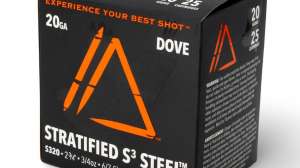
Federal’s new Ultra Steel is a good example of identifying a need and developing a product to fit that need. “Waterfowlers live for those moments when the birds do it right. And in those moments, they want a shell that does the rest,” says Federal Shotshell Product Manager Josh Vickers. “Our new Federal Premium Ultra Steel will exceed expectations. It blends the rear-opening FliteControl Flex wad with a payload of our best zinc-plated steel, producing extremely tight patterns for even deadlier performance.” Federal Premium Ultra Steel loads are available in various standard payloads and double-stack loads that feature two sizes of shot: smaller pellets that create full patterns and larger ones that deliver better lethality at extended ranges. They feature reliable primers and clean-burning propellant with 12- or 20-gauge options, packaged in 25-count boxes. “Our spherical, zinc-plated steel shot creates denser core patterns; the results in the core 15-inch circle are quite impressive,” Vickers says. “The new double stack payloads make it great for multispecies hunts, such as using BB and No. 2 blends on field hunts when either honkers or mallards could be coming in at any time.”
When the Rubber Meets the Road
Feedback is also crucial, and when the rubber meets the road, it is often industry partners such as retailers and consumers who determine if a new product has merit. Until a product makes it to the retail shelf and hunters take it to the field it’s all academic, says Compton. “There are very few products that we develop that are not going to get in the hands of somebody to field test,” he said. “We can make a lot of allegories or comparisons — if we pattern it a certain way and get certain numbers — and that should translate to something, but we always like to hunt with it because it just gives you a feel for the product. If I’m going to be out there pitching [new products] I like to at least have shot or hunted with it.”
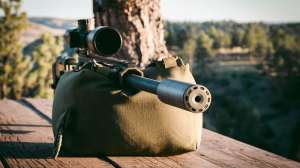
And what goes for ammunition goes for other hunting products such as optics, firearms and others — with end users helping to determine their direction and success.
Linda Powell, Director of Media Relations at Mossberg, says it’s the introduction of new products that really helps drive business, and that retailers and ultimately consumers are a big part of the process. “We have our own direct sales managers, and they go in and visit with retailers and have conversations about trends they see in the marketplace and what their customers are asking for,” she says. “And that truly drives a lot of our decisions. Because, ultimately, we want consumers who buy our products to be happy. And if the retailer has the appropriate products, he’s going to be able to satisfy customers’ needs. So, they really are a key partner in our new products decision process.”
Internally, we have weekly new product meetings — and we bring in people from sales, from marketing, from engineering, along with the executive team and they’ll talk over concepts and ideas,” Powell said. “They’ll update [the executive team] on products that are already in the works and the next step usually is to get prototypes, and that’s become much easier with 3D printing. You can actually mock up a gun for everyone on the team to evaluate.”
Dean Capuano, Director of Communications at Swarovki Optics, says that for them, the introduction of new products is the result of a chain of events that involves both internal and external influencers. “We’re in contact with retailers and consumers throughout the year. We do a lot of consumer shows that our retailers are involved with so there’s a lot of working together,” he said. “We also have round tables at least twice a year with our top 20 dealers. You know, just getting product ideas and feedback [from consumers]. And not only what the consumers want but what might be shortcomings in our present products. So that’s been a focus, and one thing with us that’s gotten better over the past couple of years.”
And with the evolution of social media and website interaction, Capuano says the ways you can listen to consumers via retailers have increased exponentially. “Dealer networks have grown so much, and the fact that they have their own websites, their own email lists, means we like to get them involved with product launching as early as possible,” he says. “So, we’re gaining a lot of good information, and the trick is how to build it into a Swarovski optic product and how to build it at a price that gives the consumer the quality they’re used to with us but also not so far out of the stratosphere [in price] that we can bring new people in.”
Mossberg also puts a premium on feedback and information from retailers and customers. “Our regional sales managers are out visiting our customers across the country and they’re always talking to them about trends,” Powell says. “Sometimes it’s something as simple as changing a camo pattern on a turkey shotgun, as an example, because an old-school pattern has come back in trend and that’s what everybody wants. So that’s an easy change for us to make. But if you’re talking about truly new products, that can be years of development. Sometimes we use marketing research to identify categories and niches within the market we might not really be filling in that time and we can expand.”
And then there’s coverage and feedback from media partners, Powell says. “Internally, we’ll share [media coverage] with our team and most, if not all, of our sales reps will share that coverage with retailers. We also have training sessions with retailer staff that might help them sell our products, because in the end that benefits all of us. You know, when they have the knowledge and they know we’re working with them to promote and educate their consumer about the products, that’s only going to help them.”
In terms of new gear, modern hunters have never had it so good. And retailers and consumers can take pride in knowing that they are an important part of the process.