
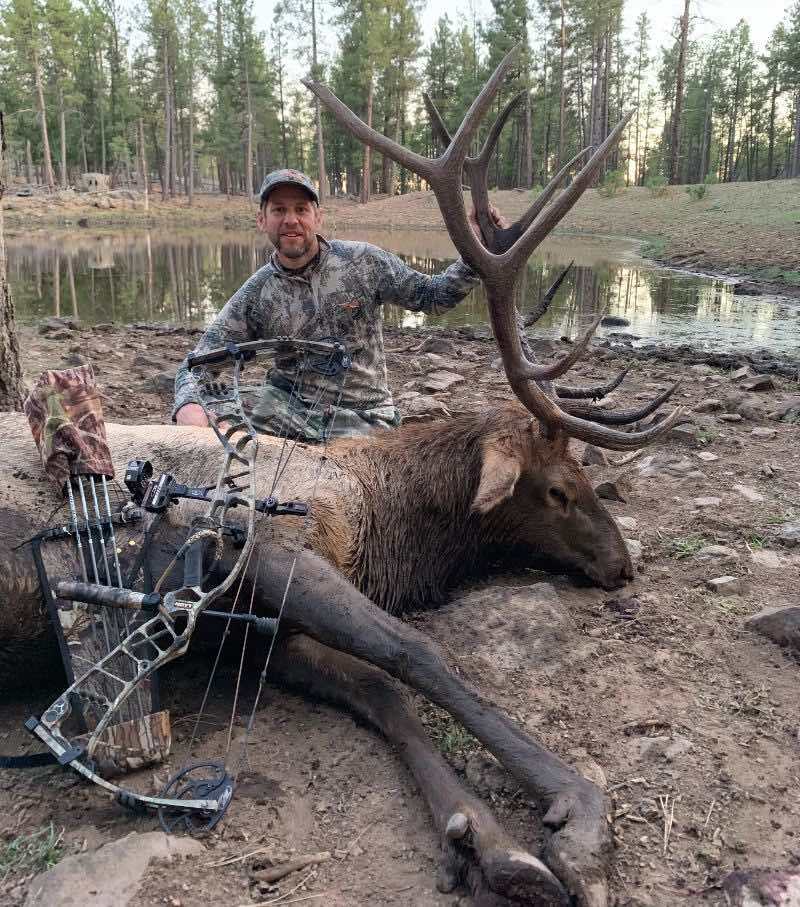
My heart was hammering in my chest as the bull sauntered into view. For most of the day, my daughter and I sat on the floor of a Double Bull blind waiting for this exact moment to come. Now, here it was.
The bull had lots of lady friends with him, too, and they were everywhere, causing a symphony of mews and chirps to echo across the remote mountain canyon. This certainly heightened the excitement! One moment the bull was 45 yards away, the next he was deep in the pond at just over the 60-yard mark. The cows were at the far end of the dirt tank, about 80 yards away. I knew it was a matter of time before the 6x6 monarch shuffled in that direction, leaving for good. It became a now-or-never moment.
Slithering into a kneeling position inside the blind’s interior, I positioned the bow out in front of me, moving ever so slowly, then smoothly came to full draw. Despite the heightened emotions, I felt extremely comfortable pulling the bow back and moving the sight into position. The bull was quartering away, and I put the correct aiming bead a little high and back near the last few ribs, while keeping the angle in line with the off-side leg. Confident of my aim, I simply let the pin roll around in a tight circle as I applied firm back tension. Within a couple seconds the shot broke, all by surprise. Next, I saw a glimpse of the arrow striking the bull dead on, followed by a thump-thump sound of the projectile passing on through.
The elk lunged out of the knee-high water, stopped at the pond’s edge, then stumbled to the ground. I sent a follow-up arrow, but it wasn’t needed. As the bull expired, I became amazed at the power of my well-tuned bow.
Days and weeks after the hunt, I recounted every aspect of the shot leading up to the kill. The most obvious highlight was how easily I had drawn and aimed the bow. The shot felt about the same as the ones I’ve taken on my backyard range. I don’t remember doubting the arrow’s placement. Things were intense and adrenaline was flowing, but I was very controlled and on auto-pilot. It was quite noteworthy to recall.
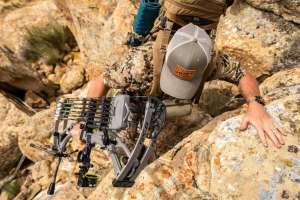
I attribute this performance to the setup I was using. My dialed-in Hoyt bow had a gentle 59-pound pull weight, yet it belted out arrows with solid speed and force. It was equipped with high-end components, including fast cams, stout limbs, and an ultra-stiff riser. No matter how I felt on a given day, I could shoot accurately and comfortably with this rig — as if it was an extension of my arm.
Many bowhunters insist on shooting heavy peak weight bows for big game such as elk, but I don’t think it’s necessary. Now don’t get me wrong: If you’re pretty strong and lift weights, then certainly upping the bow poundage won’t hurt anything and makes good sense. You just never know . . . your arrow may strike heavy bone, and that extra power could come in handy. However, if you’re of average build and don’t hit the gym on a regular basis, then don’t feel like you are at a major disadvantage by using a light-drawing bow, because you’re not. I know, I’ve been on both sides of the fence — shooting both heavy and light rigs — and light- to moderate-pull weights seem to promote more pros than cons.
Here are all the reasons why I think a light-drawing bow reigns supreme for serious hunting and shooting, and how making the switch will make your customer a better bowhunter.
New Bows Help – A Lot
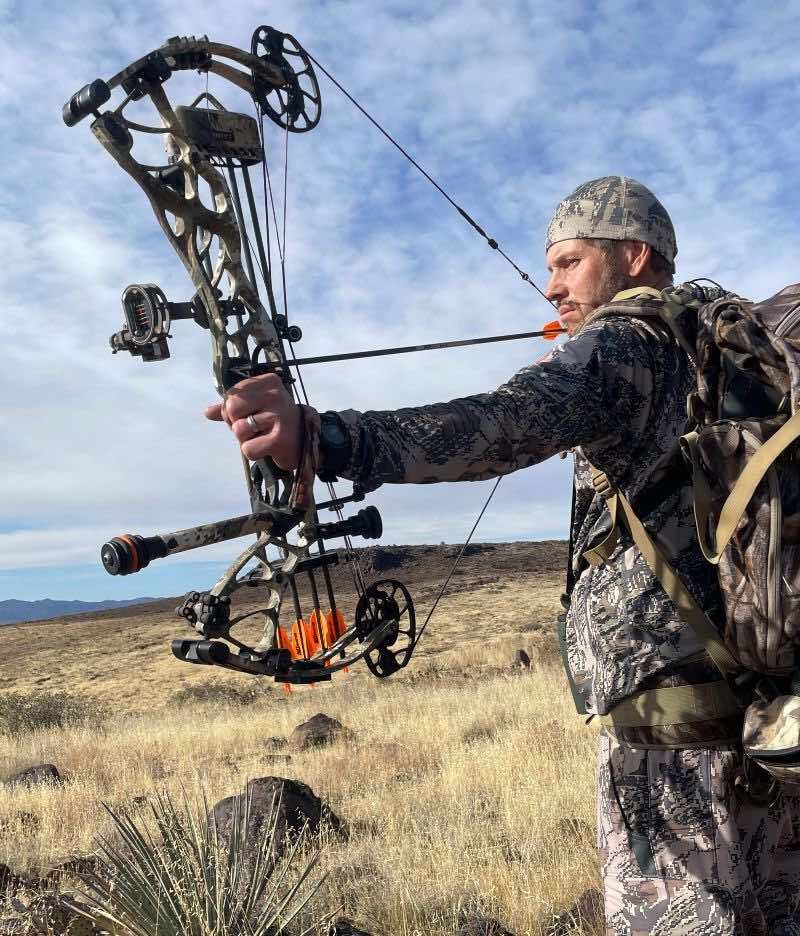
A little more than a decade ago, I had several sports injuries happen all at once. I had runner’s knee from overdoing my jogging routine, and I came down with elbow and shoulder tendonitis from excessive archery testing and training. While going through physical therapy, I had some big hunts planned, so I had no choice but to drop my bow’s draw weight from 70 to about 54 pounds. I questioned the lethality of this setup, wondering if the powerstroke (especially at my 27.25-inch draw length) would get the job done on elk and big mountain mule deer, especially at normal and possibly even long shooting ranges.
To my surprise, I had one of my best hunting seasons ever while hunting with this light-drawing setup. Despite challenging conditions, I shot with exceptional form and accuracy, and my straight-flying projectiles seemed to penetrate with amazing force. I was truly blown away — very easy draw with no perceived downsides.
That was several years ago, and today’s compounds are faster, smoother and more powerful than they were at that time. Today’s high-end 55- or 60-pound bow is no doubt similar to a 70- or 75-pound bow from 20 years ago, so why punish yourself when you can draw light and still send arrows through trophy game with utter ease?
The benefits are quite measurable, too. For example, when you compare the IBO arrow speed of a 2003 Mathews Q2 bow next to the Mathews Phase 29 or new Lift 29.5 bows, the Phase is 32 feet per second faster while the Lift is 40 feet per second faster. This translates into significant kinetic energy gains when using the newer bows: 18.42 ft./lbs. more for the Phase 29, and 23.31 ft./lbs. more for the Lift 29.5. As you can see, added bow efficiency makes a tremendous difference in improving arrow speed and power — a huge bowhunting benefit.
Better for Shooting Form
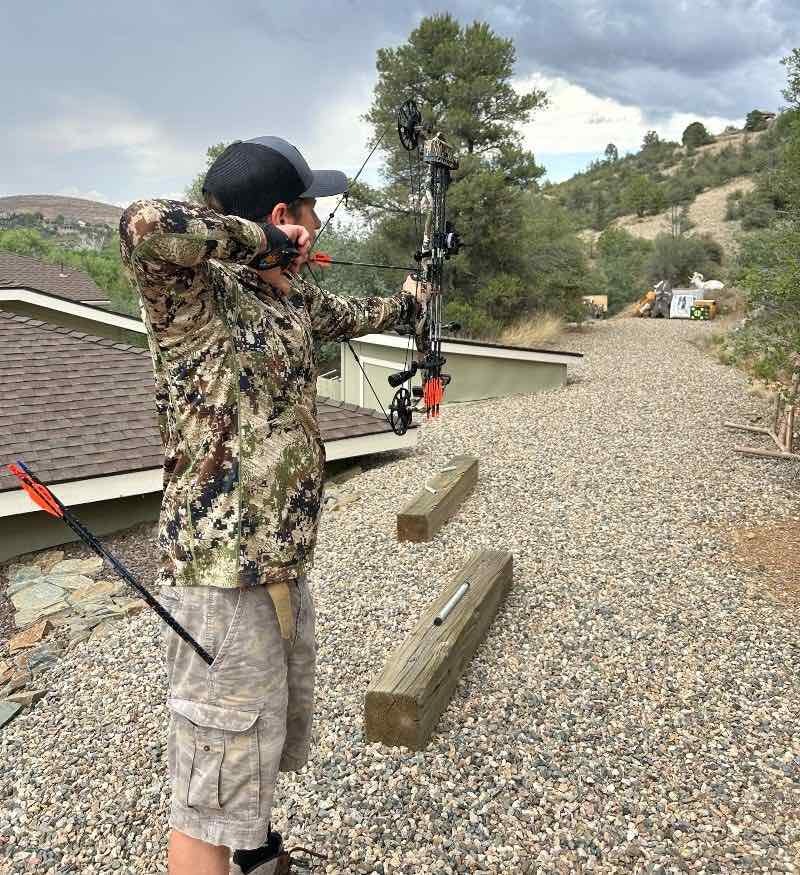
The most important element in shooting a bow properly is comfort, which breeds consistency and accuracy. If you have to fight the bow to full draw, your muscles will feel strained, and maintaining consistent shooting rhythm will be much more difficult. This disrupts comfort, repetition, and solid shooting form — making you a less effective archer.
This is one key benefit to using a light-drawing setup, so you can draw smoothly without activating unnecessary shooting muscles, other than the ones in your back. From there, you can aim comfortably while applying firm tension on the string using your rhomboid muscles. This accentuates a highly controlled and smooth release, just the way it happened on the elk I described in the opening of this article.
I’ve also found that when you’re comfortable drawing and aiming the bow, you can fine-tune your shooting form that much better. You may want to focus on your grip one day and maybe your release hand the next — fixing wrongful nuances until you’ve perfected your technique. After a summer of practice shooting and fine-tuning your archery form, you’ll become deadly on targets. From there, you’re only one small step from duplicating these skills in the hunting woods.
Deadlier for Hunting
From a bowhunting standpoint, a light-drawing bow can be a godsend. I can’t tell you how many times I’ve had to whip the bow to full draw to make a quick shot on a rutting buck. Shooting from a blind or treestand is often awkward and difficult, too, particularly in cold weather. With a light-drawing bow, getting to full draw — and letting down without a lot of movement — is much easier in all these situations compared to using a heavy-drawing bow, something that will undoubtedly improve your effectiveness as a bowhunter.
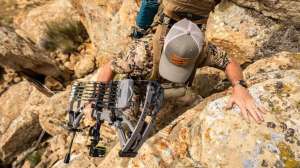
Last fall, I had to draw and let down twice on two rutting Coues bucks while kneeling behind a rock. Finally, as the biggest buck reappeared from some tall grass, I glided to full draw once again. I planted the 50-yard pin high on the buck’s vitals, activated my back muscles, and waited for the shot to break. The G5 Striker broadhead passed quickly through the buck. He ran over the rise and expired. Without a light-drawing bow, I doubt I could’ve drawn back that many times undetected, while calmly taking the shot.
Holding for an extended period of time at full draw, then shooting, is also sometimes necessary when hunting crafty big game. Several falls ago I stalked a big Colorado mule deer while he was bedded in some chest-high brush. I waited more than six hours for the buck to stand and move from the subalpine willow thicket to open ground. To prevent the buck from spooking, I knew I had to draw prior to, then wait for the deer to leisurely walk out from the dense vegetation and out where I could see his vitals. I was at full draw for more than two minutes before making the 25-yard shot. Without a light-pulling setup, such wait-at-full-draw-ambushes would be increasingly more difficult, if not impossible.
Easier to Keep In Tune
After hunting with a number of bows over the years, I believe light-drawing setups are easier to tune and to keep in tune. When an arrow surges out of a bow, the arrow will vibrate and flex to some degree as it absorbs the bowstring’s energy. The more energy the bowstring delivers, the greater the energy surge. This can cause additional shaft oscillation, particularly if the bow is slightly out of tune or the arrow spine is off. These dynamic shaft movements tend to cause tuning and point-of-impact issues with broadheads, especially at higher arrow speeds. Because a light-drawing setup has a lower energy surge when compared to a heavy-drawing setup, the bow is oftentimes easier to tune for straight arrow flight, with minimal adjustment, or at least that’s been my experience.
There’s also a lot of “pre-load” built into a modern compound. In the static, undrawn position, most of the “load” is on the limbs and bowstring. This is why bow manufacturers suggest backing out the limb bolts a few turns prior to putting a stout, 70-pound peak weight bow in a press – to reduce the stress placed on the limbs. As the bow is drawn, the energy transfers from the bowstring to the buss cables, cable guard/slide, and to the flexed limbs – where the stored energy goes.
When you compare a light- vs a heavy-draw bow, there’s continuously more preload on the bowstring and limbs on the heavier-draw bow. Usually this isn’t a big deal, especially with today’s high-quality bow components, but over time, I’ve noticed bowstrings will tend to creep somewhat, particularly during the hunting season when they’re exposed to lots of sunlight, moisture, and rain. Once the strings creep, even as little as 1/8-inch, the bow will need to be re-tuned, or your arrow flight and point-of-impact settings could change.
This may not seem like a big deal to some, but if you’re a serious backcountry hunter, the last thing you want to worry about — or deal with — is a bow that needs to be re-tuned or re-zeroed. This requires time, probably several adjustments, and lots of practice shooting to ensure the bow is shooting dead-on. In the middle of a big hunt, such tinkering could ruin precious hunting time, not to mention loss of focus and shooting confidence.
After spending the last 10 seasons hunting with light-drawing bows, I’ve noticed my setups seem to stay in tune longer, if not all the time. I fuss with them less, which keeps me poised and ready for action.

They Pack Sufficient Punch
Overall, I prefer arrow setups that deliver more than 60 ft./lbs. of kinetic energy, which I believe is sufficient for tackling nearly any North American game. The key, of course, is to choose a deep-penetrating broadhead, mid-weight arrow, and ensure your bow is tuned for straight arrow flight. Beyond this, taking only broadside or quartering-away shots is critical. With today’s high dynamic-efficiency bows, pulling somewhere between 55 and 60 pounds and delivering this type of kinetic energy isn’t a problem.
Although I have no problem hunting with a good-quality mechanical broadhead, I’m partial to fixed-bladed heads, mainly because I don’t have a problem getting them to fly well, and I like the added penetration I get from a stout, cut-to-the-tip broadhead.
Over the years, I’ve had great luck using midweight hunting shafts — those that weigh about 9 to 10 grains per inch — along with strong, precisely made three-blade broadheads, such as the G5 Striker, Wac ‘em, or Muzzy Trocar. Total arrow weight of these hunting arrows usually comes in at 420 to 450 grains. I’ve found these arrows to offer a great blend of speed, quiet shooting, and deep penetration on game, even when shooting a light-draw bow.
If you want additional kinetic energy (and especially momentum), you can increase total arrow weight by 25, 50, 75, or even 100 grains by using a heavier arrow shaft or heavier components, such as the insert, broadhead, or both.
My favorite hunting setup right now is a dialed-in Hoyt RX-8, set at 59 pounds, using 26.25-inch Easton FMJ 5MM Match Grade shafts, AAE 2.6-inch Hybrid vanes, and G5 Striker II broadheads. Total arrow weight is 422 grains using a standard HIT insert and 100-grain broadhead. This bow draws and shoots supremely smooth and consistently groups fixed-blade broadheads into tight clusters beyond the 60-yard mark.
When compared to the Hoyt Nitrum I shot years ago, which helped me bag several deer, elk and pronghorn with pass-through shots, the newer Hoyt RX-8 shoots 12 feet per second faster and delivers 5 ft./lbs. more kinetic energy — more speed and power without having to pay a draw-weight price. The RX-8 is also more stable at full draw and shoots better groups across the board. To me, that’s money in the bank.
There’s no doubt in my mind: A lighter draw is certainly better thanks to modern bow designs and arrow setups. Educate your customers on this fact, have them give it a try, and they’ll witness this performance edge for themselves. They won’t be disappointed.
Sidebar: Female Bow Perfection
Women adapt quickly to shooting a bow properly, but only if their setup is comfortable to draw and shoot. Here are some vital tips that can make or break a new female archer.
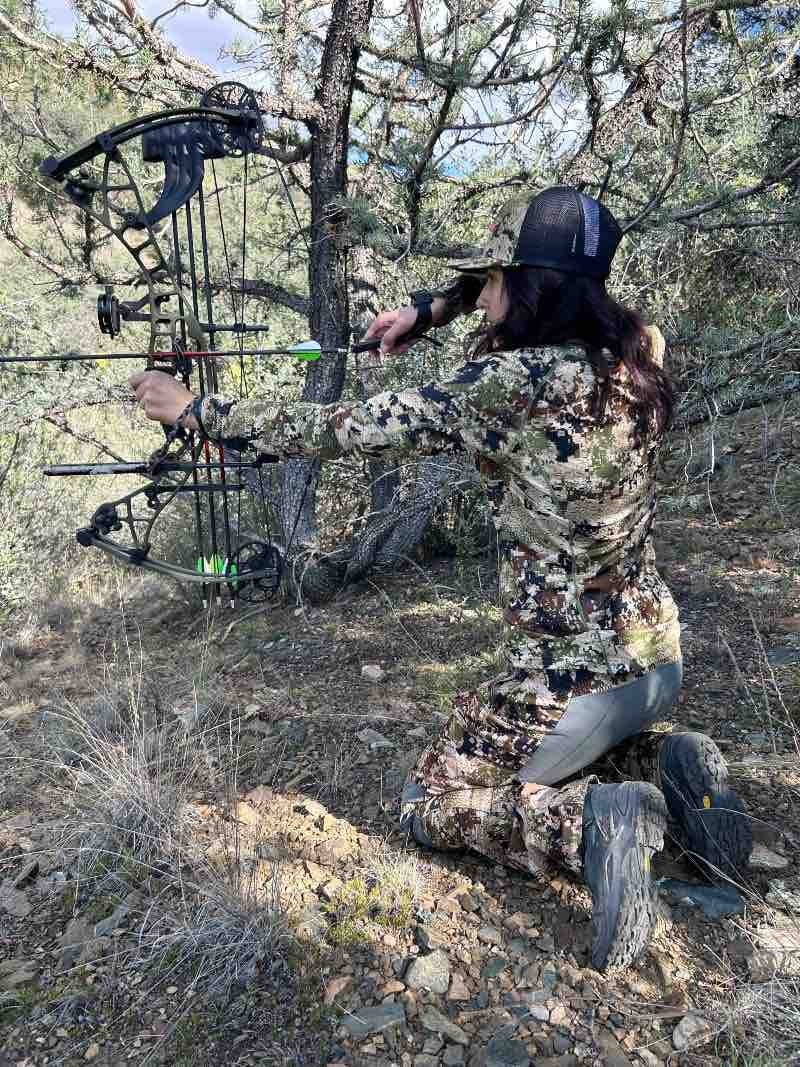
1: Reduce Draw Weight. My 22-year-old daughter has practiced archery since she was 10 years old. Even though she lifts weights, rides mountain bikes, and trail runs, she insists on shooting a fairly light-pulling bow. She finds draw weights in the 38- to 42-pound range ideal for her. Sure, she can pull more, but she says it impacts her motivation to shoot. If the bow is too hard to pull, she just won’t go outside and practice, because she knows it won’t be fun.
To counter her low draw weight, she uses a full-length carbon arrow and heavy insert to up the projectile’s weight, kinetic energy, and momentum to ensure adequate penetration on Arizona big game. She uses a 125-grain Magnus Stinger broadhead.
2: Refine the Draw Valley. Most female archers I know hate bows with narrow draw valleys. A bow with a narrow valley is one that wants to jerk forward if you let up on the draw even slightly at anchor. I’ve found swapping out draw-length modules or moving the draw-stop peg to the next longer setting (if feasible and recommended by the manufacturer) sometimes works for improving the valley’s feel. When using a different draw-length module, you can twist/untwist the main bowstring to reduce/increase the draw length to bring it back to the correct length. Do whatever is necessary to make the draw valley more generous and shootable. If not, the female shooter will quickly lose interest in shooting.
3: Keep the Bow Light. Female archers usually don’t have stout shoulder and arm muscles. For this reason, it’s vital to keep the overall weight of the bow light, so it’s more manageable to hold up at full draw and carry while hunting. My daughter’s Hoyt Eclipse is one of the lightest female bows on the market, coming in at 3.7 pounds out of the box. Fully rigged with bow quiver, arrow rest, sight, and stabilizer, it’s field ready at a little more than 6 pounds total weight. Bows heavier than 7 pounds, fully rigged, are usually too heavy for most female shooters.
Photos by Joe Bell