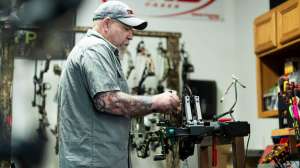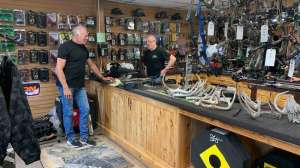

Few gear manufacturers can relate to archery pro shops quite like Schaffer Performance Archery, and that’s because this long-standing Minnesota-based innovator features a very unique “two-pronged” business structure. Up front it’s one of the country’s most successful archery pro shops, while upstairs — in the very same building — Schaffer staffers build some of the industry’s finest arrow rests and bowsights. As you’ll learn, they are products built not only to make bowhunters more successful, but also to help spur more profits for pro shops looking for a competitive advantage.
At the helm stands founder John Schaffer (54), a longtime archery competitor who holds a degree in engineering and a couple Minnesota state archery titles. He dearly loves the challenge of designing gear that solves problems and helps others be as accurate and successful as they can be.
These days, Schaffer’s competitive career is now on hold, a passion somewhat displaced by his extensive adventure bowhunting exploits. With the steady help of his signature products, he is now just six animals away from completing the Super Slam of all 29 North American big game animals — experiences and knowledge he passes on to his large and loyal pro shop customer base.
In this issue’s “Industry Spotlight,” we sat down with Schaffer to learn more about his successful pro shop, as well as his arrow rest and bowsight business.
AB: Let’s start from the start: How did you get into archery and designing products?
JS: I started working for an archery shop in 1984 at age 14, and my first product was an overdraw cableguard bracket that centralized the cableguard position on the overdraw. That was a 1989 patent, and our first customer for that was McPherson Archery; that began while I was in college at the University of North Dakota. When I graduated, I went to work as the design engineer for Chek-It sights.
AB: Being a gear manufacturer and running a pro shop is a fairly unique mix; how did the pro shop angle come about?
JS: After I left Chek-It, I was manufacturing my own arrow rests, and one day I got a phone call from King Archery, one of my dealers. He wanted to sell the shop. That was in 1996. I said hell no, I was having fun with the products, and never really saw myself owning a pro shop; it wasn’t in my brain. But the more he pestered me, I thought it would be a good fit. I bought it, it was good timing, and we immediately got a Mathews dealership, whereas the previous shop did not have Mathews. It was a nice advantage, and it continues to this day. We grew as Mathews grew; during our first year, we were a top 100 Mathews dealer, and we’ve been one of their largest dealers ever since.


AB: Your company currently offers several variations of the ultralight and rugged Schaffer Opposition Air bowsights and the equally unique XV rest. Let’s start with the sights: How and why are they different?
JS: We introduced our first sight in 2008, and since then, we’ve dramatically reduced the weight, increased the brightness, and we now have three different frame fitments: a solid mount, a removable mount, and the Mathews dovetail mounts. All are really light — the lightest is just a tic over 3 ounces — and really bright. We use the brightest fiber-optics you can buy, they are 17 percent brighter than industry standard models. Sight companies that have to melt and “mushroom” the fiber tip to hold it in their sight pins can’t use this fiber; we can because we put them in a stainless-steel tube, so they never break.
What motivated me to build the sight, at the time, we were selling existing sights and customers were breaking fibers regularly, and we were spending way too much time fixing very expensive sights. I just told my guys, I’m going to design a sight that we don't have to do this. I’m not big on dropping names, but all three of the guys who have North American Super Slams that are also in the record book – Tom Hoffman, Jack Frost and Walt Palmer – they all use this sight. So does Frank Noska, the only guy to have posted two Super Slams.

AB: Tell us about the genesis of the Schaffer XV arrow rest.
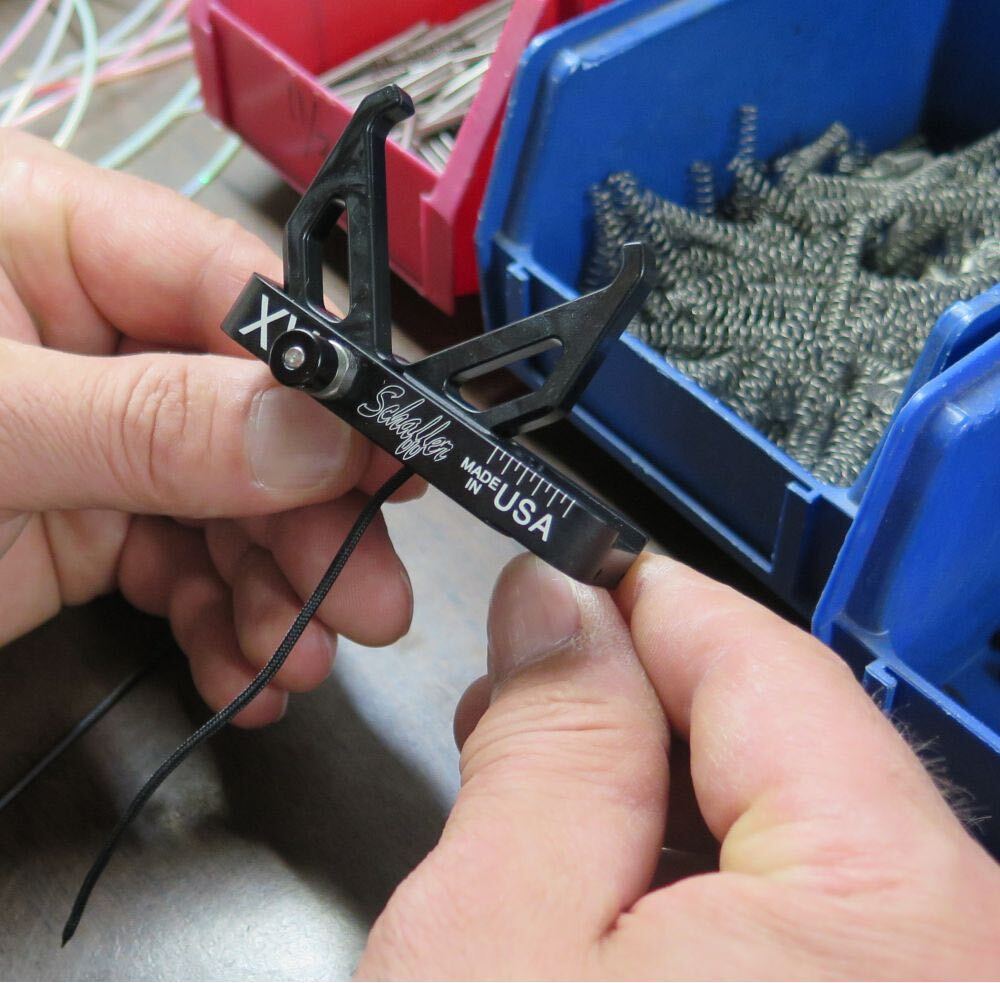
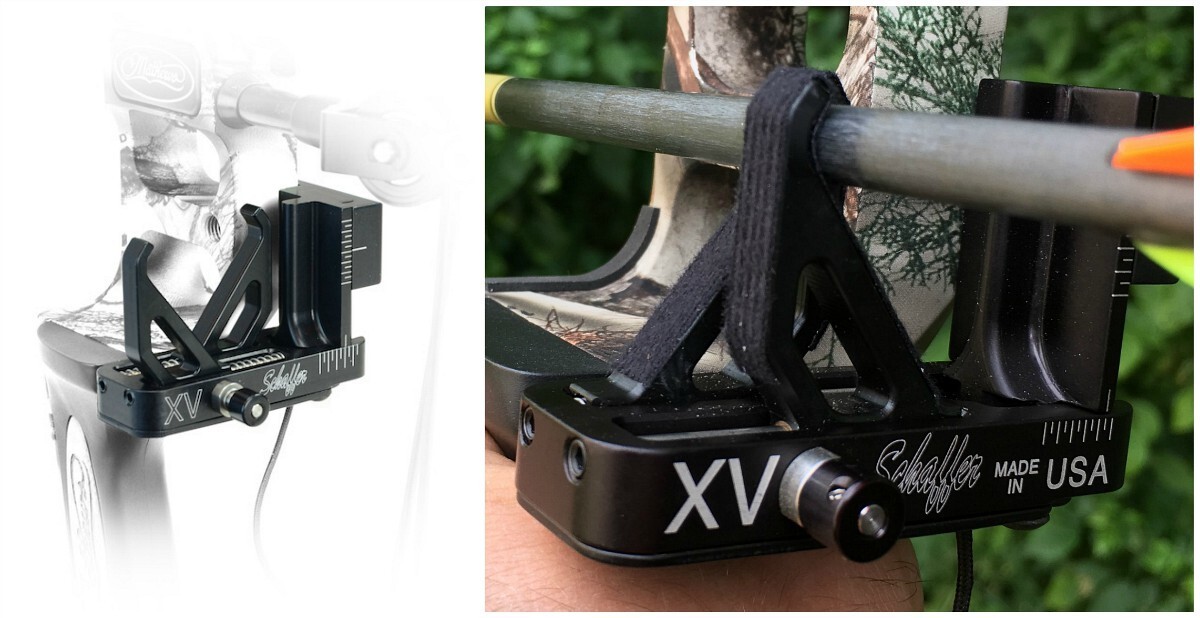
JS: We’re on the second Gen now, but each generation has had refinements over the years. In a nutshell, it’s now lighter and quieter; it’s just a tic over 2 ounces. As far as the name, it’s based on the shape change. When you start your draw, it starts out as an X, then goes to a V.
Where it started, I’ve always prided myself on building designs that are new and fresh; I don’t like doing “me-too” products to a fault. So I started off thinking of a concept that would both hold the arrow and clear the vanes, and also offer a tuning advantage. When the light finally went on in my head, I was driving myself to a mule deer hunt in Alberta, traveling through Montana about 2 a.m. It was then the idea of two opposed ramps, moving toward each other, and then moving back, to clear away, came into my brain. And I drove for another hour and I was wide awake, going through everything in my head. I got to camp, hunted for two days, and then told the outfitter I needed to get back home — I was obsessed and needed to get home and build it.
It was the first arrow rest — and is still the only one — to have dual movement. When you draw back, two things move to secure the arrow. And because we have two things that move, we can better secure the arrow. Also, because of its design, it doesn’t require that you cock it or set it, before you draw the bow back. So if you need to shoot quickly it works. And if you do lock it in the upright position, it holds the arrow better than any rest on the market.
AB: You’ve been a regular at ATA Trade Shows for decades. While there, how do you go about selling the advantages of Schaffer products?
JS: No. 1, we offer unique products for hunters that work better than the competition, and we’ve really been careful about our channels of distribution, so that it heavily favors the independent pro shops.
No. 2, no one offers the margins to the independent dealers that we do. It’s not even close. It’s because we feel the independent pro shops are vital to maintaining a strong archery industry, and it’s because we know that in areas that don't have strong pro shops, archery struggles. No. 3 — and it kind of goes hand in hand — we’re a U.S. manufacturer. Me and the guys who put these together, we’re available at a phone call; you can call here any day and know what’s going on. When one of our dealers calls, they’re getting a human who knows what’s going on.
We’re moving into an age now, where in my opinion, too many times when a new product comes out, that product is first marketed and sold consumer-direct. And maybe down the road, as an afterthought, the company might decide they want to get some dealer business. But from the beginning, the dealer gets lost in the shuffle, and inevitably, the dealer gets squished. To tell a dealer that he’s going to make 30 points on a product, isn’t a healthy business. That’s happening too much these days, that the dealer is an afterthought.
AB: Most would agree that the archery and hunting industries are currently in an era of consolidation, where smaller manufacturers are increasingly selling out to large private equity firms and others. In this regard, Schaffer Archery is one of those built-from-the-ground businesses bucking the trend.
JS: As an engineer, the most exciting thing for me is to have new gear inspiration come into my head, and take it to the next step. Draw it up on CAD, and have a prototype made so I can hold it in my hands and use it, hunt with it — and then do the same with thousands of other people. It’s the most satisfying thing in my life. Not being able to do that would really bother me I think.
AB: How did you get started in competitive archery, and do you have any desire to continue that path moving forward?
JS: While I was at Chek-it, I started to get involved in archery to promote their products, and got really involved with the national 3-D shooting, primarily IBO, and then also got into NFAA Indoor, and Vegas shooting. I did pretty good; I won the Minnesota state title, back to back, in the Freestyle Unlimited class. The last time I shot Nationals was in Oklahoma, I tied for fifth in the pro class, that was in 2003.
I don’t do it so much any more, with a growing business and family, and trying to get all the Super Slam animals. But I still miss it. I think the attraction was a combination of always being competitive, always being meticulous with any piece of equipment that I have around me, and of course wanting to be perfect. I still shoot for score occasionally, mostly to help people interested in competition at the shop. I also have a 100-yard range at my house that pretty much sees only broadhead use. I think bowhunters need to shoot their broadheads more.

AB: Does owning a pro shop help your manufacturing business, and vice versa?
JS: Having our company structure is a huge advantage. We can, on a daily basis, correspond with our end users, so we can see what their wants and needs are. It not only helps me design better products, but we also get immediate feedback and know what they like and don’t like, and can make changes accordingly.
I think we have a very unique offering here at Schaffer Performance Archery. We have extensive expertise in hunting, we design product, and we hold several patents. I don’t think there is a shop anywhere in the world that can offer that sort of expertise.
On the manufacturing side, our primary concern is where those margins are going to fall for the dealer. We want our dealers to be healthy, and if so, they are also going to be more loyal to us, because we were one of those companies giving them those good margins. And so in the end, they’re healthy, and we’re healthy.
Interested dealers can reach me at (952) 894-6169.