
Consumables. Without them, the retail world wouldn’t be nearly as busy. But as it is, tire shops are always hopping. Grocery stores and restaurants are mobbed. Shoe stores keep busy, and stores that sell toiletries don’t have to advertise to get customers. The challenge, though, is there are more places than ever to buy consumable goods.
Although there will never be as many archery stores as restaurants in a given city, archery pro shops face this dilemma with certain product categories, such as archery targets. Being consumable — something that inevitably wears out and gets used up with regular usage — archers and bowhunters have a perpetual need for new archery targets. Thus, most archery and sporting goods stores carry them.
Because sporting goods giants stock tons of archery targets, often at lower prices than pro shops due to their huge buying power, this is a challenging product category for smaller archery pro shops. Still, you can have your piece of the target sales pie by following several principles. Let’s discuss.
Tracking With Trends
In the archery target category are dozens of options, but fundamentally three sub-categories: bags, foam broadhead targets, and 3-D animal targets. In my talks with archery dealers over the last few years, bag targets are king. Most archers want to buy an economically priced target with easy arrow removal, and a bag target is an ideal solution.
In 2023, Josiah Richards of Ross Outdoors in Phoenix, Arizona, told me that while most of his target buyers are bowhunters, they rarely go for 3-D targets. Instead, he said most choose bag targets in the $50 to $60 range. Also in 2023, John Vernetti of Royal Gorge Archery and Range in Canon City, Colorado, concurred, saying bag targets outsell everything else.
This May, I connected with Raymond Barnd of Outlaw Archery in Spring, Texas, to discuss target sales trends and tips. He’s been in archery retail for about 15 years, two of those with Outlaw Archery. Although Outlaw sells a fair number of bag targets, he reported a different trend than Richards and Vernetti.
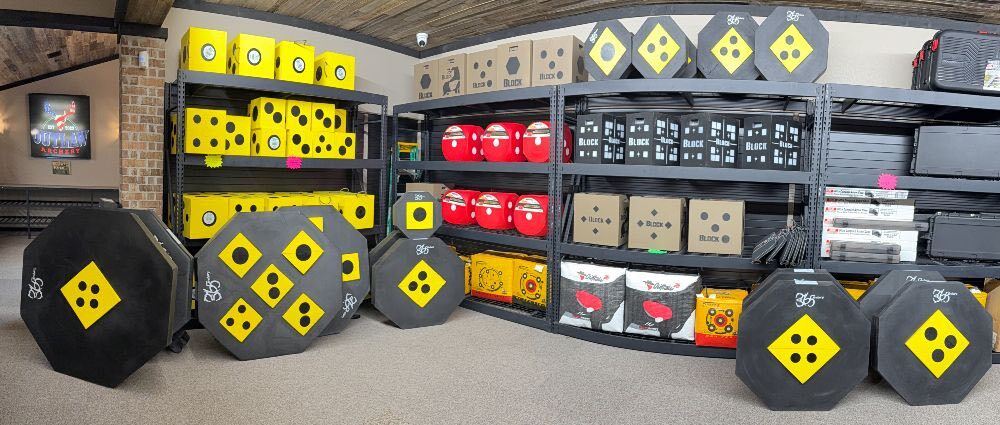
“Right now, 365 Archery’s targets are selling hot for us,” he said. “A big reason is they’re so interchangeable. Customers can purchase different cores, and when a core wears out, they can replace it with a new one rather than purchase a brand-new target. We bring in pallets of them at a time. Several influencers who my customers follow use 365 Archery targets, and that helps with promotion, too.” Barnd said that Morrell’s High Roller foam target is next in popularity and that Outlaw Archery moves lots of them.
For Brent Smith of Slingin’ Arrows in Arkansas, “Blockis our most popular broadhead target,” he said. “Block does well with advertising, and they’re good-quality targets, too. People want a target that lasts, and these seem to hold up quite well. Folks also get a good target for their money.”
The input from these dealers can put your finger on the pulse, but you’ll have to see what target style is in the highest demand in your area. If you fail to do that, you could order too heavily in one category or another and end the season with a heap of unsold targets. If you’re a newer dealer, the safe bet is to order even amounts of bag and foam broadhead targets, and to order on the lighter side. You won’t get as good of pricing, but that’s a small price to pay as you figure things out. Get things dialed in before you go big.
For several years now, most dealers have consistently said that 3-D targets don’t sell very well, and Barnd is one of them. I’ve learned that the dealers who do stock them keep things pretty simple, offering an entry-level deer target and maybe a turkey target, and some out West might stock an elk target along with a couple of deer targets. Some shops, such as Royal Gorge Archery and Range in Colorado, and Flaming Arrow Archery in Montana, defy the trends and do quite well with 3-Ds. But from what I’m told the most, those shops are exceptions.
When I’ve queried dealers about why they believe 3-Ds are more difficult to sell, price was the resounding answer. The least-expensive 3-D deer target I know of retails for $139.99. That is roughly double the price of the average bag target, and in my experience, a cheap 3-D’s longevity doesn’t hold a candle to that of a bag target. However you slice it, bags and foam broadhead targets are simply more bang for the buck, which is why they outsell 3-Ds at most shops.
If I were a new dealer, I’d probably bring in no more than six 3-D deer targets to start with and then gauge how long it takes them to sell before solidifying my future buying plans.
How Many Brands?
The archery target category has multiple cool designs, and settling on a manageable number of brands and SKUs can be challenging. Barnd said that Outlaw Archery keeps it simple and has just three brands: 365 Archery, Block and Morrell. Most of the other dealers I’ve spoken with keep their target offerings to just two or three brands, too
The problem with buying too broadly is you’ll needlessly limit your buying power for other product categories by having it tied up in too many targets. You don’t have to try to please everyone in the target category. Unlike bows and broadheads, most archery consumers aren’t loyal to a target brand — they’ll buy what you suggest, so long as it holds up. Rely on your expertise in connecting the customer with a target from two or three brands rather than stocking targets from six different manufacturers.
Learn Your Customer’s Needs
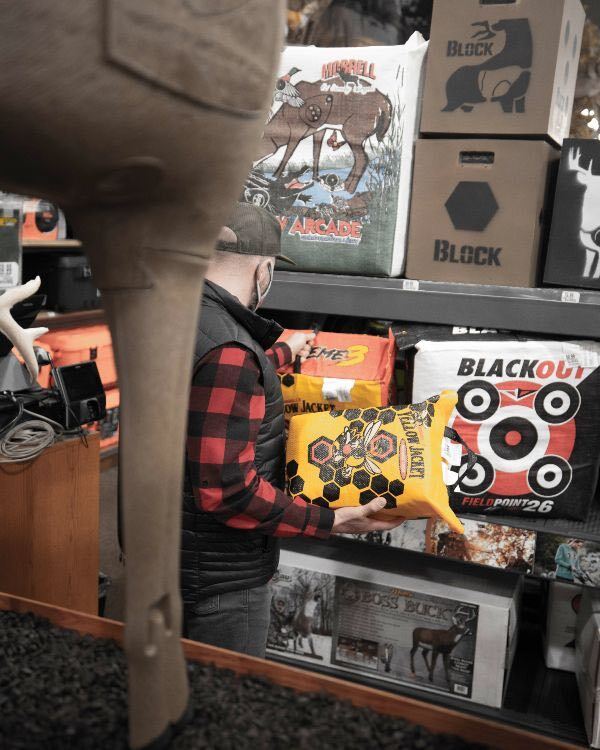
Speaking of connecting your customer with a target, an important step in the sales equation is taking the time to learn what type of shooting he or she will be doing. Will they be getting in reps only with field points? Are they looking to shoot mostly field points but change to broadheads at some point before hunting season opens? Or, are they looking to make their practice as realistic as possible with a 3-D target? The answers to these questions can largely reflect their needs, so you can sell them a target that meets them. Very few archery consumers want to invest money in two or three different targets.
Barnd emphasized that you must be attentive to what your customers want. “We ask the customer what style of shooting they plan to do,” he said. “If they’re just going to shoot field points, they don’t need to buy an expensive foam target. A $60 bag target will do the job.”
A couple of years ago, Nicole Tindale of Flaming Arrow Archery in Montana explained how she connects her customers with the appropriate target. “Our customers look to us as the experts,” she said. “We personally shoot 3-D targets rather than foam blocks, and we shoot our field points and broadheads at them. We do it because it’s more realistic for bowhunting practice, and that is how we suggest and sell a lot of 3-D targets to our customers.”
Smith of Slingin’ Arrows once told me that he doesn’t push the same target on every customer. “If someone knows what type of target they want,” he said, “I explain the differences between the different models I offer and help them settle on one that works for them. I don’t push one particular target. I find out what the customer is looking for and go from there.”

Setting Yourself Apart
As I mentioned at the beginning of the article, archery pro shops inevitably face competition in target sales. Even if you don’t have a lot of competitors located nearby, you face the online monster. Even though targets are large and heavy, many online retailers offer free shipping. Another factor is brick-and-mortar competitors, particularly chain retailers, have extensive target selections at lower prices due to their significant buying power.
How do you compete? You set yourself apart. What targets do your competitors stock? Find different targets and order those. Look for more specialty items or brands that the box stores don’t carry, even if they’re a little more expensive. Often, this puts you into higher-quality targets that your customers will be happier with anyway. Granted, you’ll want to offer some reasonable bag targets, which are also available at your competitors, because archers need something to shoot at, and if you don’t have affordable bag targets, you’ll miss the sale. But, for the most part, try to be different than the box competitors.
That’s how Tindale maps out Flaming Arrow Archery’s target selection. “We have a few different competitors here locally,” she said. “Most of the targets they offer are inexpensive, cheap-quality targets. They don’t offer the high-end ones like we do. So really, our mix of different targets and ability to special order gives us a competitive edge.”
I’ve talked with pro shop owners who leverage economical bag targets as incentives for bow buyers who are on the fence or asking for discounts. The cost of a bag target is minimal, but the target is valuable to the customer. Prices at box stores are usually fixed, and aside from special sales, I’ve never heard of box stores throwing in a free target to get a bow sale. You don’t want to cheapen your pro shop or what you sell, but winning a customer is arguably worth the price of a bag target.
Smart Purchasing
Once you get your target selection dialed in to two to three brands and learn what sells best in your area, it’s time to make purchasing decisions that increase your bottom line. A lot of this entails attending buying shows such as ATA and/or becoming a member of a buying group, such as NABA or A.R.R.O. Volume pricing with programmed delayed ship dates means either better per-unit savings or freight savings yielding greater margin potential.
Longtime archery retailer Marty Stubstad said this of A.R.R.O. in a previous Behind the Counter column. “Through A.R.R.O., I increase my profit margin because I’m able to order at volume-distributor pricing,” he said. “However, I can still order in small quantities. A.R.R.O. helps put money back into dealers’ hands.”
Barnd said that Outlaw Archery tries to spread its annual target purchases across three to four different ship dates. “Targets are pretty seasonal,” he detailed. “We don’t want to get all of them at once and then sit on them for months and months. Our hot months for targets are July and August, so we always get stocked up for that period.
“We try not to sell anything with a margin below 30 percent. If you’re willing to buy in bulk, some of the companies are willing to work with you on the cost or freight. If we’re going to carry a product, it must make financial sense for us.”
Hit the Mark
As we wrap up, Barnd and I discussed a few final points. First, the higher tariffs are a new development, and he said archery dealers are already seeing price increases on products from certain manufacturers. He also said you must be attentive to what your customers want or are talking about and want.
“When Outlaw Archery opened 2 years ago, I had never heard of 365 Archery targets,” he admitted. “I knew nothing about them. One or two customers I’ve known for a few years who keep up to date with everything brought them to my attention. It just took me listening to them and bringing in the targets, and now they are our best-selling targets.”
Finally, ask for the sale. “If a customer is buying a new bow package,” Barnd said, “the target is the last piece of the puzzle. I get them all set with the bow and accessories, and then I ask them if they need a bow case and a target. Many times, they already have those items, but a fair number of customers don’t, and if you don’t ask, they probably won’t think of it, and you’ll miss the sale.”
Just like tires and toothbrushes, archery targets are consumables and something that archers also need perpetually. If you can navigate around the competition by setting yourself apart, you can excel in selling more archery targets and reap the associated profits. One thing is for sure: If you don’t have a good target selection and you put little emphasis on this great category, the results will show, and you’ll lose sales to your competitors. So, why not get dialed in, do it right, and get your piece of the target sales pie?
Sidebar: Try, Then Buy
If your store has an archery range, it makes sense to put one of each target that you sell on the range so your customers can try them before buying. Some bag and broadhead targets have white, yellow, black or green bull’s-eyes. Some customers struggle to aim at certain colors, depending on their eyesight and their sight pin colors. Make sure they like what they’re buying by allowing them to demo it in the range. Also, removing arrows from some foam and 3-D targets is more difficult than others, so be sure your customer can comfortably remove arrows from the target they intend to buy.