
Daylight was upon us after a short, easy boat ride across the big creek to the tract of public land. Like other small tracts around the lake, it was best accessible by boat and shoreline. Dressed in camo, our suppressed, scoped .22 rifles were cased for safety and lest a rogue wave bump the aluminum flatbottom. The bow slid against the shoreline vegetation and, with a hard look for any mad water moccasins we might have disturbed, we stepped off and bid our companions adieu until mid-morning.
August is not considered optimal for squirrel hunting in the Southeast. It is oppressively hot, even at 5 a.m., and humid enough to create three-shirt days and noon lunch breaks. Ticks and mosquitoes, two of the three Axis of Evil Pests, chiggers being the third, are home in the squirrel woods. So are snakes, moccasins with attitudes of mafia hitmen and wily, uber-camoed copperheads in dryer areas, like the base of a tree that squirrel hunters might sit against. Dragging a stick through the leaves around my tree trunk revealed no hidden copperheads, yellow jacket nests or other visible issues.
Chris Ellis of West Virginia is a longtime friend and industry associate who works for Timney Triggers, which is based in Arizona. We’ve chased deer, turkeys and squirrels a time or two. By the time I was seated, he had already reclined against a leaning tree, clearly impervious to any snakes that might deign to rear up against his mountain-tough hide. After a short hike from shore, and with the help of OnX marking a few hickory trees, Ellis and I had agreed this was the place. It didn’t take long for Mr. Bushytail to emerge.
In the early squirrel season, my usual preference is a shotgun and ample shells in my bag. Leaves still are on the trees, providing cover for squirrels sitting and cutting a nut or jumping through the canopy. You see a shake of a limb, leaves rustling, and then perhaps a tail or body, then nothing, then a tail, then hopefully a spot for a shot. With a scattergun you can blast away. It’s not as sporting, in my opinion, but if you hunt early before leaves have fallen then that’s possibly the best option.
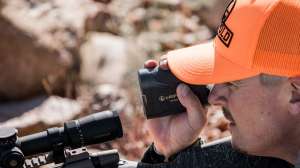
Or, for a challenge like our crew was doing, you hunt with scoped .22 rifles and pick out that one moment quickly right now to take the shot. The squirrel might sit momentarily in a limb crook or hesitate on the trunk to peek around. Our decision proved fruitful with the rattle of leaves high in the tree a giveaway. Up there, I pointed, and as if on cue the squirrel ripped another nut from its hold and rattled the limb. Ellis zoned in like his old champion squirrel dog, which is now chasing bushytails in the celestial limbs. We peered through our binoculars, also critical early in the season, until he spied the hickory honker. The rifle poofed — suppressed doesn’t mean 100% silent — and No. 1 for the season hit the ground.

Firearm Efficiency
Vague memories exist of my father helping me hold his .22 as I pointed it at a target affixed to a fallen tree, which would absorb the lead bullet. I didn’t aim, as a 5-year-old, perhaps 6, doesn’t know about aiming. But I remember the heft of the rifle, the feeling of success at hitting the target, and 50-plus years later still enjoy shooting and hunting with a .22 rifle.
His was a semi-auto with a tube magazine, thick wood stock and no scope. Open sights were my training ground with the .22 and, later, a 20-gauge with a Poly Choke. Cutting off that choke might have been the best option but that’s a tale for another day. Open sights were fine until, later, my .243 and his .308 were used for whitetails. Going from the .22 to the larger calibers was, and still is, a rite of passage for many hunters.
Rimfires still matter, for hunting, plinking, target fun and competition. They are, I believe, the all-American rifle. Cutting my teeth on a semi-auto led me to do a double-take when I saw my first bolt-action .22 rifle. How dainty! But, also, safer. Until a few years ago I had no idea about the rimfire competitions that rival the larger calibers for long-range pokes. Rimfire enthusiasts are just as passionate, with loads, weather worries and other concerns. But instead of 800 or 1,000 yards, they’re poking holes, or one hole, with a .22 bullet.
Thousands of rimfire rifles and hundreds of thousands of rounds of ammunition are sold annually. Ammunition is relatively inexpensive, although as with all products it has increased in price the past few years. Rifles and optics, as well, but not enough to blunt consumers from purchasing and enjoying them.
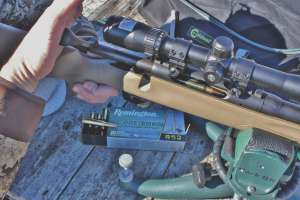
The .22 Long Rifle rounds likely are the most popular, for hunting and targets, with varieties of each for bullet design (solid, hollow point) and a few grain sizes. Federal Premium, for example offers the .22 LR in 25-, 29-, 36-, 38- and 40-grain in different bullet styles for hunting, competition, training and self-defense. The latter category has grown a bit the last few years, too, with improved ammunition for those who desire to carry something smaller with some pop. Winchester, Aguila, CCI, Lapua and others also offer a variety of options.
Accessories and gear for hunters, target shooters and competitors are, as usual, also a great way to increase sales. Along with the rifle, ammunition and perhaps a scope or red-dot, small-game hunters typically will consider other items. Extra magazines are good to have, where legal, to avoid time reloading the small rounds with cold fingers in the field. A good game vest for rabbits or squirrels and gear is a plus. A sling, of course. Targets and bench rests, such as from MTM Case-Gard, are super items to suggest. Getting dialed in at the range is a must before trying to knock a bushytail from an oak or hickory tree. MTM Case-Gard also offers a wide range of storage boxes for home or in the field, too.
Don’t forget about cleaning supplies for the notoriously dirty .22 ammo, either. A good supply of Ballistol, Hoppes No. 9 or other solvents, rods, patches and other items will help shooters remove lead and copper fouling. Target or competition shooters may be more keen on cleaning than hunters, who often don’t think about it until it’s too late. Suggest these cleaning products to buyers so they can be more efficient with fewer problems in the field. Jammed cartridges aren’t fun to mess with if bushytails are dancing in the treetops.
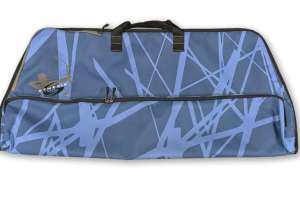
Gun cases should be in the mix, too. Some states require rifles to be cased during transport. It’s a good idea to have one, anyway, to prevent dings to the rifle or scope. Hard cases, such as the Diverge rifle case from Plano, can handle rifles up to 49 inches with internal padding and locks. Zippered soft cases are good sellers, too, whether budget-friendly or more expensive.

Outfitted for Success
Our sweaty August opening weekend of squirrel season ended successfully with a bevy of bushytails in hand, thanks to patience and some crack shooting. Of course, there were misses, which were entirely the fault of sudden gusts of wind, unseen limbs and squirrels jumping the shot instead of operator error.
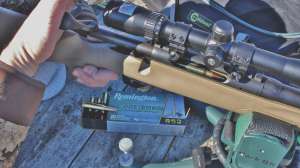
Our crew was outfitted with the CZ Firearms 457 American Synthetic and 457 Pro-Varmint rifles, both bolt-action in .22 or .17 HMR. Available with wood or synthetic stocks, they performed flawlessly. The .22 rifles were fitted with Silencer Central Banish titanium suppressors, which added a smidge of weight but didn’t affect the rifle’s balance or performance. It’s been years since I shot a suppressed .22 and I’d forgotten how pleasant it was to do so at the range and in the woods. With the greatly reduced time to secure a federal tax stamp for the suppressor, and possibly the ultimate elimination of the stamp requirement, more hunters likely will be adding these to rifles in the coming years.
Leupold scopes and Timney Triggers were installed on the rifles, as well, the latter an easy change that takes only moments. Timney has been making triggers since 1946 and doesn’t make anything else. The focus is on precision-machined triggers for a wide variety of rifles for different uses, from hunting to competition. Factory triggers work, of course, but an upgrade is a nice touch if you want something different, such as a different trigger design or perhaps easier ability to set the pull weight. The one for the CZ 457 can be set at 10 ounces or 1, 1.5 or 2 pounds.
We laughed and sweated, swatted skeeters, flicked a few ticks trying to inch their way up our boots and pants, fortunately saw no snakes, and exchanged texts with photos of squirrels taking a .22 nap. Our camp of hunters ranged in age from late 20s to 50s, with one eager grade-schooler ready to hunt every waking moment. Like him, we enjoyed the renewal of hunting season with rimfire rifles, a throwback to yesteryear that shouldn’t be overlooked today. Rimfires still matter, in your store and in the field.