
For backcountry adventurers and hunters, weight matters.
Everything they bring in has to also come out, and sometimes with the addition of a harvested animal. A pound at the bottom of the mountain can feel like three or four when they’re halfway up. Because of this, serious hunters who hike miles to the place they START hunting weigh the pros and cons of everything they take with them. Some take less water and plan to fill their bottles from known springs and streams. Dehydrated, calorie-dense food fills their packs. Their outerwear is their shelter from the elements.
A 10- or 11-pound rifle just doesn’t fit in this hunting scenario.
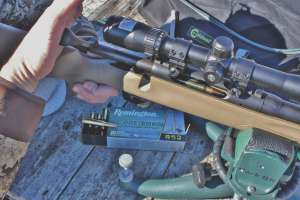
When it comes to rifles built for serious backcountry hunting, the Christensen Arms Ridgeline FFT is the future of backcountry hunting. It’s lightweight, incredibly accurate, and packed with technology that makes it more than just a “pretty face” in the world of high-end bolt guns. If you’re a hunter who values shaving off ounces without compromising performance, this rifle should definitely be on your radar.
Giving the FFT the “Once Over”
The first thing you’ll notice about the Ridgeline FFT is just how light it is. Thanks to Christensen’s proprietary Flash Forged Technology — hence the FFT in the name — the rifle’s stock is crafted from an ultralight carbon fiber monocoque.
Don’t feel bad if you aren’t familiar with this term — I had to look it up, too. What this means is the structure is one solid piece that is also structurally load-bearing with no need for interior supports, which helps the FFT tip the scales at just over 5 pounds in most configurations. Despite how featherlight it feels in the hands, the FFT manages to be strong and rigid. That’s not easy to pull off, but Christensen has a solid track record when it comes to carbon fiber rifle builds, and this one doesn’t disappoint.
The barrel on the FFT also uses carbon fiber in a big way. It starts with a 416 stainless steel core that’s button-rifled and hand-lapped for precision, then wrapped in aerospace-grade carbon to keep the barrel weight down and the heat dispersion up. That carbon wrap isn’t just there for show — on long hikes or multi-shot sessions, it does an impressive job of managing temperature and maintaining accuracy. The muzzle is also threaded and comes with a stainless side-baffle brake that works well to reduce recoil without blasting your ears off (though you’ll still want ear protection, of course!).
What’s really cool is how this rifle just feels like it was made for mountain hunting. It balances well. It shoulders naturally, and it’s easy to carry all day. Even with a scope and sling mounted, the whole setup stays comfortably in that sub-seven-pound sweet spot that most hunters are looking for.
But Does It SHOOT?
Let’s talk a bit about performance, because the FFT is not just light for the sake of being light — it’s purpose-built to be a shooter, too.
Christensen guarantees all of their rifles to sub-MOA accuracy, and the Ridgeline FFT lives up to that promise. The TriggerTech trigger is adjustable, and the spiral-fluted bolt cycles smoothly with a nice, tactile and smooth feel. Whether you’re lining up a 100-yard shot across a Northwoods clearing at a whitetail or reaching out to 400+ yards on a Western mule deer, the Christensen Ridgeline FFT can make it happen.
Another major win for this rifle is its chambering offerings. Christensen offers the Ridgeline FFT in a wide selection of calibers, from flat-shooting varmint rounds like the .22-250 to heavy-hitters like the .300 Win Mag or even the .300 Remington Ultra Mag. Barrel length choice follows the calibers — from a hair over 16 inches all the way to 24 inches. That means no matter what kind of game you’re after, or where, you can find a chambering and overall length that suits your needs.
The finish options are nice, too. You can go with a more classic stainless look, or pick something like Burnt Bronze Cerakote or even Sitka Subalpine camo.
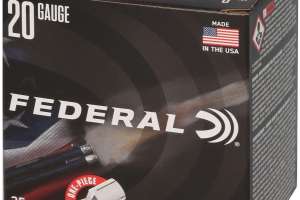
The rifle I was sent was one of the earliest off the line in Federal’s new 7mm Backcountry (7BC) caliber.
What Is a 7BC?
The name says it all.
This round is purpose-built for hunters who demand high-performance ammunition that can deliver magnum-level power without the bulk of oversized rifles.
Designed for rugged terrains and backcountry hunts, this cartridge is tailored for shorter-barreled, suppressed rifles, making it ideal for those long hikes into remote areas where every ounce matters. What sets the 7mm Backcountry apart is Federal’s innovative approach to maximizing ballistic performance in a more compact package. The cartridge utilizes Federal’s proprietary Peak Alloy case construction (the main component of which is steel), which allows it to operate at pressures up to a staggering 80,000 psi — well above traditional pressures for most cartridges in this class. If you’re a handloader, pressure levels like that are terrifying. Fear not. This caliber is safe to shoot, and it’s quickly living up to the hype surrounding its launch.
What does that mean for hunters? It means you get magnum-class velocities and hard-hitting energy out of shorter, more maneuverable rifles — perfect for the hunter who needs to stay nimble but doesn’t want to sacrifice performance at longer ranges.
The engineering behind this round is also impressive. The case is a rimless, bottleneck design with a 0.284-inch bullet diameter, giving it the versatility to handle a wide variety of high-performance projectiles. The overall case length measures 2.417 inches, and it achieves a full cartridge length of 3.34 inches, giving plenty of room to seat longer, high-ballistic-coefficient bullets. This design optimizes the round for long-range hunting and excellent downrange energy retention.
Ballistically, the 7mm Backcountry lives up to its name. One standout factory load is the 175-grain Fusion Tipped bullet. Out of the muzzle, this load clocks an impressive 3,125 feet per second, with energy measuring just under 3,800 ft./lbs. Even at 300 yards, you’re still seeing speeds of around 2,630 fps and more than 2,600 ft./lbs. of energy, ensuring ethical and effective shots on big-game animals like elk, mule deer and even moose at extended distances.
The “4F” Test
Every gun I evaluate gets the “4F” test — Fit, Feel, Function, Fire. I took the Christensen both to the range and out to the desert to stretch things a little beyond my local range’s 200-yard maximum, and though it was windy both times, I was more than impressed with its performance.
I won’t lie — it’s a bit of an odd feeling to shoot a long-range hunting rifle with a barrel that looks like it was the runt of the litter. After I added a Dead Air Nomad suppressor onto the threaded barrel, the method to this madness was seen to be spot on, and, quite frankly, addressed one of the main reasons I hadn’t jumped on the suppressor bandwagon. After all, hiking up an overgrown trail in the predawn darkness with a 24-inch-barreled magnum-caliber rifle fitted with another 8 to 10 inches of branch-grabbing leverage strapped to my back does not sound like my idea of fun.
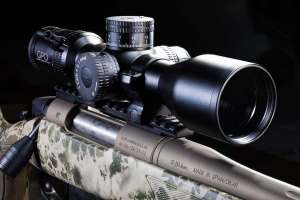
I topped the gun with a Riton lightweight 3:Primal 3-15x scope, because, after all, putting a mega-turreted, 30x, heavy duty 32+ ounce optic on a rifle that weighs a bit over 85 ounces total just seems to not be “right.” The combination put me in the bull’s-eye at Christensen’s sub-MOA guarantee at 100 and rang 8-inch steel at 400 yards every shot. The FFT fit me well, came to shoulder cleanly, and didn’t have one of my biggest pet peeves — a recoil pad that sticks to your shirt or jacket — yet still reduces recoil. The trigger was already set to what I judged to be a bit under 3 pounds, so I chose not to mess with it. Shooting both the included muzzle brake and the Dead Air Nomad suppressor produced recoil levels that were more than manageable.
All these features come at a price though. This rifle isn’t cheap.
With an MSRP starting around $2,049.99 for the stainless model and $3,049.99 for the titanium version, the Ridgeline FFT is in premium rifle territory, albeit at the lower end of the spectrum — but you’re getting premium components, a next-gen carbon stock, a precision barrel, and outstanding build quality. Add a quality optic and you’re looking at $2,700 to $4,500 for a ready-to-hunt package that is custom quality for significantly less money. For hunters who spend days in the field, ounces matter, and performance even more so. If that’s your buyers, the Ridgeline FFT starts making a lot of sense.
All in all, the Ridgeline FFT is a backcountry hunter’s dream. It’s light enough to carry up a mountain, short enough to easily add a suppressor, tough enough to handle any weather conditions, and accurate enough to take game cleanly at long distances.
If your customers’ hunts take them deep into wild country or they’re simply tired of lugging around a heavy rifle, the Ridgeline FFT from Christensen Arms might just be their next upgrade.