
The gun stock is nothing more than a support system for the barrel, action and trigger. Those things will function without a stock, but the results won’t be good. It would be like driving a truck on wheels with no tires, right? Doable, but definitely not ending well. Thus a stock is a vitally important part of a rifle, supportively co-existing with the other components while providing a means of effective shooting.
Gun stocks date to the 1570s, evolving with materials, uses and components. After the realization that projectiles put in front of gunpowder would injure or kill, a better way of firing the new weapon was needed. Metal tubes were affixed to carved pieces of wood and pointed. Someone finally realized that holding this contraption with two hands against a shoulder helped point the barrel better. From there, woodworkers began manufacturing stocks, some became gun-makers, and the military and hunters were beneficiaries.
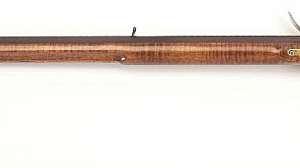
Some of the earliest gun stocks are similar to today’s bird’s head grip models. Others were square and clunky, or quite rounded. At some point the edges became smoother and designs became less harsh. Stock designs vary greatly, however, with different ideas and models throughout Europe. I’ve seen examples of fighting rifles and intricately ceremonial rifles in the British Museum, Tower of London, museums in Vienna and The Met in New York. I’m thankful for those experiences but certainly am glad we have today’s array of options and materials. Some of those old rifle stocks look uncomfortable and heavy.

History and Tradition
My shooting history dates about 55 years to range with my father. I was 5 years old. He helped steady the Winchester Model 77, if my memory is correct, in my little hands. I shot at the target several times with the .22 rifle and loved it. The first shotgun I fired was my dad’s Browning A-5, a heavy duck-killing humpback wearing the patina of his years of use.
The traditional stock on that Winchester was seared into my brain. Of course, nothing else was acceptable as I moved on into my shooting and hunting days. At the time, however, few non-traditional stocks existed and none within my friends or father’s hunting groups. I hunted and shot with that .22 for squirrels, a .243 and .308 for deer, and 20- and 12-gauge pumps for ducks and doves. All had traditional stocks, with the .243 Win sporting a Monte Carlo stock. I still have it and the 12-gauge.
I love traditional stocks, as do tens of thousands of hunters and other shooters in the country. They never will go away. They have changed over the last 150-plus years, more or less, but have not gone away. Stocks on the ’98 Mauser, 1860 Henry, .303 Lee-Enfield, Winchester Model 70 or Win 1873? All still available, still stylish, still workable. The Model 70 Traditional stocks are an industry stalwart, whether it’s in your store, through an online shop, or coming out of a manufacturer’s production line. Traditional stocks can be easily shaped for average body size and rolled off the line. They’re easy to make in wood or synthetic, sized for myriad calibers and shipped out to sell.
Other Options
As usual, we can find the widest array of things on the internet, including gun stocks. A store or pawn shop might have a handful of rifles with traditional and modern stocks. But online, the possibilities are endless to find something for the bench, competition, field or something else.
Traditional stocks fall into the “what you see is what you get” category. Length of pull and comb height are fixed. To make changes to the former, you have to add shims or buttpad, or cut the stock. For the latter, a cheek pad helps with comb height. For more specific modifications, the talents of a gunsmith likely would be needed. Sporting clays shooters often use gunsmiths for their shotgun stocks to get the perfect fit.
Shooters who want something specific yet traditional may opt for a custom manufacturer. Macon Gunstocks in Warsaw, Missouri, does custom work with many woods including American, French and Turkish walnut. Warsaw is considered the gunstock capitol of the world thanks to its long history and access to quality walnut. Macon Gunstocks produces the renowned Fajen and Bishop stocks and has more than 10,000 stocks and forends, along with 35,000 stock blanks. With 100 years of experience, they’ve seen and can make everything from a plain stock with no adjustments to a wildly expensive, top-grade wood stock with multiple adjustment options.
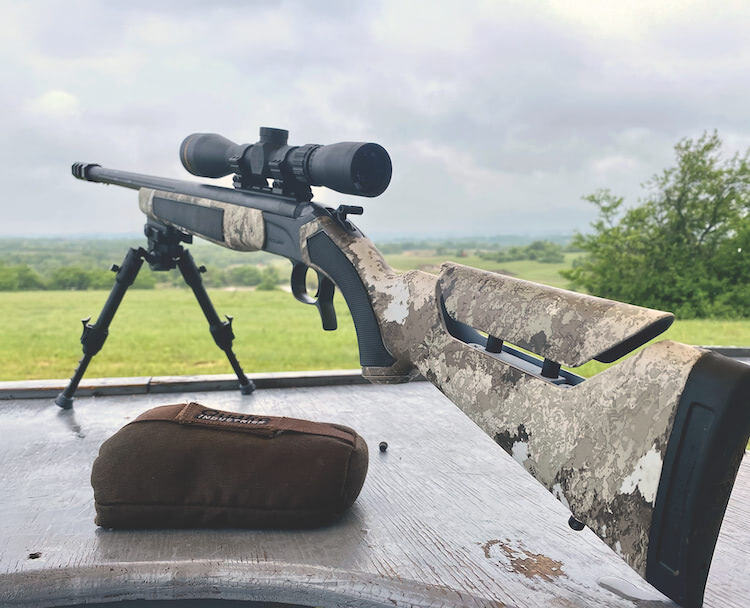
For those who want more options, the world is your oyster. It’s easy to find stocks made from fancy wood, laminates, synthetics, hand-laid composites, skeletonized designs or perhaps a lightweight injection molded model. AG Composites in Alabama, for example, offers fiberglass or hand-laid carbon fiber stocks. Several are traditional, such as the AG Privateer and Sportsman, while others like the Chalk Branch model have more prominent stock and vertical grip. The AG Ferrata stock offers a thumbhole design — yet another option preferred by some hunters.
Aftermarket options are more numerous than clowns at a circus. Hunters and other shooters may not be buying stocks in your store, but they might buy a rifle for a DIY project at home. Or they may need slings, optics and cleaning supplies, and possibly ammunition if they’re not bench-shooting reloaders. Finicky bunch, those bench guys. If they haven’t gotten into reloading yet, they’ll be looking for match ammo that you can supply.
Searching gunstocks online can send you down deep rabbit holes. Grayboe’s Phoenix 2 is designed for long-range hunting and shooting. It has a vertical grip that reduces torque, adjustable length-of-pull and cheek piece, and a universal inlet that fits all Rem 700 clone actions and barrel contours, among dozens of others. Want a zippy .22-250, 6mm or good ol’ .30-06? No problem. Want something unique for the Ruger 10/22 you’re creating? How about the Stocky’s Stinger, with 11 colorful options of a laminated thumbhole, ample Monte Carlo cheekpiece and unique free-floating forend design? Its described as “racy,” which is appropriate.
Need more things to consider? Pop over to boydsgunstocks.com, mcmillanusa.com or stockeysstocks.com and it’s like looking at a galaxy through the Hubble telescope. Thousands of options are available for brands, features, accessories, barrels and even bargains or seconds. Some hunters are persnickety about their stocks and want a camo pattern that matches their bloomers and boots. Others don’t mind if a stock has a scruffy spot or scratch if they can save a few bucks. That stock will be part of a tool for hunting, and hunting isn’t always a trip through the rose garden.
Competition and bench shooters are more specific, to be polite, which is to say they sometimes can be a delightful gumbo of OCD worrywarts with exacting tendencies. Tactical shooters are the same. One shot matters, sometimes more greatly than others. If your goal is to make one shot matter or put five shots into one hole, everything must be wired tight, including the fit of the stock. McMillan’s adjustable tactical A5-7 stock, for example, a sexy workhorse with specific features. The adjustable comb allows for incremental adjustments up to 1.25 inches. Among them are a vertical pistol grip, beaver tail fore design and a 1-inch straight toe set at a 6-degree angle, instead of a butt hook for “precise adjustments when utilizing a rear bag.” That’s a degree of specificity you don’t get in mass production stocks.
I’ve shot some of these multi-adjustable, task-specific stocks and enjoy them. It’s fantastic to be able to dial up a comb to make my cheek feel more comfortable, or change the length of pull a smidge. Vertical grips with a palm swell are delightful, especially with a great trigger. Creating a more stable, comfortable and customized rifle for improved accuracy starts with the stock. But in the end, when I’m planning a trip to the Midwest for whitetails or winter woods for squirrels, my tried-and-true rifles with traditional stocks will be by my side. It’s hard to buck decades of tradition.