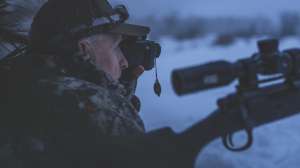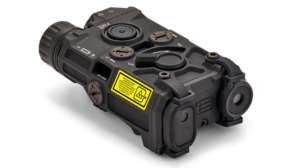

As a dealer serving the hunting market, you know very well that the thermal optics market is hot. There are more companies offering thermals than ever before, prices have generally come down even as the technology within these units has improved, and social media continues to drive ever more interest in night hunting.
Given this popularity, you may be leaning toward offering thermal. Maybe you recently stepped up and now offer a selection of thermal units. Either way, a new line, especially one as high-tech as thermal, comes with a learning curve for you, your staff and your customers. A large part of that educational process includes dispelling myths and misconceptions about thermal.
Let’s face it: While the digital revolution means most everyone carries a tiny computer in their pockets connecting them to the World Wide Web, the sheer amount of accessible information can provide many bits of information but a complete lack of real understanding.
All too often, the result of this scattershot information is confusion and unreal expectations on both sides of the sales counter.
So, let’s take a look at some thermal issues sales staff and customers may have the wrong ideas about.
Tech Differences
We’ve hit this issue before at Hunting Retailer, but one of the key misunderstandings concerning thermals is that many of your customers will equate it with night vision. It’s most definitely not night vision.
As I know firsthand, all kinds of people interested in night hunting will ask me about “night vision.” Yet, as they mention various units and videos they’ve seen online, it’s clear they really mean thermals. Again and again, I find myself explaining the basic differences to people.
Thermal optics are actually not optics at all. Essentially digital cameras, thermals identify electromagnetic radiation, what we non-scientists call “heat.” The unit’s front lens detects this heat; that information runs through a digital sensor or “core,” which projects an image to the rear or ocular lens.
Night-vision units, however, intensify the available light using image intensifier tubes or digital sensors to in effect light up the night. That light can be from the stars or moon, streetlights, or other sources like infrared illumination.
Night vision doesn’t work in complete and utter darkness. It requires some sort of light or infrared help. Most night vision also can’t be used during daylight hours, either, as the daylight will burn out the intensifier tubes.
Thermal can operate during the day. But certain environmental conditions, including high humidity, smoke and very dusty air, can degrade the images seen through a unit and reduce detection range.
New Customer Expectations
Armasight is a top manufacturer of both thermal and night-vision technologies. Steve Lemenov, Armasight’s Senior Director of Marketing, knows all too well the misunderstandings common with first-time thermal buyers.
“These first-timers often assume thermal optics will deliver the same image detail as daylight glass or Gen 3 night vision, which leads to unrealistic expectations,” Lemenov explained. “Many also believe thermal devices can ‘see through’ walls, brush, or obstructions, or detect game miles away under any conditions.”
As noted, thermal units are very good at identifying heat signatures. Yet, a specific unit’s performance is still influenced by range, environmental factors, and the nature of the target itself.
Dennis Lam, Dealer Sales Director for DNT Optics, frequently finds new customers with very unreal expectations about thermal.
“Buyers assume the image will be cinematic, crisp, and high-contrast,” Lam said. “They don’t understand that those videos [they’ve viewed on the Internet] are often recorded in ideal conditions and they’re processed post-capture.”
What these newbies don’t realize, he added, is that “thermal sensors perform differently in humidity, rain, or thermal saturation. Customers expect 4K clarity when actual thermal imagery has texture, noise, and atmospheric interference.”
James Munn, CEO of ATN Corp., agrees. ATN sells a popular thermal optics across a variety of price points. Munn acknowledges that first-time thermal customers often arrive at a retailer with some wildly wrong ideas about thermal. And he knows why.
“The biggest misconception is that thermal works like movie-style night vision or can ‘see through walls,'" Munn notes. “It doesn’t — thermal detects heat, not light. With ATN’s Gen 6 platform, the advantage is the ability to detect living targets and movement in total darkness or challenging conditions where traditional optics simply can’t perform.”
Numbers Game?
New buyers can get wrapped up in numbers and will often equate thermal resolution to total performance. So, they may well assume that a thermal with a 640 sensor is automatically twice as good as a 384 thermal.
“They rarely understand that NETD drives real-world clarity, and that lens quality and software pipelines can outperform higher-resolution sensors,” Lam noted. “The reality is a 384 thermal with strong processing can beat a poorly tuned 640.”
NETD refers to Noise Equivalent Temperature Difference. The lower the NETD rating, the better the thermal is at detecting smaller temperature variations. For example, a thermal scope with a very low NETD will not only spot that hog but will show different intensities of color shades for the hotter parts of the hog. In this example, the center of the hog will be much brighter than the cooler tail or ears.
Sales Staff Responsibilities
“Sales staff can add tremendous value by setting clear, accurate expectations early in the conversation,” Armasight’s Lemenov said. “That means explaining what thermal does exceptionally well: detecting heat, tracking movement, enhancing situational awareness and clarifying where limitations exist.”
He continued, “Demonstrations, comparison imagery, and simple explanations about sensor resolution and lens size go a long way. Staff should guide customers toward optics built for their actual use cases rather than letting them over- or under-buy based on misconceptions.”
DNT’s Lam thought that sales staff should acknowledge some of these overblown expectations first-time thermal buyers often have and then work to correct.
“Explain that online videos are taken in ideal conditions, while thermal performance varies with humidity, terrain, and temperature differential,” Lam said. “Teach detection, recognition, and identification as a simple decision model. Detection: ‘You’ll see something is there.’ Recognition: ‘You’ll know what type of animal it is.’ Identification: ‘You’ll know exactly what it is.’”
He strongly suggested that sales ask targeted questions, like, “What distances do you typically engage?” “How humid is your area and what terrain do you hunt?” “Are you scanning with a handheld?”
On Your Own?
As a retailer, you might think that once these pricey thermal units are on your shelves, you are all by your lonesome. Not true! Many thermal companies provide their dealers with a great deal of help.
“Having a solid understanding of the technology’s fundamentals is essential to selling it,” said Lemenov. “While you may not need to be an expert in every intricate detail (that’s what we’re here for!), having a general knowledge of how the technology operates and the advantages it offers customers can significantly enhance your sales pitch.”
To help educate dealers and their customers, Armasight launched Thermal University (armasight.com/armasight-university/), which offers numerous articles explaining thermal technology, plus examinations of individual thermal units, their capabilities and specifications.
(As Armasight manufacturers night vision, it also offers the companion website, Night Vision University armasight.com/armasight-university/.)
“Our goal is to demystify thermal technology and give retailers confidence in discussing features, use cases, and performance differences,” said Lemenov. “When retail staff understand the value behind each product type and or category, they’re better equipped to guide customers and close sales.”
In addition, Armasight supplies its dealers with in-store sales training, plus product literature and display stands. The company and its dealers follow a MAP policy, and Armasight does co-op advertising with its larger dealers.
PARD USA is there for its dealers, too. In 2023, PARD introduced a series of informational videos on topics such as the difference between NV & Thermal, and Optical versus Digital Zooms and many more related tech topics at pard.com/support/video-collection/.
PARD didn’t stop with only digital help. The company also partnered with a 30-person national rep group to support dealer-level needs, including in-store education of staff and consumers.
Pulsar certainly provides in-store education and many other resources for its retailers. However, as Reese said, “Hands-on experience is the best teacher. The best way to make thermal sales is to get a thermal device in your hands and use it.”
ATN’s Munn emphasizes the real-world applications of thermal and encourages sales associates not to treat thermal like just another piece of technology. “Retailers are most successful when they present thermal as a real-world capability rather than a piece of tech,” he says. “ATN Gen 6 systems help users quickly locate heat signatures in environments where visibility is limited. When customers understand that thermal improves detection and awareness in the field, the value becomes clear.”
IRAY’s Burge completely agrees.
“Selling thermal is all about education, by sales staff first becoming familiar with thermal themselves and actually going out and using the technology,” Burge stated. “I would venture a guess that staff members who have personally used thermal technology are 10 times more likely to sell a thermal to an end user than their counterparts who have never looked through one outside of a store setting.”
Too Pricey?
One common fear retailers have is that the thermal units are too expensive to provide steady product turnover. And who wants to invest thousands of dollars to make the occasional sale?
“We hear it frequently from retailers, that thermal is too expensive for their area,” Burge admitted. “Yet, and contrary to popular belief, we find out best sales success in the most rural areas. While this may have been true that thermal was too pricey for most customers years ago, thermal technology has shifted in such a way that the average price is lower, and the performance is better. Few industries experience this growth, and it is often compared to the flat-screen televisions.”
Not only have overall thermal prices in general come down in the last five years, but there now exists a definite category of sub-$1,000 thermals that actually work pretty well and are making large inroads with first-time thermal buyers. These units are usually based around 256 sensors and sport relatively small objective lenses. And, no, they don’t have the capabilities of their 384 and 640 sensor “big brothers.” But this writer has used a few of the new sub-$1,000 thermal units and they were perfectly capable of taking on coyotes and feral hogs at 150 yards and under. As one of the reasons for night hunting, after all, is the ability to get much closer to animals than in the daylight, 150 yards will likely encompass the vast majority of night hunting scenarios.
Thermal = Science PhD?
Some customers will definitely feel intimidated by these high-tech thermals and will assume they need a strong science background or degree to effectively use one.
But if a customer can navigate the functions and apps on their cell phone or tablet, he or she can learn and use today’s thermal and night vision units, which are easier to operate than ever before.
True, it wasn’t always this way. At one time, zeroing a thermal scope was often an exercise in extreme acid reflux for this writer. The instructions were confusing when not outright contradictory, the controls difficult to manipulate.
But most of today’s thermals, to use one example, are outfitted with what is basically a one-shot zeroing system. And these systems work with just a few quick adjustments! Meanwhile, menu controls now include turrets that are more intuitive than the hard-to-feel button pads of the past.
Simplification has also come to the other functions, like changing out palettes and reticles to taking video and photos and adjusting image quality.
Having your customers make a few such adjustments at the counter will remove many tech-based fears and can lead to very strong sales.