
Your customer’s primary tools may be an excellent bow and arrows, regular practice, and a mindset for safety and preparedness. But his or her secondary tools and gear — those carried and used in support of bowhunting — deserve thoughtful planning and execution as well.
For you, the retailer, a unique opportunity exists for cross-selling secondary tools such as a knife, flashlight, IFAK, personal beacon and some basic survival gear. All of these can be carried on-person, adding minimal weight in favor of being prepared for most situations or emergencies that may occur in the field, even if the next archery outing is just a simple afternoon shoot. It’s not paranoia to think about the worst that can happen; it’s simple preparation.
Here are five pieces of on-person gear to recommend to your customers and get them started or continuing to think about how to be better prepared for just about anything:
1: Fixed-Blade Knife
Few tools are more basic than a knife. And while your customers may already carry a folding knife or a multitool with some kind of blade, make sure they’ve considered the functionality a fixed-blade knife brings to the field. While a sheathed fixed-blade knife may be almost twice the overall length of a folded knife, the dimensional difference may be negligible compared to the overall increase in the tool’s strength and its speed of deployment.
As needed, help your customers understand terms such as “full tang” and “leverage,” and even what types of metal are most suitable to outdoor usages that may come in bowhunting or other field settings. While some folding knives can be very strong and effective in the field, a full-tang, fixed-blade knife made from certain steels can bring distinct advantages, especially in emergency situations where it serves survival or self-defense.
Moreover, a fixed-blade knife, depending on the sheath, can be carried in a variety of locations on a hunter’s body, and, because there’s nothing else to do other than pull the knife from its sheath, it’s usually deployed much faster than a folder or a blade that’s part of a multitool. Whether these are minor or major concerns may not be fully appreciated until a situation comes to bear. As such, be ready to demonstrate to your customer the various advantages available to him or her with a fixed-blade knife. Demo models, instructional videos and expert testimony can be instructive.

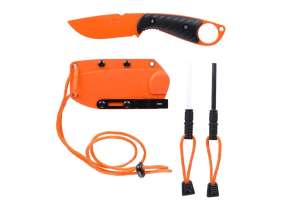
One example of a simple but eminently strong and useful fixed-blade knife is the Benchmade Dacian. Other knives may have the characteristics of the Dacian, but the overall design elements that make it great include its overall length of 7.57 inches, spear point 3.54-inch blade, and molded sheath with belt clip. Its weight is only 3.37 ounces. A Micarta handle with a lanyard hole at the end adds additional utility, enabling the Dacian to be affixed to the end of a pole in order to serve as a spear.
2: Individual First Aid Kit
First aid kits have come a long way and continue to evolve. Many individual first aid kits (or IFAKs) focus on portable gear that helps stop bleeding from traumatic injury. So they may be equipped with a tourniquet, hemostatic gauze, and a compression bandage, among several other useful pieces of first aid equipment.
IFAKs are often identified by a bright red, zippered bag about the size of a brick. The bag is meant to be easily carried (attached to a pack or belt) and quickly identified. Packed neatly and tightly, once opened they usually present their contents in an organized manner, including a pair of nitrile gloves tucked under an elastic band and the other stop-the-bleed gear ready to be deployed as needed. IFAKs may also include some kind of CPR mask and maybe even an instruction card on what to do in the event of some emergencies.
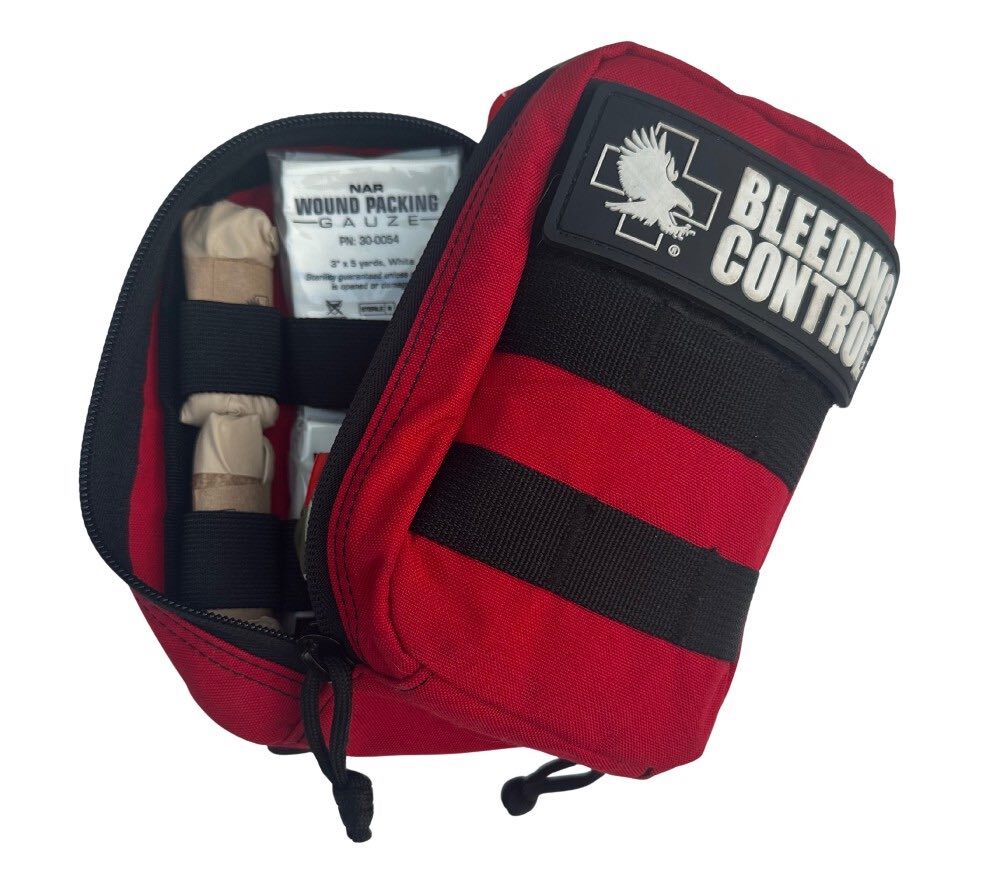
North American Rescue offers several first aid kits that would serve any bowhunter well. The compact Bleeding Control Kit is well-equipped and able to be attached to a belt, backpack, or other gear straps, keeping bleeding control gear at the ready. The kit’s bag also has additional points on which to lash other gear as needed, allowing a user to customize its utility and deployment.
As with any piece of medical gear, professional instruction or certification is recommended in order to know how to properly use it on a person who has been injured.
3: Personal Beacon
While the mobile phones we all carry have amazing communication capabilities, technological advances have made personal beacons more accessible and affordable than ever. Connected via any number of satellites in outer space, a personal beacon allows for tracking and simple communication in the event that a mobile phone isn’t available or is out of commission.
One example of a popular item in this category is Garmin’s InReach Messenger Plus, an “SOS Satellite Communicator” with the ability to share photos and voice messaging. Measuring 3.1 x 2.5 x 0.9 inches, this device is smaller than most bars of soap. And it weighs only 4.1 ounces. The onboard rechargeable lithium ion battery is charged by a USB-C cable and will hold a charge for a year when powered off and, depending on usage, will last dozens if not hundreds of hours. Its simple display is easily readable in sunlight and protected by chemically strengthened glass. The unit is water rated at IPX7 which means it handles “splashes, rain or snow, showering.”
Easily attached to a lanyard or keychain, the InReach offers intuitive controls, including a dedicated SOS button. Set up requires connecting to a mobile device and selecting a paid monthly plan.

Regardless of what type of device your customer carries with them to aid in communication, remind them to leave important information with loved ones or key contacts as to location, timing, and so forth.
4: Tactical Flashlight
Flashlight styles and capabilities abound and run the gamut from inexpensive to exorbitantly priced. I specify “tactical” flashlight for our purposes here and by it I mean a small, pocketable flashlight with a bright, white light, a tough aluminum body, and a thumb on/off switch. Rechargeable batteries hold power for longer than ever, even with regular use, and are easily charged with a USB cable.
The point of a tactical flashlight is not only to cast a bright beam of light in order to see but also, in some cases, to be seen. The bright light may also help ward off a bear or other type of predator. Or, the purposes may be much more mundane. The point is that it can handle a variety of lighting needs while taking up very little space.

One of my favorite tactical flashlights is the Streamlight ProTac 2L-X. Measuring just over 5 inches in length and weighing about 4 ounces, this tactical light is small enough to go anywhere but large enough to carry a powerful, rechargeable battery and protrude just beyond each side of your hand when held. The length is important as it helps put the thumb switch in an easily accessible area (compared to being too short and then a light becomes difficult to handle). A well-designed steel clip allows the light to be fastened to a pocket or a pack. The 500 lumen light will shine up to 180 yards and run for 3.25 hours on high.
Besides the brightness of the light (there’s also a strobe mode available) being able to thwart an attacker or predator, the ProTac 2L-X has crenellations on both ends, making it a more effective strike tool.
5: Survival Gear
Other survival gear your customers should consider having on their person include a space blanket, waterproof matches, paracord, and emergency food and water rations — basically the gear needed to stay warm and dry, start a fire for heat and/or light, lash something down or tie something up, and nourishment/hydration. A firearm may be helpful if the situation demands some kind of personal defense that’s beyond the fixed-blade knife. A second space blanket (or a folded tarp) can serve as a shelter or cover, and a change of clothes or additional layers or outerwear for cold climates may also be a good addition to this kit. It can be carried in a backpack.
Food and water rations may not be part of a customer’s kit for a quick evening of bowhunting but minimally an extra bottle of water and a protein bar may be a wise choice. Some kind of water purification system may be in order as well.
Some survival-minded professionals insist on having and being able to use more analog or primitive gear — in the event that power sources run out or electronics fail. As such, printed maps and compasses and signaling mirrors, high-contrast flags or markers (in order to be seen) and even primitive fire-starting methods may have a place in your customer’s kit.
Final Thoughts
The key is to help your customer know their surroundings (terrain, weather, etc.) and be prepared for a lot of things to go wrong. Every single piece of gear carried should be tested ahead of time to learn how it functions and how to carry it well.
Press your customer on the importance of mindset when it comes to backup or survival situations. Provide content such as reputable online video instructions or offer basic survival training through your store. And rather than thinking about these cross-sell opportunities as one-offs with individual customers, hold an event for customers to attend to learn more, perhaps learning from a trusted expert on his or her experiences in the field and sharing stories about the time they wish they had this or that piece of equipment with them.
Sidebar: How to Carry the Gear
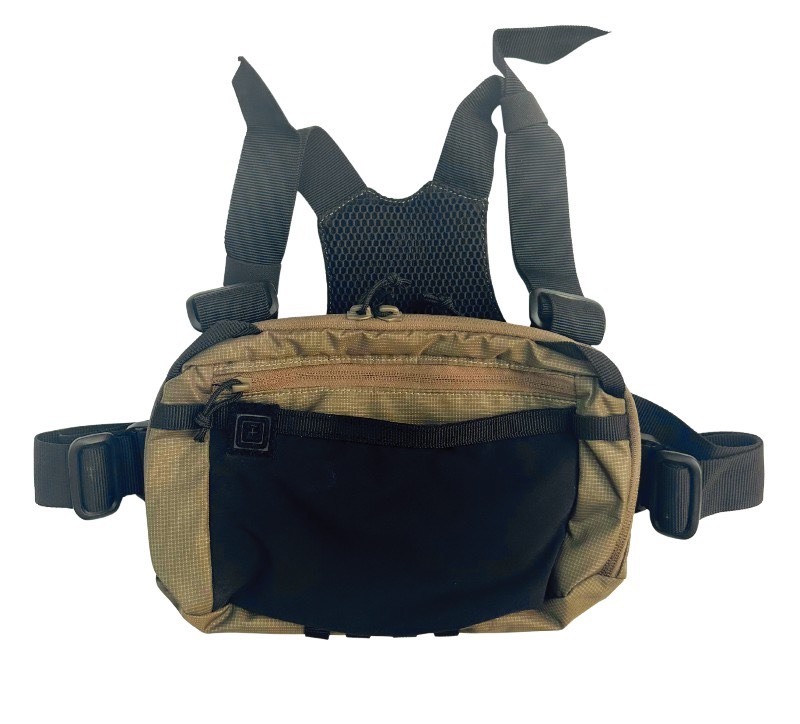
All of the smaller gear mentioned in this article can be carried in pockets or attached to other gear or packs. One way to easily carry most of it would be to use a 5.11 Skyweight Survival Chest Pack or a 5.11 Skyweight Utility Chest Pack — smallish zippered packs that can accommodate a variety of gear, including a concealed pistol, if need be.
The main difference between the two packs is the Utility has two zippered pockets vs. the Survival’s one zippered pocket. Choose the Utility for more storage space and options, in addition to a concealed firearm; choose the Survival if carrying a concealed firearm is paramount.
Since these packs put everything on the wearer’s chest, generally it’s out of the way for drawing a bow but immediately accessible if needed. The packs are secure and comfortable, allowing for multiple attachment points on the exterior of the pack (via the MOLLE webbing or sewn-in loops) and plenty of internal organization. Note: If a chest pack isn’t ideal because a bowhunter wants to wear a binocular on a harness, then these packs can be easily attached to a 5.11 Skyweight Hip Belt.
Sidebar: Selling Strategies
You don’t have to push all this gear on a customer at once, but give some thought to how to introduce him or her to it, perhaps in tiered recommendations. The tiers can reflect variations of situational preparedness customized to their style of hunting — e.g., stand hunting vs. stalking or still hunting. Or the tiers can reflect levels of gear quality available at various price points. In any case, take the time to learn about each bowhunter’s needs and preferences, and how your store can support them.
This is the opportunity to really show your customer you care about them and their welfare — by helping them think clearly about their own. Make sure to have the posture of a trusted advisor as opposed to a high-pressure salesperson. This is where a shared love of bowhunting creates a genuine and natural bond where both seller and customer are pursuing a common goal.
Even if your customer doesn’t buy anything after an initial discussion about on-person gear like this, be sure to ask them about their bowhunting experience and simply keep the conversation going, showing genuine interest in their goals and development.