
When you sell something to your customer, you own a significant part of that transaction. You are now the touchpoint for that product with the customer. Even though most brands now include in packaging some sort of “do not return to retailer, contact brand directly” customer service messaging, the reality is, people still like talking to people.
So, when a customer has questions or issues with a product you sold them, it certainly helps if you are able to answer questions. Even better, your employees talked through some of the potential issues before the purchase.
This is especially true with technology products, and no technology product is coming off the shelves like cellular trail cameras. While not difficult to use, they are a nuanced product, with some considerations that standard trail cameras don’t have.
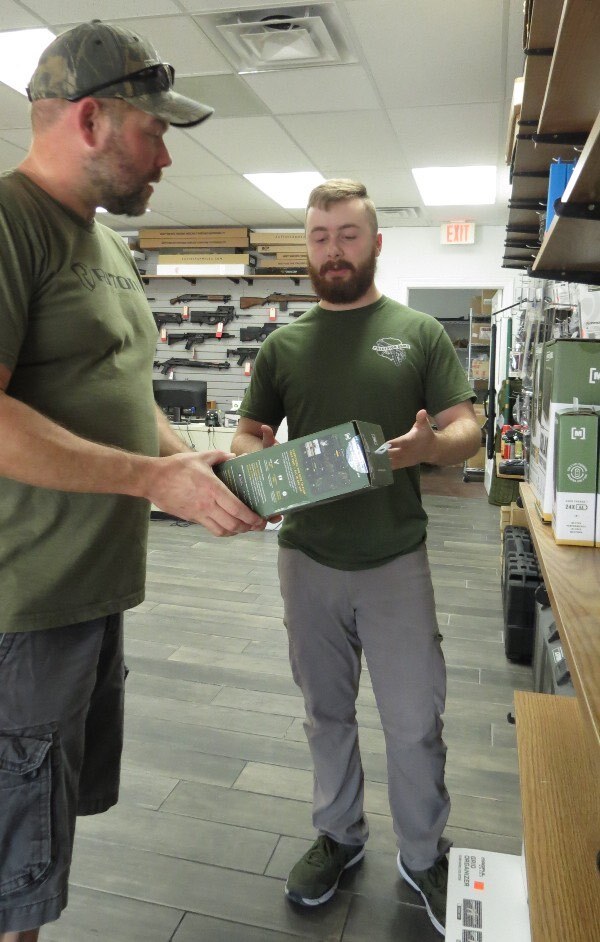
Send your customers out the door more informed, and less likely to return upset or with issues, by turning your staff into a cellular trail camera support team.
Understand the Plans
Cellular trail cameras need a transmission plan. The photos being taken are only worthwhile if they are sent to the hunter. To do that, they need a transmission plan.
While most brands have some version of an unlimited plan, the details from there get varied in a hurry. There are month-to-month or annual options, metered-use plans, there are even a few brands that do offer free options, but these typically come with very low photo thresholds that leave the hunter with days or weeks of photos not being sent.
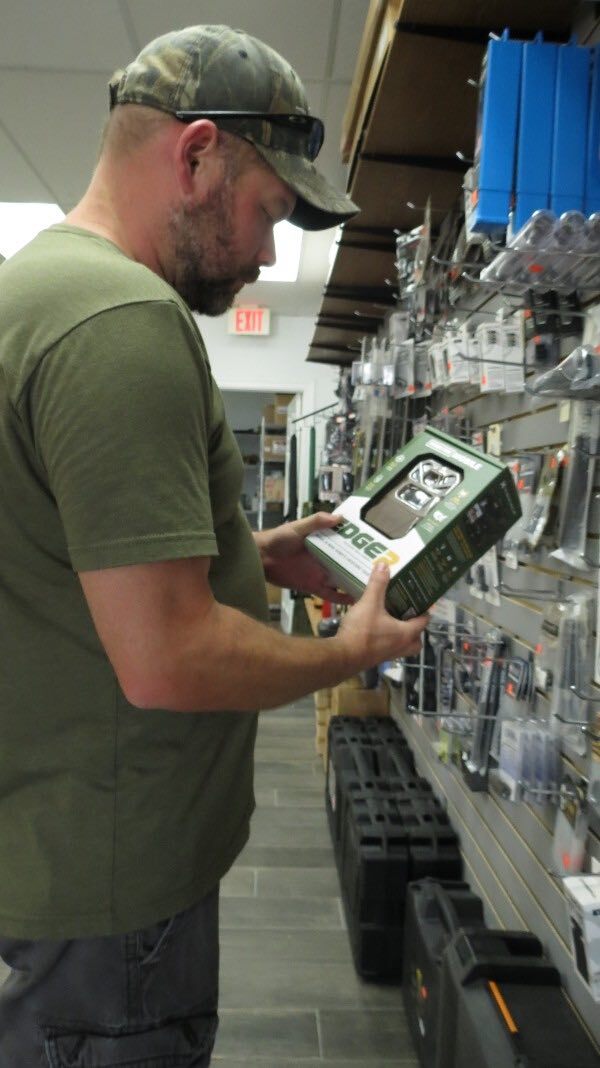
In many cases, the transmission plan is going to be the biggest expense associated with a cellular trail camera, not the camera itself. When you sell that camera, you are best off selling the plan or plan options at the same time.
Making the plan options part of the purchase process prevents the customer from feeling like they weren’t really dealt with fairly. Reasonable expectations are critical to long-term relationships with your customers. I’ve talked to too many hunters who were told inaccurate information about what the plan options were that came with their camera, only for them to regret that camera purchase.
That may seem like a small deal, but what do you think that did to the confidence that customer had in the store that sold them that camera?
This is one of those product categories where you are probably better off having one or two product lines rather than five or six.
Of course, we want the customers to have options, but keeping information straight on too many kinds of cameras and plans just isn’t realistic. Better to avoid being an inch deep and mile wide. Pick a couple cell cam brands, invest in understanding all the details around those brands, and make your employees a resource to the customer base for those brands.
Don’t forget that brands often have resources for you and your store. Point-of-purchase displays for camera plans are very often available if you ask for them. Don’t rely on your employees remembering all the details, get some POP help to keep the details fresh in their minds.
Getting the customer as many of the details about the true expense of running cellular trail cameras will make for a much happier long-term relationship.
Connectivity Considerations
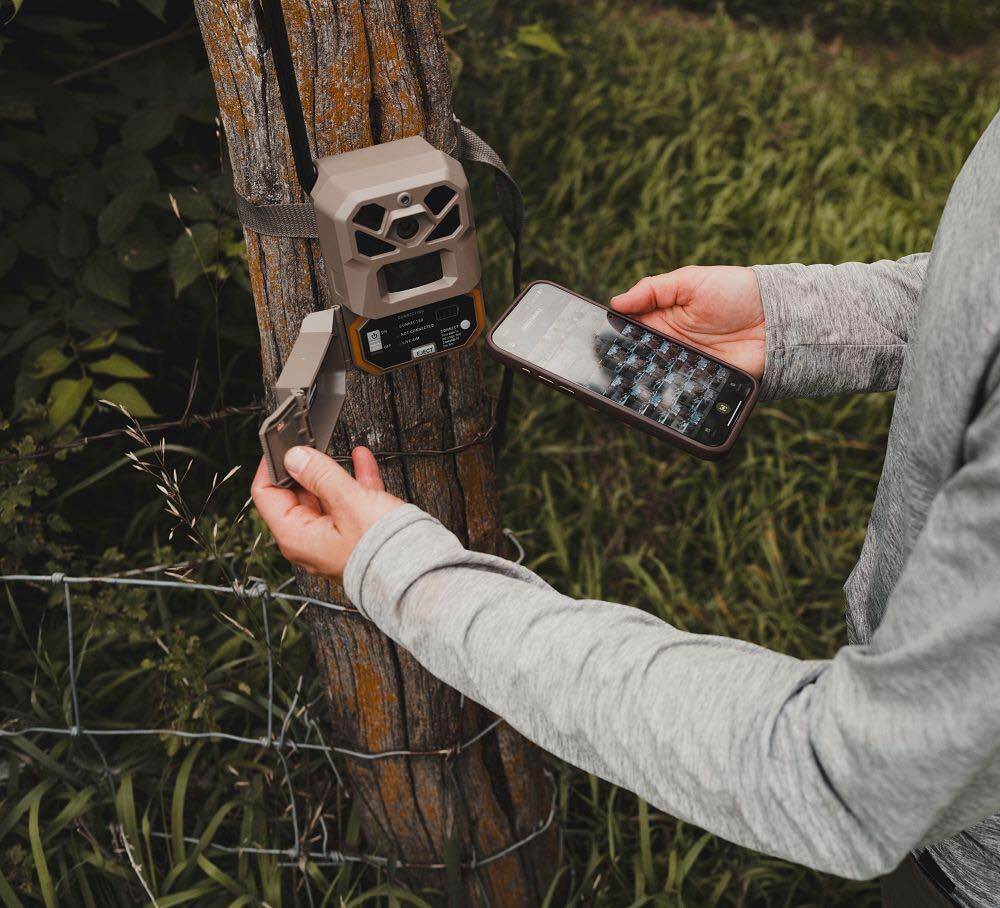
Regardless of the plan selected, a cellular camera can’t send photos if it doesn’t have a reliable connection to the cellular network. And no matter what anyone says, camera brands are at the mercy of the cellular provider networks. There is no magic solution to improving connectivity, and no brand has any magic key that unlocks towers that don’t exist.
Some basic understanding of connectivity best practices, and making sure the customer understands them, is the best path towards successful use and happy users.
The first thing to make sure customers understand is that a cellular signal is not static. We’ve all dropped calls in places we’ve never had signal issues, or had trouble sending a text from a spot that we’ve sent hundreds before.
Cellular signal wavers. You may lose signal and need to access a camera to troubleshoot. If a customer isn’t comfortable sneaking in during the right conditions to work on a camera, or ok leaving it out and not getting photos, the camera shouldn’t be there.
Similarly, signal can vary in a tiny area. You can’t be tied to one tree where the camera has to be. You just may not get a good signal in that location. The camera may need to be moved only 20 or 50 feet to get a better signal, but the user has to be willing to do so. Make sure the customer understands that fact.
Too many people think cellular trail cameras are a magic bullet, meant to be put in the woods and never touched for months on end. That can happen, but it shouldn’t be expected. Technology isn’t that reliable. If they get that kind of performance, great. For all involved, though, it’s far better to explain the potential pitfalls, and plan for those. That way, if something does get sideways, nobody can be too upset about it.
Power Considerations
Have you ever watched how quickly your cell phone battery dies? We’re always plugging them in. Cellular trail cameras are, in a way, a cellular phone. Understanding how cell phones work can help you plan for the way cellular trail cameras use batteries as well.
Nothing will impact battery life of a cellular trail camera like sub-par cellular signal. Logically, that makes sense. We’ve all been in a stand with terrible service, tried to send a text to a friend and been able to watch the battery meter draw down, let alone trying to send a photo!
Now, try to send a batch of 40 photos with a bad signal. The battery life of that camera is not going to be especially impressive.
It’s important to talk to the customer about the variability of battery life to make sure that expectations are realistic. In some instances, it may also be worth addressing the power supply used for the camera, and adding some accessory options for the long-term power solution of the camera.
Battery life is almost impossible to predict. Marketing claims are usually assuming best case scenarios. With signal strength playing such a big role in the details of battery life, it’s a guessing game. Transfer frequency is a factor. Photo versus video mode is a factor. The percentage of photos requiring flash versus daytime photos are a factor.
Battery life is something you would be much better off under-promising and over-delivering than the other way around. It’s tempting, when the sale hangs in the balance, to blurt out that you can get six or eight months of battery life out of a camera. That may be possible sometimes, but once you say it, you create the expectation. Failure to meet that expectation won’t be on the camera, it will be on the sales team member who said it was possible.
General Best Practices
Nothing is more frustrating in a trail camera app than a photo of nothing. Was it a branch moving or did a deer make it off-frame before the camera snapped the photo? There is literally no way to know, and a season’s success could literally hang in the balance.
For some reason, people seem to forget a lot of those basic trail camera principles they’ve heard and used for the last two decades.
Unlimited plans have become far more affordable, but you still don’t want to burn through photos for no reason. If you aren’t able to do unlimited plans for all your cameras, and have to limit some to save money, you literally can’t afford to be sending photos that don’t contain valuable scouting information.
It’s worth asking what kind of plan the customer thinks they will use, and remind them, if it isn’t unlimited, area prep will be critical. Reducing grass and overgrowth that is easily moved in the wind will help cut down on those so-called “false triggers.” Avoiding scrapes, with their overhanging branches, will cut down on branch triggers instead of deer triggers.
When a camera is set on a trail, it should always be at an angle down the trail rather than perpendicular to it. Give the camera time to wake up and capture the photo before the deer moves through the frame area.
In that same vein, trigger speed is something that is often misunderstood. When you see hunters on the internet complaining about a blurry photo at night, you will always see someone say the camera needs a faster trigger speed. No. It doesn’t. You need to understand the physics of photography.
Trigger speed is the time it takes for the motion sensor to wake up and tell the camera to take a photo. Motion blur seen on nighttime photos are a function of the exposure needed to see in the reduced light of an IR flash, and the motion that takes place during that exposure time. That’s the physics of light and motion, and you can’t do anything about it. Quit saying blurry photos are because of trigger speeds. It’s not true.
Invest in Education
Anytime your employees can present themselves as educated, informed, and possessing valuable insight, your shop gains credibility. When you make someone’s life a little bit easier, that is appreciated.
The inverse is also true.
If your shop is passing along incomplete or outright bad information, you’re sowing the seeds of distrust and doubt. It’s unlikely that doubt will remain contained to the product that was misrepresented. That puts the credibility of the entire store in danger. That’s the kind of thing that spreads quickly through a customer base.
Use the resources at your disposal to invest in training for your employees. Get the POP and marketing materials to help convey information quickly and clearly.
Give your employees an opportunity to be the hero to the customer. Solve this problem, without creating another, and they’ll be back to get help next time too.

Sidebar: How Often Should Your Camera Transmit Photos?
This is one of those questions where asking five people can get you six answers. Most people think if you have poor service, then you should reduce the number of times you are trying to send photos out. If you want to maximize battery life that MIGHT be the right choice, but I usually recommend going the other way. The worse the service, the more frequent I send photos. My logic is tied to trying to send smaller batches more often. My priority is getting the photos.
I already know battery life is going to be diminished in an area like that, so I at least want to get photos regularly. And if a transmission is missed because of bad service, do I want to be sending one transmission a day, and have to wait for the camera to try again in 24 hours, or do I want it to try again in four hours? For me, try more often, send smaller batches, and figure out a different solution for power.

Sidebar: Power Accessories — Keeping Cameras Running
One of the best accessories to add to any cellular trail camera sale is some sort of power accessory. The math alone is enough to make the case to customers. With the price of everything skyrocketing, standard AA batteries included, anything that offers longer life will provide value over time.
Most cellular trail cameras have a lithium power option that lasts two or three times a standard set of AA batteries before needing to be recharged. Being able to mix in some rechargeable batteries with standard AA trays can help keep costs down, even if a full set of lithium packs plus a couple extra to allow for easy swapping isn’t in the cards.
Another common option is some sort of solar panel/battery combination. Largely, the days of panels charging a battery, and a battery powering the camera are gone. Many units are available that have the panel and battery all in one unit, reducing wires, bulk, and possibility of damage leading to a battery solution that isn’t working. Rechargeable solutions are going to be much cheaper over time than pack after pack of AA batteries.