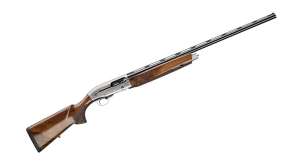

Dove hunting season in most states opens with a real bang at the beginning of September and since shotguns are the implements used to hunt doves, it’s a great time to discuss smoothbores, scatterguns or whatever term one wants to use to describe shotguns.
Before exploring other shotgun-related matters, consider that it is estimated that 16.8 million doves are harvested each year by hunters who shoot an average of five to seven shots per dove.
This means somewhere between 84.0 million and 117.6 million shotshells are shot solely on doves each year.
By comparison, it is estimated that 6 million deer are harvested by hunters each year, which means that the number of deer harvested each year is roughly 36% of the number of doves harvested.
Dove hunting should be considered critical for the entire shooting sports industry because it is a classic entry level-hunt in that youngsters and others often become hunters in the dove fields.
Women represent one of the biggest growth demographics in the shooting sports, and they are represented en masse among dove hunters. Bluntly, dove hunting is a perfect family activity.
In addition to the basic guns and ammo, newcomers to hunting also need a lot more accessories than those who are veteran dove hunters. We’re talking about camo shirts and hats, shell carriers, gun cases, game processing items, etc. It represents a long and profitable list of potential adjunctive sales.
Add all of the other bird-hunting seasons and shotgunning is a big deal in hunting alone, to say nothing of the other ways shotguns are used, which range from target shooting to home and self-defense.
The bottom line is that shotguns are the basic firearm. No other form of firearm is valid for as wide a spectrum of applications as the shotgun, which means that virtually all shooting sports retailers are well advised to be in the shotgun business.
To what degree does a shop need to be involved in shotgunning? Just what that mix of gun types, ammo selection and accessories needs to be depends on the shop’s clientele because there is a huge difference in the gear needed for bird hunting compared to target shooting or defense.
And it is not uncommon for a single shop to have customers who focus on all three applications. Hence, you must pay attention to maximize sales while minimizing stock that doesn’t move locally.
For example, hunters typically own one or maybe a couple of shotguns where serious shotgun target shooters have double that number or more. And defensive shotguns are logical for all gun owners, whether they are active in any of the shotgun sports, or none of the shotgun sports at all.
Some shotgun configurations lend themselves to multiple shooting sports. Sporting clays shotguns fall into this category because they also can make good bird and upland hunting shotguns and are not so thoroughbred that they really are good for only one specific sport, or even one type of event within a sport like skeet guns or trap guns.
Although any shotgun can double as a defensive arm, the longer-barreled hunting and target guns are not very handy in defensive mode, and they often are choked tighter than is desired in a defensive arm.
Defensive shotguns also are used for the various tactical kinds of sports, including 3 Gun. Their primary configurations include relatively short barrels and higher capacity magazines (most are pumps or semi-autos).
Another delicious thing about defensive shotguns is that they assume the use of accessories, ranging from sights (often red-dots) to extra shell carriers attached to the gun itself. The gadget and goodie factor is off the charts when it comes to defensive shotguns.
Regardless of the level of shotgun sales, customers don’t purchase shotguns nearly as often as they buy ammo to feed their shotguns. And there is good reason to stock a wide variety of ammo for shotguns because those customers who use them regularly go through a lot of ammo.
The most popular gauges are 12 and 20, but there are enough shotguns in other gauges to make it logical to stock the other gauges, and especially the smaller bores like 28-gauge and .410-bore.
Most dove hunting is done with the lower priced promotional ammo, while serious target shooters and those who have shotguns for defense are better candidates for higher-priced premium loads. For serious competitors, it can make the difference between winning and losing, while for home and self defenders, it can be a matter of life and death. This is serious stuff.
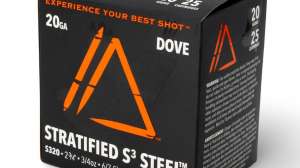
Beyond the normal considerations, recent shotshell development coupled with hunting regulations has resulted in a mushrooming of sales of quite expensive ammunition.
Typical nontoxic loads have been more expensive than lead loads, and the differential really took off when tungsten super shot came to market. At as much as several dollars per shot, it is expensive, yet amazingly effective. For example, the use of .410-bore shotguns with TSS has been taking over the wild turkey scene.
Because shotguns represent the universal firearm, sales of these guns and everything related to them can be huge, consistent and profitable.
It is possible to imagine that an individual shop is doing well on the shotgun front if overall product category sales are good and/or that they are steady year over year. That’s nice. But is that level of sales as big and vast as it might be if more focus was put on shotguns? Could sales levels be bigger – perhaps much bigger?
This is something to think about because this category represents a wider and deeper biomass of products than any other category in all of the shooting sports.
It is logical for all gun owners to have at least one shotgun. And, once they have their shotguns, they need to feed and care for them, which means repeated sales of ammo and accessories. It can be a total win-win situation for individual shops. Or not.
It all depends on focus because the potential is there and will be there as long as there is individual ownership of firearms.