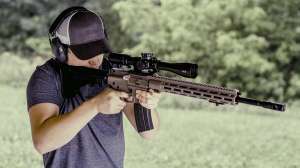
Pick up a modern competition rifle and the first thing most people notice is how much of it moves. The stock slides. The cheek piece rises and shifts. The buttpad goes up, down, and sometimes sideways. Rails run the length of the fore-end, inviting things to be bolted on, slid forward, or removed altogether. To someone new to precision rifles, it can look excessive — almost as if the rifle were unfinished.
That reaction is understandable. Traditional sporting rifles taught generations of shooters that a rifle was a fixed object. You learned to adapt yourself to it. Competition rifles reverse that relationship. They assume the shooter is the constant and the rifle is the variable. Every adjustment removes one more reason for the shooter to compensate, strain, or guess.
For a gun salesperson, this matters more than knowing brand names or calibers. Customers looking at competition rifles are not just buying accuracy. They are buying repeatability. Understanding what adjusts — and why — lets you explain how a rifle supports consistent performance instead of simply listing features.
The Stock: Where Consistency Begins
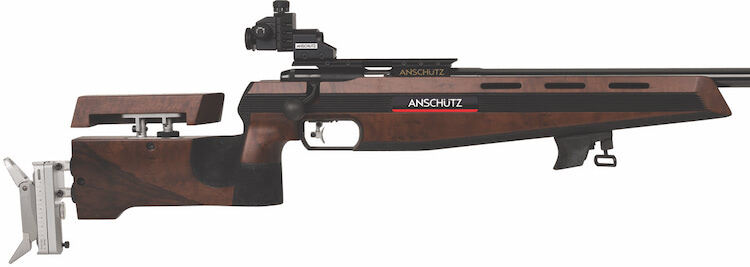
The stock is the primary interface between shooter and rifle. Its adjustments are often described in terms of comfort, but comfort is not the real goal. The real goal is alignment — bone, muscle, eye, and recoil all working in predictable ways.
Length of Pull
Length of pull is the distance from the trigger face to the rear of the buttpad. It is the most basic adjustment, and the one that quietly affects everything else.
When length of pull is correct, the shooter does not reach for the trigger or collapse into the stock. The firing hand falls naturally into position. The shoulder pocket accepts the buttpad without conscious effort. Recoil travels straight back instead of climbing or torquing.
When it is wrong, shooters compensate without realizing it. Too short, and they crowd the scope and absorb recoil awkwardly. Too long, and they stretch forward, losing leverage and consistency. No amount of technique fixes this reliably.
Competition rifles address this with spacers, threaded butt assemblies, or tool-less extension systems. The important point for sales is not just that adjustment exists, but that it is repeatable. Shooters can remove the stock for transport or change clothing layers and return to the same setting without guesswork.
Cheek Riser Height
Cheek riser adjustment governs eye alignment, not cheek pressure. The objective is simple: When the shooter mounts the rifle, the eye should already be centered behind the optic.
A properly adjusted cheek riser allows a neutral head position. The neck is relaxed. The jaw is not forced down or lifted up. The shooter does not hunt for the sight picture. Close the eyes, mount the rifle, open them — and the reticle is there.
Many higher-end stocks add lateral adjustment to the cheek piece. Faces are not symmetrical, and eye dominance does not always align perfectly with the centerline of the stock. This adjustment matters most to experienced shooters, but once demonstrated, its value is easy to see.
Buttpad Height and Cant
Buttpad adjustments are often misunderstood as comfort features. In reality, they are recoil management tools.
Vertical adjustment allows the buttpad to sit squarely in the shoulder pocket. If it is too high or too low, recoil energy does not travel straight back and the rifle lifts or twists under fire. Cant adjustment rotates the buttpad to match the angle of the shooter’s shoulder, especially important in prone or barricade positions where the body is angled relative to the rifle.
When these adjustments are correct, the rifle returns from recoil predictably. When they are not, the shooter must rebuild position after every shot.
Grip Angle and Position
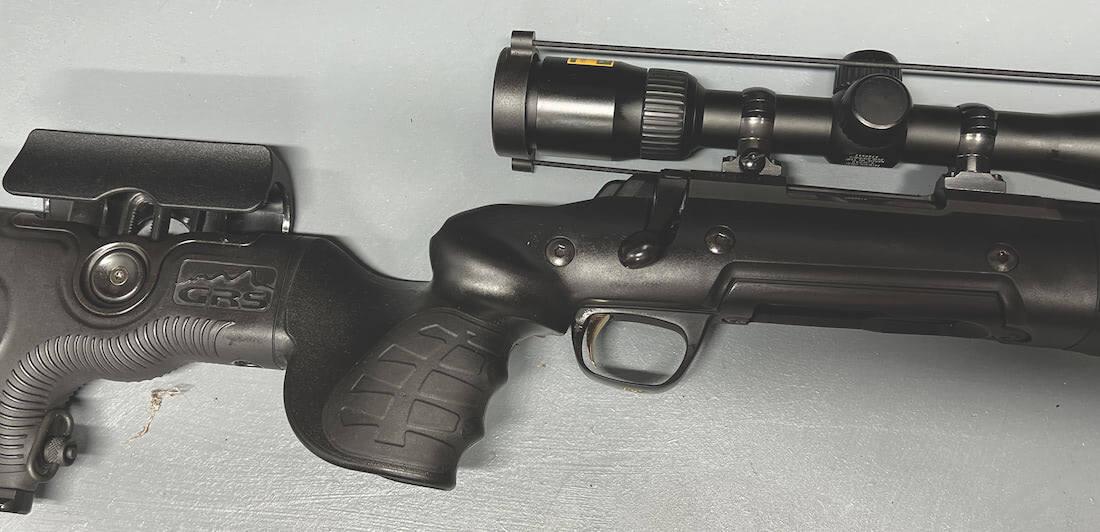
Grip geometry affects wrist tension and trigger control. Modern competition rifles often use more vertical grips than traditional hunting rifles. This keeps the trigger finger moving straight to the rear rather than pulling at an angle.
Some systems allow the grip to move fore and aft independently of length of pull. This lets shooters fine-tune trigger reach without disturbing shoulder position. It is a small adjustment with outsized benefits for shooters with unusually large or small hands.
The Fore-End: How the Rifle Meets the World
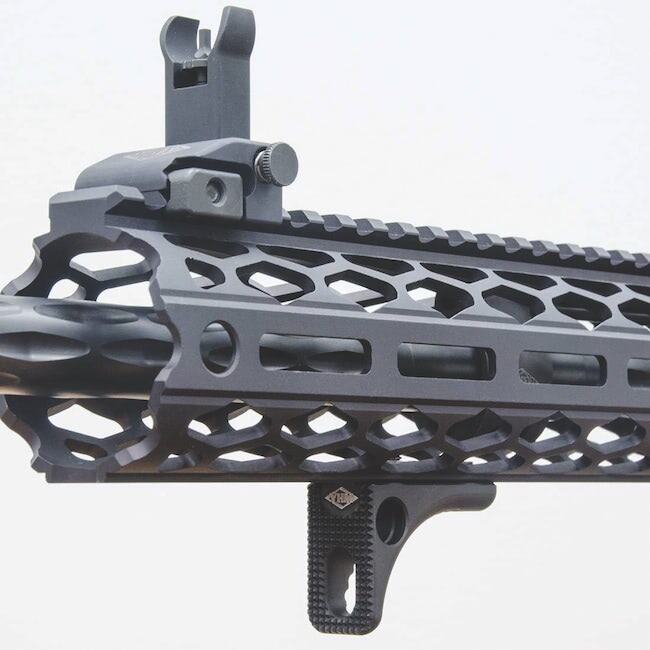
If the stock defines the shooter’s relationship to the rifle, the fore-end defines the rifle’s relationship to support.
Accessory Rails and Positioning
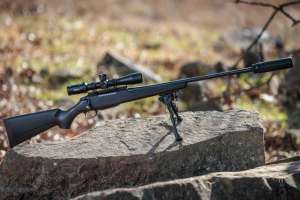
Extended ARCA or Picatinny rails have become standard on competition rifles. These rails are not adjustable in themselves, but they enable adjustment through placement.
Moving a bipod forward increases stability in prone shooting. Moving it rearward can help on steep angles or awkward barricades. Tripod clamps, hand stops, and barricade blocks can all be positioned where they best suit the stage or terrain.
From a sales standpoint, it helps to frame rail length as flexibility under pressure. The shooter does not have to compromise on one position. They can adapt quickly without tools.
Barricade Stops
Barricade stops provide a consistent surface for loading the rifle against an obstacle. Adjustable designs allow shooters to tune how aggressively the rifle is driven into cover.
This reduces muscle tension and fatigue, particularly in positional disciplines where the rifle must be supported on imperfect surfaces. The stop turns improvised support into something closer to a repeatable system.
Weight Distribution
Many competition stocks allow internal or external weights to be added or repositioned. This is not about making the rifle heavier for its own sake. It is about balance.
Forward weight dampens muzzle rise and smooths recoil in prone shooting. Neutral balance helps when transitioning between positions. Rearward weight can help shooters who struggle to maintain consistent rear support.
There is no universal “best” configuration. The value lies in the ability to experiment without permanent modification.
Trigger Adjustments: Managing the Shot
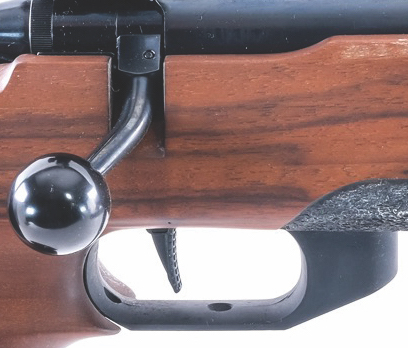
Triggers are often where shooters focus first, and sometimes where discussions become overly theoretical.
Trigger Pull Weight
Adjustable pull weight allows shooters to reduce the force required to fire the shot, minimizing movement at the moment of ignition. Competition triggers usually offer a safe adjustment range rather than extremes.
Lighter is not automatically better. Cold weather, stress, and match conditions all influence how a trigger feels. A consistent, predictable trigger at a moderate weight outperforms an unreliable light trigger every time.
Sear Engagement
Sear engagement affects how the trigger breaks. Reduced engagement produces a cleaner, crisper break but narrows safety margins. Well-designed competition triggers allow refinement without sacrificing reliability.
Overtravel and Reset
Overtravel adjustment limits unnecessary movement after the shot breaks. Reset adjustment shortens the distance required for the trigger to reset. Together, they help shooters maintain position and rhythm without encouraging rushed shots.
Optics Interface and Alignment
Although optics are separate components, the rifle must support them properly.
Built-in scope rail cant — typically 20 or 30 MOA — preserves internal elevation adjustment for long-range shooting. Eye relief positioning ensures safe recoil clearance and consistent head position. Integrated bubble levels help prevent cant-induced horizontal error, which becomes increasingly significant as distance increases.
These are not accessories added for convenience. They are structural considerations for rifles designed to shoot far and predictably.
Why it Matters at the Counter
Most customers will never read a technical manual cover to cover. Many will never attend formal training. What they hear at the counter may be the only explanation they receive about why a competition rifle is designed the way it is.
Your role is not to overwhelm them with options, but to explain purpose. Adjustability exists to reduce compensation, not to complicate shooting. Every moving part is there to remove a variable the shooter would otherwise have to manage subconsciously.
When you can explain why something adjusts, customers stop seeing complexity and start seeing intention. That understanding builds confidence — not just in the rifle, but in the advice behind it.
Keep learning. Pick a feature. Ask why it exists. Those questions are what turn features into useful knowledge.