
PARD Global was founded in 2017 with a focus on advanced thermal and digital night-vision optics for shooting sports. After several years of rapid growth internationally, the company launched PARD USA with a dedicated sales office and distribution hub in Reno, Nevada. Since then, PARD USA has been focused on partnering with major distributors to support American dealers and bring its products directly to the U.S. market.
Shooting Sports Retailer caught up with John Aho, PARD’s director of marketing, to talk about optics manufacturing, the thermal and night vision market, and the company’s newest products.

SSR: Can you give us a brief overview of your product lines?
Aho: We offer a full range of thermal, night vision, and multispectral products, including weapon-mounted optics, clip-ons, monoculars, binoculars, and handheld units. Many of our products are designed for versatility, allowing them to be used in multiple configurations.
SSR: PARD is delivering some very innovative optics. What’s the company philosophy behind research and development?
Aho: Thank you! We pride ourselves on innovation at every level — from the software that powers our devices to the hardware itself. Our goal is to deliver user-friendly, feature-rich products that push the boundaries of what’s possible in this space.
SSR: What separates PARD from competitors in an increasingly crowded market?
Aho: Quality and affordability are always at the front of mind. We work to keep our products competitively priced while offering features that often come at a premium elsewhere. For example, our integrated LRF + ballistic calculator is standard in many models, yet competitors often reserve those features for units priced well above $5,000.
SSR: Are thermal and night vision on the same trajectory, or is thermal taking over?
Aho: For the most part, thermal is king. It’s where we’re seeing the strongest growth and customer demand, though night vision still has its place depending on the application.
SSR: Can you talk a bit about the build and construction of PARD optics?
Aho: Durability and dependability are essential. All our optics carry an IP67 waterproof rating, and construction varies by model to match the intended use. A good example is our new Night Stalker Extreme, which features a rugged design and a tactile coating for extra grip. And of course, all of our products are backed by warranty support for added peace of mind.
SSR: Beyond image clarity, what makes a really good thermal unit?
Aho: Ergonomics and usability. Button placement, menu navigation, and overall weight are critical when every second counts. We focus on making sure our products are intuitive and comfortable to use in the field.
SSR: The Ocelot 640 delivers high-end features at a mid-market price. How is that possible?
Aho: It comes down to our philosophy of bundling premium features into a standard package. The Ocelot 640 includes an integrated LRF with a ballistic calculator, a sharp 800×800 circular display with 100 mm eye relief, a 640×512/12 μm ≤20 mK/50 Hz sensor, and a compact IP67 aluminum housing. Instead of making those features expensive add-ons, we deliver them all-in-one—keeping the MSRP mid-market while offering top-tier performance.

SSR: What does the future of thermal and night vision technology look like?
Aho: Technology is evolving rapidly, and while it’s hard to predict exactly where it will go, we know advancements will continue to raise performance standards across the board. We already have several exciting projects lined up for 2026 and beyond.
SSR: What new products have you most excited for the future?
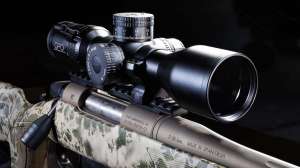
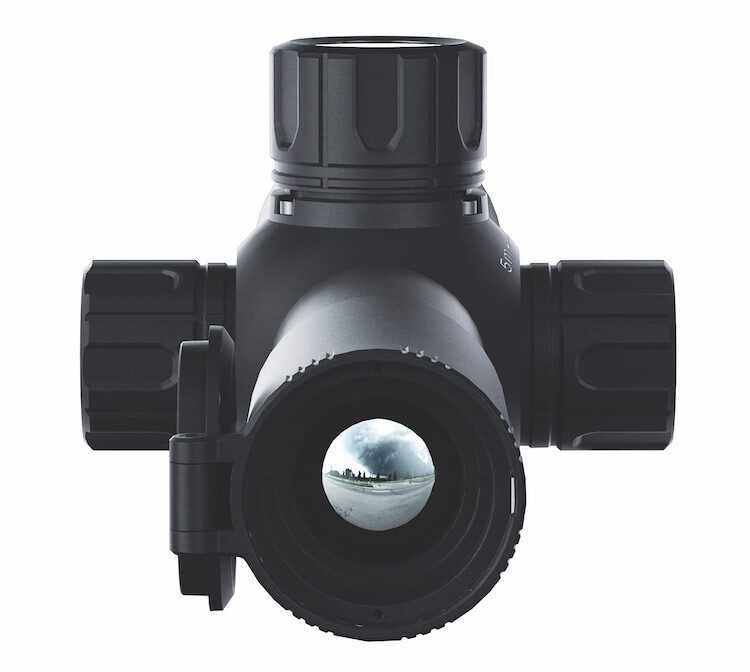
Aho: We just launched seven new products, but the standout is the Pantera 256 Q. It introduces an LPVO-style scope design with side focus, giving it the feel of a traditional optic in a lightweight IP67 aluminum body. It’s designed as an entry-level scope, but don’t let the 256×192 resolution fool you — the clarity is impressive.
SSR: What’s the difference between a PARD optic for the tactical market versus the hunting market?
Aho: The core technology is the same, but design priorities differ. Tactical models tend to be compact, lightweight, and optimized for fast target acquisition. Hunting models typically emphasize features like built-in LRFs, ballistic calculators, comfortable eye relief, and a more traditional scope design. That said, there’s plenty of crossover depending on user needs.
SSR: How do those differences affect manufacturing?
Aho: They influence ergonomics, housing durability, IP67 waterproofing, coatings for grip, recoil testing, and other factors that ensure the optic performs reliably in its intended environment.

SSR: Which optic is harder to make, market, and sell?
Aho: Multispectral units are the most complex since they combine both thermal and night vision in a single device. New technology always requires more education and explanation, but these models have become some of our top sellers once customers understand their advantages.
SSR: How much do user intent and skill matter in getting the full capability out of an optic?
Aho: User intent matters, but we design our products to be as intuitive as possible. Many customers are able to get up and running right out of the box. Built-in features like ballistic calculators (on certain models) make the learning curve even shorter. At the end of the day, user success is our success.
SSR: How do you help novice hunters and tactical shooters learn and succeed with PARD optics?
Aho: Every product includes a detailed manual, and we provide extensive online resources: FAQs, how-to blogs and videos, downloadable manuals, and catalogs. Customers also have access to warranty registration, after-sale support, and a dealer locator for hands-on experience. From a marketing perspective, we partner with well-known brands and influencers to produce engaging content, and we offer a full educational video series on YouTube and our website to help new users build confidence.
SSR: How can retailers be more effective at selling thermal and night vision products?
Aho: Education is key. Retailers who understand the data and specs can translate those into real-life benefits for their customers. While the price tags can be intimidating, the products themselves are straightforward once explained. Our goal is to ensure retailers have the knowledge and resources to match every customer with the right PARD optic for their needs.
SSR: What does a retailer need to do to begin carrying PARD optics? Are there dealer incentives for new partners?
Aho: We always have dealer incentives! The easiest way is to contact us via our website and we can have a sales representative reach out!