
If it hasn’t happened already, the hunters who frequent your store are going to ask: Do you carry those thermals I’ve seen on social media?
The thermal market is booming as night hunting for coyotes and hogs and other varmints continues to grow. More manufacturers than ever are offering thermal units, too, and the prices for thermals have decreased steadily over the last decade.
“Over the past five years, we’ve seen consistent 15 to 20% growth annually in thermals, driven by increased affordability and heightened demand,” said Steve Lemenov, Director of Marketing for Armasight. “The surge in interest, particularly in hunting feral hogs and predators like coyotes, underscores the expanding market and the desire of modern hunters to embrace innovative technology.”
Affordability, of course, is a relative thing. Compared to, say, a mid-level factory hunting rifle, thermal units are relatively pricey. They’re definitely not impulse-buy items, and selling thermal units requires knowledgeable and creative salespeople. Which means any establishment taking on thermal will need to invest time, education and money into this product line.
But a new thermal retailer need not go it alone. In-store assistance from the thermal makers to help sell their products is there for the asking. This includes many educational venues for sales staff, including face-to-face sales training opportunities.
Thermal Versus Night Vision
No doubt some of your customers think thermal and night vision are the same things. That’s understandable. Both technologies are used at night, and unfortunately, writers and influencers frequently conflate the two. But thermal units employ very different technologies compared to night vision.
Thermal optics are essentially digital cameras, and they take photos of electromagnetic radiation — what most of us call “heat.” The objective lens of a thermal unit is made of the rather pricey chemical element Germanium, which detects heat and sends this information back into a digital sensor. The sensor creates images and projects them to the rear or ocular lens which is actually a small display screen.
Night vision, though, intensifies the available light using image intensifier tubes (analog) or the new digital sensors. That light can be from the stars or moon, streetlights or other sources like infrared illumination.
Night vision doesn’t operate in complete and utter darkness. It needs some sort of light, no matter how miniscule. Or, as noted, it can use infrared help, too. Traditional night vision can’t be used during daylight hours, either, as daylight can damage the intensifier tubes, though some of the digital night-vision products have daylight capabilities.
Since they detect heat, thermals can operate during the day. But certain environmental conditions, like high humidity and very dusty air, can degrade the images seen through a unit and reduce detection range.
Many Options
Thermal products are available in a wide array of unit types.
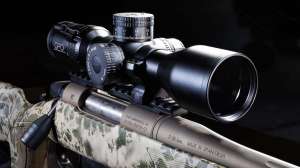
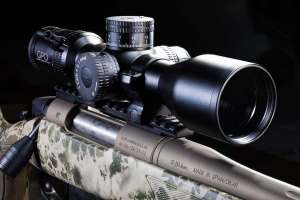
Top of the list are dedicated weapons sights. Some are rather blocky, while others look like more traditional day scopes. These units mount onto rifles, are then zeroed and are ready for hunting.
Thermal clip-ons go in front of traditional day scopes. One advantage here is the hunter need not have only a single rifle set up for night hunting. Clip-ons rely on a day scope’s zero, so a single clip-on can go from one rifle to another rifle as hunting conditions dictate. Clip-ons can also operate as handheld units.
Dedicated handheld thermals are increasingly in demand. They’re used for general scanning purposes, like searching out groups of hogs in fields. Law enforcement, search-and-rescue units, and other first responders (other potential customers!) regularly use handhelds, too.
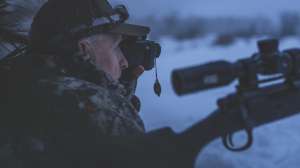
As the tech has improved, manufacturers have made smaller and smaller units. Several companies now offer thermals tiny enough to mount on a helmet, much like night-vision goggles. In addition to the helmet, these units require mounting hardware to position the units in front of the eyes.
Vehicle-mounted thermals are also available and attach permanently or temporarily atop vehicles. Operated from controls inside the vehicle, the units scan and pan the surrounding landscapes, while the user watches on a screen affixed to the dash or center console.
Still Pricey
As noted, thermal prices have dropped considerably over the last 10 years.
The Sightmark Wraith Mini Thermal Rifle Scope, at $1,500 MSRP, is a good example of a solid, entry-level thermal. Lightweight, compact and featuring 384x288 thermal resolution, the Wraith Mini Thermal offers five color palettes and 10 reticle options, as well as on-board video recording.
ATN’s ThOR LTV line fits in this entry-level category, too. MSRP starts as low as $879, but consider stocking one of the middle-of-the-road 320 options ($1,495 to $1,795 depending on model). Ultra lightweight and utilizing ATN’s AI enhancement technology, the ThOR LTV 320 optimizes thermal imaging to deliver a crisp, detailed view of targets. It has 320x240 px thermal resolution, video recording capability and all the features new-to-thermal hunters will want without excess (expensive) features they don’t need.
Then, there are higher-end units like the Trijicon IR-HUNTER, where the 60mm model totes a suggested retail price just 300 bucks shy of the Big $10K. It sports 640x480 resolution and 12 micron thermal sensors with 60 Hz frame rates, and it is available with a 24mm, 35mm, or 60mm objective lens.
Engineered, machined, and assembled in the USA by Trijicon, IR-HUNTERs are tested to the U.S. military’s mil-std 810-G material stress and strain standards, feature a 3x base magnification that can zoom to 24x, have on-board DVR capability, and offer a host of other impressive features.
Of course, there are dozens and dozens of other thermals positioned between the Wraith and the IR-HUNTER for features, capabilities and prices.
Sell the Night
“The beautiful thing about thermal is that it sells itself,” said Chris Wisecarver. “You just need to turn it on and hand it to a customer. There is nothing else in your store that will make as dramatic a product demonstration as a thermal scope. It’s nearly impossible to find someone who doesn’t want one after they look through one.”
Wisecarver is the president of Fusion Thermal and WAVE Infrared. Between the two, Wisecarver’s companies offer 10 different thermal units, from the WAVE ATRIS 335 thermal scope to the top-of-the-line Fusion Avenger 55XR dedicated sight.
Wisecarver doesn’t simply oversee these companies. He’s in his dealer stores regularly, educating staff on the units and ways to sell them.
“When I work with a dealer, I always have a thermal turned on,” he said. “When a customer walks over to the gun counter, I say, ‘Want to see something really cool?’ and hand him the scope. If he’s never looked through a thermal, it will blow him away.”
He continued, “Even if that particular shopper does not buy, he will 100% be telling his friends about the cool thermal scope he saw in your store. The wave of interest and sales that follow using this simple technique is nothing short of amazing.”
Pliny Gale is the Marketing and Communications Manager for thermal companies IRAY USA and Nocpix. He stressed the need for sales staff to understand their stocked thermal units well enough to teach the customers.
“Know how to zero a thermal,” Gale recommended. “It may sound basic, but there is nothing more disheartening to a potential customer about buying a four thousand dollar optic than for him to hear that you can’t help him zero it.”
If your facility has a range, take your customers and their thermals to it and run them through the zeroing process.
“Even if your shop doesn’t have a range, you should at least be able to describe the process to the customer and note basic things like that the adjustment direction is opposite of their day scope,” Gale advised.
He continued, “Geek out on the product, learn it, and you can sell it very effectively. It is not the price or technology that holds dealers back — it’s a lack of sales, marketing, and product knowledge.”
Thermal U
“Having a solid understanding of the technology’s fundamentals is essential to selling it,” said Lemenov. “While you may not need to be an expert in every intricate detail (that’s what we’re here for!), having a general knowledge of how the technology operates and the advantages it offers customers can significantly enhance your sales pitch.”
How to acquire that knowledge?
Armasight recently launched its Thermal University websites at armasight.com/armasight-university/. The web-based program offers articles explaining thermal technology, plus feature examinations of individual Armasight units, their capabilities and specifications.
Most night vision and thermal manufacturers provide in-store sales and educational training, either using their own staff or via sales rep agencies. PARD USA, for example, partnered with a 30-person national rep group to support dealer-level needs including in-store education of staff and consumers.
Additionally, PARD offers a series of informational videos on topics such as the difference between night vision and thermal, and optical versus digital zooms and many more tech topics at pard.com/support/video-collection/. All of it is provided free of charge to any retailer.
In-Store Help
“We have printed product specifications sheets for each item available for dealers,” said Todd Bailey, Vice President of Sales for Fusion Thermal and WAVE Infrared. “Additionally, we have ready-to-go promotional video clips for a dealer to loop on in-store TVs or monitors. Other materials are planned for 2025, including a planogramed display.”
WAVE sales reps prioritize counter team training sessions, too.
“When conducting trainings in store or through a zoom-type call, we make sure to bring or ship printed collateral for sales support,” Bailey added. “Our training regimen is comprehensive. We try to not only create device fluency, but also thermal optics fluency in general, including familiarization with the terms and basic operational principles.
“At Armasight, we make sure our brick-and-mortar dealers are well-equipped with everything they need, from eye-catching product display stands to our brand banners,” said Lemenov. “And our sales reps pay regular visits to provide insights about our brand and the technology that drives it.”
AGM Global Vision also offers zoom training and in-store training for dealer sales staff.
“And we’ve also invested a ton of time and energy into support videos on our AGM USA YouTube page,” Chase Stephens, AGM’s Director of Brand Development, said. “For each product family, we have a promotional introduction video and then a full-menu walk-through showing each button push and what each part of the menu does to the device.”
He continued, “And for applicable models, we do ‘How to Zero’ videos and ‘How to Set Up Your Ballistic Calculator,’ as well. These are invaluable tools at teaching dealers, distributors, sales staff, employees and end-users how the units work and how everything operates.”
Stocking
Understandably, an establishment going thermal the first time will be leery about stocking too much inventory. But you have to have some. Where to start?
“Avoid the cheapest thermal options,” Gale advised. “Usually, those models are just designed to catch the opening price point search and are not quality units. I know many people who have purchased the first thermal they could afford, only to be disappointed. You don’t need to start with the best, but skip that opening price tier. It is the lowest for a reason.”
At the very least, invest in a couple different entry-level thermal riflescopes, as they are the most popular choice for hunters.
As these sell, consider adding a handheld unit or two to the mix. Once your hunters begin using a rifle-mounted thermal, they’ll quickly understand that a handheld provides a faster and easier way to scan, especially from a vehicle or a hunting blind.
You might want to build your thermal inventory with units that can fill more than one role. The Nocpix SLIM thermal, for example, can operate as a riflescope and a handheld unit, giving the hunter real flexibility.
Armasight’s Jockey 320 Compact Thermal Clip-On features a quick-detach mount allowing the unit to rail mount in front of a day scope. With a quick lever flip, the Jockey comes off the rifle for use as a handheld. Re-mount it and the hunter’s ready to go as the zeroing is already done through the scope.
As this market continues to grow, many of your customers will buy their own thermal units. Will they be doing that at your store? Only you can answer that question.