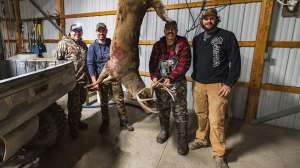

Big-game hunting and the equipment used for it are changing dramatically, right before our eyes. Never before have there been so many significant developments on the big-game hunting front than right now. Where should one begin any discussion about these developments?
Technological advancements in manufacturing have changed the face of the entire shooting sports industry, and big-game hunting is no exception. Every product category is affected as is every form of big-game hunting, whether it’s on the back 40 or in some far away place.
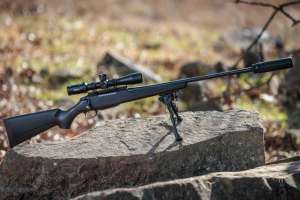
Rifles now routinely are more accurate, and ammunition is more effective at a greater range of impact distances. This means putting high-performance projectiles into game animals more precisely. That’s huge.
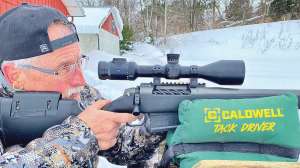
Telescopic rifle sights are more precise, including their ability to track consistently enough to dial a deer at distance. Heck, some of these scopes even talk to the hunter’s binoculars or cell phone, providing valuable wind and trajectory information.
From a retailing perspective, this means that focus needs to be on integrated systems as much as traditionally it has been on individual items. Clearly, it requires a change in mindset if the potential is to be realized fully.
Consider the growing variety of high-performance cartridges coupled with high-performance bullets. Hornady has been responsible for a slew of them, and Federal’s recent introduction of the new 7mm Backcountry round that, with its steel case, is able to deliver 7mm Magnum performance out of a shorter barrel – a shorter barrel that is handy when used with a suppressor.
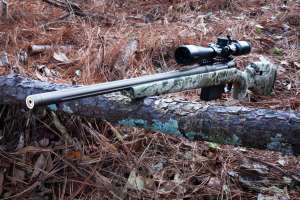
Specialization is the name of the game these days when it comes to big-game hunting. There are specific rifles designed for specific purposes when fitted with specific sights and using specific ammo. For a large percentage of active big-game hunters, gone are the days of the all-around hunting rifle.
For example, the long-range shooting trend in the greater shooting sports industry is resulting in rifles with tighter rifling twist rates, all needed to stabilize the heavier-for-caliber bullets that maintain momentum farther out than the shorter, lighter, more traditional bullets.
Although typical chassis rifles have tended to be heavy for many kinds of big-game hunting, Benelli has solved that challenge with its Lupo model that is a chassis rifle that looks, carries and feels like a traditional big-game hunting rifle.
Within the industry, there has been wholesale cross pollination among the various segments. For example, gains made by the tactical segment are now spilling over into the hunting category. Successes in the long-range target segment also are finding themselves in big-game hunting. Literally, success in any segment has triggered parallel success in the other segments.
The use of suppressors for big-game hunting is becoming common in places where they are legal to use. Not only do they help save the hunter’s hearing, but the rifle report is reduced enough that shots cannot be heard well at distance or are muted enough not to disturb game animals that otherwise might be put on alert that there is a hunter in the immediate area.
All of these factors combine to redefine how big-game animals are hunted in many areas during various times of the hunting seasons. Long gone are the days when most people went forth into the woods with their favorite old hunting rifles that shot traditional cartridges.
Yet there still are enough big-game hunters who don’t go for the latest, greatest gear to make it profitable to keep them in mind and stock items they will need, year after year. The gear bonanza is in addition to the traditional market, not in lieu of it. The base of the entire shooting sports industry has expanded exponentially, and that’s good for everyone — especially shooting sports retailers.
Although the ability of equipment to hit intended targets at longer distances is a spinoff of the advancements in the industry, there remains the question about how far is still ethical, or how far is a shot unethical? This discussion continues, even though the classic outer limit of 300 yards has been surpassed by at least some distance. Ultimately, that’s a choice for the individual hunter in specific situations and doesn’t lend itself to general discussions.
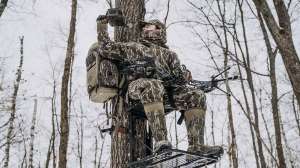
Getting into the backcountry is easier now with electric trail bikes or other modern offroad vehicles. Certainly, going the distance on foot or mounted on a horse or mule is still valid, but where permitted, there are increasing numbers of mechanized alternatives.
So, what does all of this mean? It depends on the size and type of retail shop. One thing is certain: There are expanded horizons that need to be considered, even if they may not have seemed valid just a few years ago.
More than ever, many of today’s young hunters are looking for an adventure rather than just a hunt. Yes, they still want to be successful. It is just that filling a tag now is a part of a greater goal rather than the only goal of a hunt. This is significant because the wider goal justifies greater investment by the customer in gear, time and commitment.
The good news is that big-game hunters now are more comfortable spending larger amounts of money to pursue their passion. And they seem to be OK with the concept of obtaining an entire system rather than one item here and another there.
For retailers, this is delicious because it triggers repeat visits by customers to buy a bigger number of items than was true even a decade ago. Big-game hunters have their dreams and are willing to do what it takes to realize those dreams.
Which brings us back to the basic truth: Retailers in the shooting sports industry are in the dream business. We sell the products that help the customers realize their dreams. The more completely this relationship dovetails, the better for everyone involved. Truly, it is a win/win situation and that’s a really good thing.