
Today’s air rifles are some of the most advanced shooting tools on the market, and they’re proving their worth for hunters, target shooters, and even firearm enthusiasts who want a way to sharpen their skills at home. For firearms retailers, adding air rifles to your inventory isn’t just a good idea — it’s a way to open up an entirely new revenue stream without the red tape that comes with selling traditional firearms.
The Evolution of Air Rifles
Over the past decade, air rifle technology has taken a massive leap forward. Gone are the days of simple spring or pump-powered models with limited power and accuracy. Today’s air rifles use high-pressure air tanks, advanced regulator systems, and precision barrels that make them more powerful and more consistent than ever.
One of the biggest innovations has been the widespread adoption of pre-charged pneumatic (PCP) air rifles. These rifles store compressed air in a reservoir, allowing shooters to fire multiple shots with consistent power and accuracy. The introduction of regulators has been another game-changer, ensuring a steady, consistent air output so that every shot is just as precise as the last. Combine that with rifle-grade, adjustable triggers and ergonomic stock designs and you’ve got a large number of air rifles that perform at levels that would have been unheard of just a few years ago.
Big-Bore Air Rifles Are Changing the Game
For decades, air rifles were mostly confined to smaller calibers like .177 and .22. A .177 is the same caliber as a BB gun, and everyone is familiar with the venerable .22 rifle. They sold well, could be bought at the local department or hardware store, and were perfect for target shooting and small game hunting.
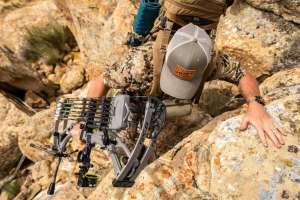
In recent years, big-bore air rifles have exploded in popularity. We’re talking about serious calibers — .25, .30, .35 and even .50. These rifles pack enough punch to take down deer, hogs, and other medium-sized game, and they do it with surprising accuracy. Hunters are starting to take notice, especially in states that allow air rifles for big-game hunting. The appeal is clear — these rifles are quiet, don’t require expensive ammunition, and offer an exciting new way to hunt, and for retailers they represent a growing market segment that caters to serious shooters looking for the “next big thing.” For the hunter who has already done it all, an air rifle can be the new challenge that archery became 60 years ago.
Perfect for Practicing the Fundamentals
Whether you’re a first-time shooter or an experienced marksman, one of the best things about air rifles is how they can help you focus on the fundamentals of shooting without the distractions of recoil and loud muzzle blasts. Breath control, trigger discipline and follow-through are all critical skills in shooting, and air rifles provide a low-pressure, low-cost way to refine those techniques. With minimal recoil and no need for ear protection, shooters can concentrate on their form and make every shot count for pennies (and sometimes less) per shot. This makes air rifles an excellent training tool, especially for those like youngsters/first-time shooters who want to improve their skills before transitioning to higher-caliber traditional firearms.
Backyard and Indoor Practice? No Problem
One of the challenges of practicing with your deer or elk rifle is that unless your backyard is 20 to 40 acres and your neighbors all shoot and hunt, too, you have to travel in order to practice.
One of the biggest selling points of air rifles is how convenient they are. Unlike traditional firearms, air rifles can often be used right in your backyard. Some lower-powered models are even safe to use indoors with the right setup. For people who live in urban or suburban areas where access to shooting ranges is limited, this is a game-changer. A backyard air rifle range lets shooters train whenever they want without worrying about noise complaints or travel time. That’s a huge selling point for customers looking for a way to shoot more often without the hassle of range fees and long drives.
No FFL? No Problem!
From a retailer’s perspective, one of the biggest advantages of selling air rifles is that they don’t require a Federal Firearms License (FFL) to stock or sell. Since air rifles aren’t classified as firearms under federal law, there’s no need for background checks, waiting periods or tedious paperwork. This means quicker sales, a wider customer base, and fewer regulatory headaches. For stores already selling firearms, adding air rifles is a natural way to boost sales without dealing with the restrictions that come with traditional guns. And for shops that don’t currently sell firearms, air rifles provide an opportunity to attract shooting enthusiasts without stepping into the heavily regulated world of firearm sales.
Handgun Replicas for Realistic Training
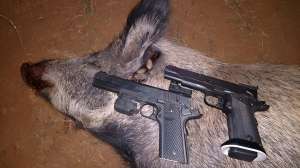
Air rifles aren’t the only category that’s been making waves. BB handguns designed as realistic replicas of popular firearms have become an incredibly popular training tool. These air-powered pistols mimic the weight, feel and operation of actual handguns, making them an excellent option for practicing grip, trigger control and sight alignment. Dry-fire training is good, but there’s also nothing like actually shooting to improve your shooting.
For new shooters, these BB pistols provide an affordable and low-pressure way to get comfortable with firearm handling before making the jump to live-fire practice, and for experienced gun owners, they offer a safe way to train at home without burning through expensive ammunition.
The Air Gun Market Is Booming
If you’re wondering whether air rifles are worth stocking, just take a look at the numbers. The global air gun market was valued at around $2.13 billion in 2019 and is expected to reach nearly $3.89 billion by 2027. That’s a massive market with steady growth, fueled by advancements in technology and an increasing number of shooters looking for alternatives to traditional firearms. Price-wise, today’s air rifles also cover a wide range. Entry-level models can start as low as $100, while mid-range rifles with advanced features typically run between $300 and $800. High-end precision air rifles designed for serious hunting and competition can easily exceed $1,000, $2,000, and even $3,000!
With options at every price point, retailers can cater to a broad audience, from casual backyard shooters to serious hunters and competitors.
Air Rifles Worth Considering
If you’re looking for specific models to stock, there are some great options on the market right now. The Barra 250Z is a solid choice for those who want an accurate, well-balanced, PCP air rifle at a very affordable price, and in .25 caliber, it is perfect for target shooting or small-game hunting. For those looking for something a little more advanced in the break-barrel category, the Gamo Swarm 10X Magnum Gen 3i is a .22-caliber air rifle with a 10-shot rotary magazine, allowing for quick follow-up shots. It’s powerful and fast, and it’s an excellent option for pest control or hunting small game like squirrels, rabbits or even that pesky pigeon that keeps nesting in your eaves. How about a two-for-one deal? The Barra Sportsman 2-Barrel Combo Air Rifle, which comes with interchangeable barrels in both .177 and .22, makes a versatile choice for different shooting needs.
If nostalgia is what you’re after, the Daisy Adult-Sized Red Ryder BB Gun is a classic that’s been scaled up for grown-ups. It’s a fun, affordable way to enjoy some backyard plinking and is a great entry-level option for people new to shooting sports. (Wear your safety glasses to avoid “shooting your eye out!”)
For those interested in a high-performance PCP rifle, the Umarex Komplete NCR .22 Caliber NitroAir PCP Pellet Rifle is a fantastic new option. The Komplete NCR uses Umarex’s new NitroAir® cartridge — a unique single-use N2 cartridge filled with nitrogen at an impressive 3,600 psi. No pumps, valves or compressors needed.
The bottom line? Air rifles aren’t just for kids anymore. With advanced technology, big-bore power, and a booming market, they’re quickly becoming a must-have for both beginner and serious shooters. Whether customers are looking for a hunting rifle, a training tool, or just a fun way to practice shooting fundamentals, air rifles offer something for everyone. For firearms retailers, they represent a golden opportunity — high demand, low regulatory hurdles, and an inexpensive product line that appeals to both new and experienced shooters alike. If your store isn’t already selling air rifles, now is the time to start.

COMING SOON
In the basement of SHOT Show this year, I came across a brand new venture, Polytech Forge, who had two prototype air rifles on display.
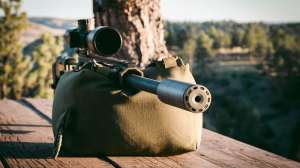
The R700 air rifle design is a reproduction of the Remington’s Model 700, with no externally visible air tank and a bull barrel configuration. Prioritizing platform compatibility with the world’s most successful bolt-action rifle, the short-action Remington Model 700, this air gun allows for the same custom options as your favorite bolt-action rifle setup. It makes for an excellent training, target shooting, or even hunting rifle. Sporting multiple caliber options, high power levels, drop-free cartridge-fed magazines, and near infinite customization options, this platform is expected to be offered at low-mid range market bracket between $800-$1,600 with a good retailer margin, making it affordable on almost any budget.
Poly Tech Forge’s IXWA line offers two to three times more shots delivered at higher power levels than any competitive air gun in any caliber range from .177 to .50.
Using aerospace-grade materials and featuring the most scientifically advanced, proprietary valving system on the market, this gun delivers the absolute maximum in velocity, precision and performance. Offered in a next-generation bullpup configuration with an inverted construction, a drop-free, high-capacity magazine and a ton of customization settings for fitting the rifle to any shooter’s size and preferences, it comes at an attainable price range of $2,000-$3,000.