
Selling coolers to hunters and anglers seems like a no-brainer, right? Put some big coolers on the floor and tote-sizes on the shelf, add price tags or signs, and let the register sing. Customers need coolers for hunting, fishing, camping and hanging out. They make great gifts for birthdays and Christmas. In the last 20 years, consumers haven’t been shy about spending more money for them, either. When the $300ish rotomolded cooler emerged on the scene 20 years ago, everyone recoiled, laughed and shook their heads — but a lot of them got on board with a new era.
Back in 2006, Yeti introduced its heavy, double-wall, arguably over-constructed coolers that cost hundreds of dollars. Even the rugged zip-lid models cost more than a “plain cooler.” Yeti’s founders wanted a tough cooler that would keep ice longer for their outdoors trips. They found a Thai company selling a cooler they liked, then sourced a Philippines manufacturer to create what they wanted. Yeti was born, with a huge price tag and overwhelming marketing and PR campaign. The brand was everywhere. Outdoor media members had coolers. Consumers initially got a free cap and shirt with a purchase. It was a “lifestyle” purchase, and a “legacy” purchase that would last for years. The landscape definitely had shifted.
From there, traditional brands such as Coleman and Igloo watched the rise of Yeti as the company created a new category. The existing “Eh, I can afford that” lineup now included a “Holy smokes!” addition. In the last two decades, more companies have appeared, including Canyon, Engel, Cordova, Mammoth, Rtic Outdoors, Dometic and house brands for big-box chains. Some came and went. Along with the coolers came the roaring return of the stainless, insulated, double-walled mugs, tumblers and products reminiscent of the Thermos legacy. Like Coleman and Igloo, Thermos got a bit of a reboot.
Suddenly, retailers and consumers had The New Coolers and Those Old Coolers to choose from. How do you sell these high-end coolers and adequately show them in your store?
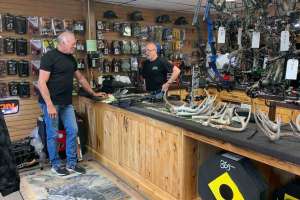
West End Outdoors on U.S. 72 in Athens, Alabama, caters primarily to anglers fishing on the nearby Tennessee River. Hunters help drive sales from September dove season on through the end of waterfowl season, though, with purchases of coolers, ice, licenses, beverages, snacks and fishing tackle to prep for spring. The store sells Yeti tumblers and coolers, including the convenient zip-up Hopper Flip and larger Tundra Haul wheeled cooler.
“Yeti has a lot of seasonal colors, especially with things like the tumblers, so there’s always something going on and in rotation,” said Jay Patel, a manager at West End. “Yeti helps with displays for some things, and we definitely look at the time of year for things in regard to fishing or hunting.”
Longtime Challenge
Retailers have faced skeptics about the need for and prices of coolers or similar products ever since they were introduced in the early 1800s.
Yes, that far back! The Science History Institute Museum in Philadelphia cites Virginia cabinet-maker and farmer Thomas Moore as the recipient of a federal patent in 1803 for a “refrigiratory.” It was described as “a cedar oval tub with a hinged lid and insulated on the outside with rabbit fur and coarse woolen cloth. Its tin inner chamber held 22 one-pound pieces of butter and was cooled by ice placed between the interior tin and exterior cedar.” Jump ahead to post-World War II and the leaps of technology and consumerism. By the late 1950s, the insulated “portable ice chest” was patented and in production, and we haven’t stopped using them since.
Coolers kept beverages cold, prevented fish or game from spoiling, and made football tailgating better. They’re super for picnics and trips to the beach, or a truck-camping getaway. In college, it was imperative to have a cooler or be friends with someone with one so adult beverages would be chilled for band parties, football weekends and lazy summer afternoons. When I was young, my father’s choice was the red-white Igloo, which we would use until it cracked or the plastic lid snap-latches broke. That typically was several years. I grew up fishing with these on the Tennessee River, going deer hunting in southwest Alabama, and seeing them on our back patio at Christmas with extra things that wouldn’t fit in our fridge. My uncle and cousin had the same coolers. My maternal grandfather had an older metal cooler, I think perhaps a Coleman, with the metal handles and latch. Those of us of a certain age remember these before their “retro” cousins coolers returned, like the current Igloo Legacy 20-quart upright and 54-quart chest.
You didn’t baby these old Igloo and Coleman stalwarts, but you also didn’t worry too much if something happened. Dropped and cracked? Well, that stinks, but just go get another one. Today’s consumers face some of the same decisions: do I buy a less expensive cooler that might need to be replaced in a few years, or spend more for a high-end version that likely will last for a long time?
“We have people who walk in and say, “Yep, I want that one” and others who I’m sure see them and think about going to Walmart,” said Patel of West End Outdoors. That’s not surprising, as the store’s clientele ranges from anglers in $70,000 bass boats and duck hunters in Sitka gear to crappie anglers in flat-bottoms and small game hunters with well-worn togs.
“I think one thing with the Yeti coolers and others like them is someone who buys it knows they’ll likely have it forever unless someone steals it,” Patel said. “If they drop it from 10 feet, it’s not going to hurt it. It works. They can keep it in their truck or boat and know it’s going to be worth the money.”
How to Sell Them
One thing about the high-end rotomolded coolers is their size and weight, both of which require floor space instead of a spot on the shelf.
Unless your store has ample space and reinforced shelves, it’s highly unlikely you’ll be stacking Yeti, Mammoth or other big coolers three or four high. One, it would not be easy to do even in their boxes. Two, that’s a potential liability when Billy Ray Knucklehead doesn’t ask for help and causes two or three 54-quart coolers to topple like a Jenga tower.
Patel said at West End, they have a small number of Yeti coolers on hand “and if we sell a couple, we order a few more.” They, like other stores, don’t necessarily keep a dozen or so big coolers in the back room or on display. That takes up space and is invested money just sitting there. Having a dozen or 20 tumblers of different colors is one thing. Having a dozen wheeled rotomolded coolers sitting around means your money is tied up in inventory.
How to move things? Make them attractive and hit the right buttons in spring and fall.
Shelf Space – If you have some of the smaller high-end coolers, such as the hardside Mammoth Cruiser 15 or softside Pathfinder 30, a shelf display might be a good idea. You can place these near relevant products — sodas and beer, perhaps, or maybe an ice machine. Make sure to have eye-appealing signage and clear pricing.
Create a Scene – If you’re wanting to do something for spring and summer, stack smaller coolers on larger ones, or combine coolers with fishing gear in a display. Rod-reel combos, coolers, cleaning pliers and knives are good items. Same thing with autumn and winter hunting seasons, but with boots, waders, empty boxes of ammo, a game vest or whatever best displays your area’s popular game. You wouldn’t put an upland vest and pheasant loads on display in Louisiana. Think about what is timely and eye-catching.
A lot of display building is a psychological nudge to at least consider if not buy a product. For example, you could combine coolers with Turtlebox bluetooth speakers. I’m unsure how many dove hunts I went on as a lad with a 5-gallon bucket for birds, ammo and snacks along with a scratchy radio to listen to Saturday football games. Today’s insulated buckets can hold ice and beverages better, and that Turtlebox system is sweet. Consumers see this in your store, and it might create two sales.
A subset of consumers wants products that are trendy and durable, and they don’t mind spending extra for them. Be ready for them with sexy displays and good information about what they’re buying, and you may have an easier time moving these throughout the year.
Ice Chests and Coolers to Consider
If you’re planning ahead for summer or even autumn hunting seasons, consider these for your customers to peruse:
Dometic Recon Finally, a company has designed an ice chest that is streamlined, stackable and tough as nails that keeps things frozen or cold for quite a while. The hard-sided Recon comes in three sizes, 69 liter, 41L and 16L, the latter having carry handles. They’re designed for modular packing, with the secure latches, comfortable soft-touch handles and screw-in drain plug all flush. A rubberized top prevents slippage. The lid opens from either side and can be removed, thanks to the pivot latches. The Recon is seamlessly injection-molded with 2 inches of insulation yet is up to a third lighter than comparable models. From $225 to $425. Info: www.dometic.com
Igloo Legacy Double-dip on your customers’ age demographics with this cool retro ice chest that uses today’s tech for better results. Igloo has been around since 1947 when it first made steel water jugs for oil field workers. The trendy Legacy cooler is made with rust-resistant stainless steel, uses Ultratherm insulation in the body and lid, and has a triple-snap drain plug. It can hold up to 85 cans, though your customers likely will have a 12-pack and snacks on ice. The portable Legacy 20-quart model offers the same features. From $119 to $189. Info: www.igloocoolers.com
Mammoth Ranger Available in several sizes, the double-wall rotomolded Ranger is built for extreme conditions or everyday outings, with up to eight days of ice retention. It has a freezer-grade gasket in the lid, which is tightly secured by two rugged latches. Non-skid feet keep it secure in the boat, blind or vehicle, and it’s portable thanks to lightweight, comfortable carrying handles. Available from 125- to 45-quart models in multiple colors, from $529 to $239. Info: www.mammothcooler.com
Igloo Gizmo Affordable and super for hunters, the Gizmo backpack cooler bag can tote up to 30 cans or other bevs, snacks or items. It’s insulated with MaxCold performance foam and a leakproof liner, has adjustable backpack and sternum straps, and comes in Realtree APX camouflage. This is a super affordable cooler for deer hunters doing all-day sits or waterfowlers going out for a few hours. $49.99.
Igloo Trailmate 50 Customers wanting a hard-sided cooler at a more affordable price might give the nod to the Trailmate 50. This rugged cooler has two-finger SureLock latches, 1.5-inch insulated walls and lid, extra-wide reinforced handles, cup holders in the lid, and a built-in bottle opener. Sweet! It weighs about 15 pounds. From $105.
Yeti Tundra Haul Customers will find all of the usual Yeti features in the Tundra Hall, along with improved portability thanks to its Strongarm Handle and NeverFlat wheels. The latter are designed to go over dirt, rocks, sand or other terrain. The handle is made with a welded aluminum arm and comfortable grips. The cooler has Yeti’s rotomolded construction, FatWall design and PermaFrost insulation in the body and lid, along with a gasket to keep things cold for days. From $475. Info: www.Yeti.com