
Happy employees are the best employees. They’re easier to get along with, generally do a better job of completing quality work, and overall bring a good vibe to the workplace.
Few employees are as happy as we would like them to be, especially in and around the shooting sports industry. Sometimes the expectation of the work is just too far away from the reality.
Setting those expectations early is crucial to long-term employee happiness and peace in the workplace.
The Allure of Lifestyle
Few kids daydream of working as a plumber, or mechanic, or even working in finance. Those are avocations that serve as a means to an end. Those are jobs, typically, people hold so they can pursue their other passions. Those jobs fund their adventures.
To many, the ability to work in and around the things they love seems like a great way to do both. If someone loves hunting, shooting, fishing, or any other hobby, working in that industry seems like a natural fit.
The appeal makes all the sense in the world. The reality, however, seldom works out the way people expect.
The Reality of the Work
With more than a decade of working in the shooting sports industry, I’m asked constantly by friends and acquaintances how they can join me on the inside.
I very quickly started asking all of them the same thing: “Why do you want to work in the industry?” Invariably the answer was some version of, “I just love everything about it, it would be so cool to work in the industry.”
That statement, on its face, isn’t wrong. I don’t disagree; I love working in this industry. It is full of some of the best people I’ve ever known, and many have become my very best friends. There is, however, a critical mistake most people make: Working in the shooting sports industry rarely involves hunting or shooting.
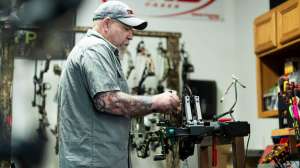
This is true of working at a local gun store or range, or for a brand. There is work to do that is hunting or shooting adjacent, but isn’t really hunting or shooting. From sales to marketing or logistics, the work is very much the same as if you were selling or marketing or moving pencils, toilet paper or offshore drilling equipment. It just happens to be guns, camo, bows, optics or bullets.
It is, of course, infinitely more fun to sell someone a gun than it is to sell them a new washing machine. It really is a sales job, though, not a shooting job. This is true with almost every job in retail or for a brand. Just because you do marketing for a gun company doesn’t mean you spend all day shooting guns. You spend your day doing marketing.
This is the crux of the issue, no matter what part of the industry we are talking about. The work that needs done is being done for cool products or segments, but the work matters more than widgets. That lack of understanding often puts people in the wrong mindset when they start a job in the industry, be it at retail or with a brand. They come in with hopes and dreams of all that time they used to spend behind a desk now being on a flat range or in a treestand.
Then it’s time for an ATF audit, receiving a shipment, or a floor plan reset — and those dreams evaporate as they spend their day doing clerical or physical work that looks a lot like what they used to do. At this point, the reality of the work sets in. Frustration starts to grow. This wasn’t what they signed up for, and soon they will depart.
How to Prevent It
We might not like to hear it, but as shop owners and brand stewards, this falls on us. We are happy to bring in eager potential employees to help pick up the slack. Often, because of their desire to work in the industry, we are able to pay them less than they deserve because they think they’re getting perks that will make up for the difference.
In the end, our lack of transparency and failure to clarify those expectations make the disappointment even worse. This leads to turnover, which creates its own cycle of disfunction and frustration.
Here’s how to get ahead of the potential problems.
Communication: As an employer, communication is vital to ensuring smooth operations on a day-to-day level. I argue that it’s even more important in any hobby industry. Shooting sports, powersports and the like have a different dynamic than things like trades, or shift work, or professional settings.
Communicating with your staff about where the business is in the annual cycle, short- and medium-term goals, opportunities and challenges will help keep the team engaged from a business aspect. Your employees can’t see their employment in a hobby industry as a hobby itself. Clear communication can help maintain the right mindset and prevent wandering thoughts or focuses.
The biggest takeaway has to be communicating to a new employee that the work comes first, and that the industry the work is happening in matters less than the duties. Yes, it’s cool to sell guns or bows or outdoor equipment. But that’s not the focus. It’s merchandising. It’s organization. It’s respect, cleanliness, customer service, attention to detail, punctuality and myriad other best practices. It just so happens we are applying those principals to some very fun products.
Clear Expectations: Ideally, that open and clear communication leads to and includes clear expectations on both a micro and macro level. This is where many managers and businesses fall short, but it is especially true of hobby industries and businesses where there are part-time employees.
On the micro level, every shift and every day should have defined goals to be respected and achieved. Not only will this ensure that nothing slips through the cracks, but it also can help keep your employees engaged daily, drive investment and motivation, and keep the frustrations that may creep in while working in an industry you love while not actually enjoying them yourself at bay.
On a larger scale, the communication about the larger goals and perspective of the business, and the investment in bringing the employees into those discussions, give them agency in those endeavors. People want to be part of something bigger than themselves. It’s human nature. The more you can use the expectation of the business to help drive every employee to do something more than they can accomplish by themselves, the more engaged they are likely to be, and they will be less likely to be sucked into the frustrations and burnout of being behind a gun counter instead of on a gun range.
Create a Functional Culture: Maybe it’s that I’m a elder millennial/tail-end Gen X, and maybe you will want to tune me out here, but I think employers that offer their people something other than a paycheck generally end up with employees that work harder for them. This doesn’t mean ping-pong tables or safe spaces, or nap times during work, but there are ways that you can create a culture in your business to deepen the roots of your employees.
When all you offer is a paycheck, your employees are exactly as loyal as the numbers on that check. As soon as a better offer comes around, they will take it. When that is the mindset of the people working for you, the cracks form around the periphery quickly. When those new employees come into the industry and see that it isn’t what they thought, and all they’re getting from it is money, those intrusive thoughts will deepen and multiply.
Invest in Your Employees: Investment in your people is a big part of a functional culture that helps your people feel engaged, involved and valued. This can take on many forms, but specific to our industry, there are several that make sense to me.
The first is to invest in getting them some training. This doesn’t mean you have to have to cover a week of travel and trip to Gunsite Academy — although what a great idea as a benchmark for your top employee of the year — but some local training would be a smart option. It might just be a day at the range to test out different new rifles or ammo or optics so they can speak intelligently about them.
Maybe it’s offering them the chance to win a hunt, or at least to be one the scheduled off on opening weekend.
Being mindful of who your employees are as people and what drives them, and offering them the chance to pursue those things, may not sound like an investment — but it is an investment of time, and it’s something they will notice.
Manage People, Not Tasks
We’ve all worked for bad bosses in our lives. None of us enjoyed it. Sadly, many of us become bad bosses and bad managers when given the chance because we get caught up in what we want to do rather than who is going to do it. Any monkey can walk into a shop and see that inventory needs put on the shelf and floors need mopped. That isn’t hard. Your employees probably don’t need you to tell them that.
The hard part is managing people, not tasks.
Making that investment in getting the most out of your people, and finding a way to help them perform their best, not only gives you the best version of your employee, but it also prevents frustrations from creeping in for them.
So many people that enjoy hunting or shooting think it would be their dream job to work in the industry in almost any capacity. The reality is far from it. Every year we see people come and go, burning out in a matter of months when they learn that the work is more important than the industry. It happens with brands and stores alike.
All of us need to do a better job of setting clear expectations, and helping employees manage those expectations, to keep some of these talented, driven people in the industry.