
Most veteran shops likely stock some time-honored gear that sells consistently year over year. It’s the stuff they know they can not only move, but also, can count on to satisfy the most-discriminating customers. Even better, selling these “no brainer” models can further the shop’s rep as a trusted, local source. Done right, selling proven products is a serious win-win scenario.
You already know one pitfall. For years, gear manufacturers have centered on marketing only the “what’s new,” latest-and-greatest models. So how do the best archery shops balance this mix on their shelves? We spoke with several veteran shop owners who weighed in on the current state of gear innovation, customer buying habits, and what really works to keep the register ringing in today’s challenging economy.
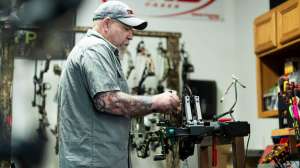
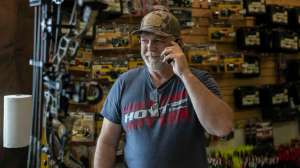
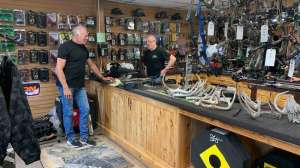
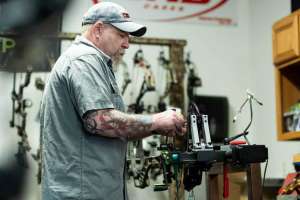
Mike Debolt, 54, owns and operates Pro-Formance Archery in Newark, Ohio, a 4,500-square-foot shop with indoor and outdoor range. An industry veteran, Debolt had worked in several capacities before purchasing the longtime existing shop 4 years ago, and he’s been steadily growing year over year since. A big part of that is knowing what and how much to stock, and when to cut his losses.
“I’ve been doing this for a long time,” Debolt said. “I don't have a special algorithm for stocking my shop or anything, I pretty much go by feel, experience, and what I know about things like advertising. If the manufacturer says they’re going to put everything that they’ve got behind this one new item, that’s some important information.”

Trusted Contacts
“Let’s say you’re at the ATA Show; you may not be talking with the company, but maybe with the sales rep,” Debolt continued. “I’ve been on multiple sides of this business, I was a buyer for Buckeye Outdoors for 10 years, then I worked for Outtech as a sales rep for 11 years. So I know how the system works. A lot of purchasing decisions can be all about the relationships you form, who you trust, what they’re saying and what they’re going to do. But I don’t think you ever buy stupid big numbers of anything new right from the get-go.”
Company sales flexibility is important to pro shop owners, Debolt says. And again, he says it comes back to relationships. Especially when placing orders very early in the year during an uncertain economic climate.
“Even after my order, lots of times I’ll tell companies, don't be surprised if I call and cancel, and maybe I’ll call for more and may or may not be able to get them. But if a company is willing to work with you that way, you feel more comfortable placing those early orders.”
Smarter Programming
When it comes to programming gear orders throughout the year, Jeff Byrne, longtime owner of Cabin Fever Sporting Goods in Victoria, Minnesota, said he noticed in 2024 that it’s time for his full-line pro shop to revert back to its “pre-Covid” buying practices. This came after he began noting recent sales declines in some key categories since those booming pandemic days.
“We always do multiple ship dates throughout the year; back in January, we have companies ship immediately, then again in July and again in September,” Byrne said in June 2024. “This year, the majority of those shipments we’ve canceled, because we’re still sitting on some stuff. It’s telling me we have to get back to what we used to do. During the pandemic years we were ordering shipment quantities of 10, 10, and 10 — but before that we ordered 5, 2 and 2.”
Byrne was one of the dealers Archery Business contacted back in 2023, when he hoped that 2024 would see a marked influx of exciting new products that always draw curious customers. But in the opinion of Byrne and several other dealers we spoke with, with a few notable exceptions, that type of across-the-board 2024 product innovation never occurred. There are reasons for that.
“I can tell, when we’re getting manufacturers calling us and sending us rebates, that they’re starting to sit on product,” Byrne offered, as a reason for the dearth in new innovation.
Oct. 1, 2024, will mark Debolt’s fourth year in business, and to this point he’s been able to operate as basically a one-man band — with no other employees save for some brief peak-time help. So Debolt knows he has his hands full, but again, his extensive industry experience, which also includes time as a competitive shooter, has helped.
“Retail is tough, and you’ve got to have the right stuff. I’ve got a lot of product in here, I’m sitting on about $250,000 in product, and you’ve got to have the right product.”
Knowing When to Pivot
Debolt says his time as a rep allowed him to see many shops, and he’s learned many operating tips from the successful ones. He also saw some mistakes made by some shops that were struggling. One example is shops using valuable floor space to hold product that wasn’t selling.
“I saw that a lot — stuff that shops refused to discount and get rid of,” Debolt said. “Once the ‘bloom is off the rose’ on a new product in my shop, I discount stuff and get rid of it. You might buy 100 of something, then sell 80 at a good margin, and then everything slows down. At that point, maybe the hype has worn off, or customers are finding it someplace else. But whatever the case, you might as well get rid of it and replace it with new product.”
Byrne agrees that shops must move on from non-sellers, and quickly. The situation can become critical, he says, just before the year’s new products begin arriving.
“We have limited space in our archery department, not a lot of room to put the new stuff out, so we try to close out older models while they are still somewhat fresh in our customers’ minds,” Byrne said. “Even if I lose 10 to 30 percent on an item, it’s better to get rid of it and keep the cash flowing. Take the cash, put it into the new stuff, and get the older stuff off the shelf so you can turn your dollars more. You need to put that money back into something that you can make 40 or more points on.”
“You can tell when stuff is hot,” Debolt said. “When the UltraView sights came out, I had about a dozen come in and people were asking to see it regularly. And then I hardly had a request for one. To be honest, there is so much that people don’t need a store to buy stuff in. The shops that are making it have good customer service and knowledge. You have to stock product, but they want answers. Not everybody’s got a bow press at their house; in that regard, pro shops are really no different than auto mechanics.”
“As far as deciding on the new gadgets, we look at the track record of companies and their innovations, and which way the market is going,” Byrne said. “If we feel the market is going that way, we’ll take a little bit more of a chance on something. If not, we’ll go less and see how it performs.”
Byrne has been a shop owner some 40 years, and so he believes the “old school” perspective he brings to new trends and products is valuable. Byrne also employs several younger archers who are tuned into popular Internet forums, and other social media and its influencers, and bring another view. Together, Byrne says, they make the wisest buying decisions possible. Still, Byrne continues to rely on some basic buying principles that have proven their worth.
“For archery I somewhat use the same practices that I use in fishing,” he said of his full-line shop. “In fishing, you can never run out of bobbers, hooks and leaders; in archery, I have to make sure that I keep a good supply of the same old Muzzy broadheads, the Grim Reapers, the Rage heads, that all seem to sell consistently. If I notice a brand starting to not sell as well, we might be a little bit more skeptical for next year.
“The power of advertisement can be huge, and because of that we try to start our buying with the larger, tried-and-true companies, because they seem to have a lot deeper dollars for advertisement. And we watch that. And with most of those established companies — if we forget the pandemic years — they have good stocks of product and you can get them as needed.”
Wide Selection Helps
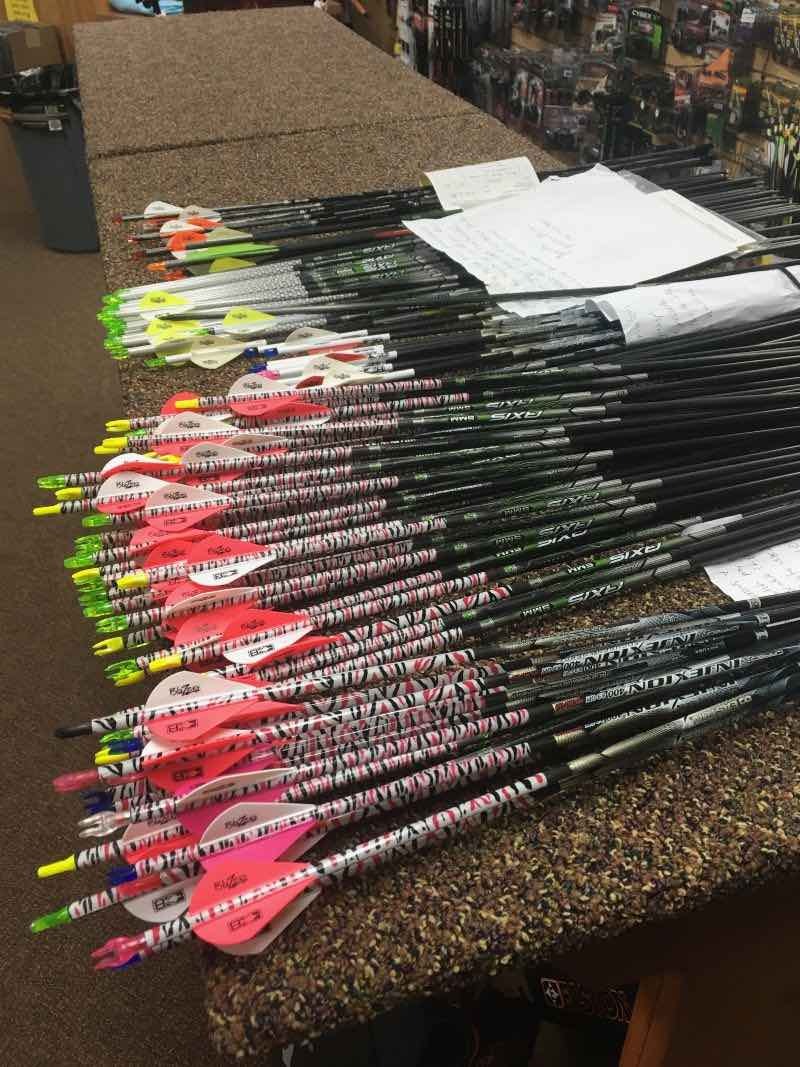
“I like to go wide not deep,” Debolt said of his shop’s product selection. “If you’re going to sell only four to six of something per month, there’s no sense in having four peg hooks loaded with 24 of the same item, when you can have four peg hooks with four different items, so you can have that better selection. And you can’t get caught in a rut, especially when it comes to personal opinions on certain products.”
As stated, Debolt’s resume happens to include accomplished competitive shooter, and he recalled that back when the now-famous Whisker Biscuit rest was gaining popularity, the fact that the rest had so much arrow contact had him cringing and turning customer heads elsewhere. “I lost a lot of sales back then because of my personal opinion, and I’ve learned that if a customer wants something, you sell it to them. And then if they come back for an update, that’s when you can sell them something that is your personal opinion.”
Good, Better, Best
Debolt is adamant about a strong and wide product selection, and he offered a warning about cutting back your selection, using an example from his sales rep days. Debolt recalled that one of his client stores was doing huge numbers in Easton arrows and accessories, some $250,000 per year, offering almost everything the arrow maker had, something for every possible level of shooter. But then, the store expanded to several additional locations, and greatly reduced its arrow selection. The stores cut way back to a basic “good-better-best” offering, across three separate brands. To be clear, that’s a total of just three different arrow choices, each from a different company.
“That move just destroyed their arrow sales,” Debolt said. “They went from selling something for everybody, to just those basic good-better-best price points, and it killed their dollar volume with arrows with me, and they didn’t see it. It blew my mind. In my opinion, a pro shop can’t just have a ‘good-better-best’ in each category, but you can do a ‘good-better-best’ selection through each manufacturer, for each brand. That is a huge difference; you need those wide product selections.”
Sidebar: Hot Products From 2024
What have been some of the dependably hot-selling products for 2024? Our polled pro shops weighed in. Mike Debolt says the Mathews Lift compound has been hot at his Ohio-based Pro-Formance Archery pro shop, as well as all the components that go along with it, including sights, rests, stabilizers, quivers and more. That’s an opinion also shared by John Schaffer at Schaffer Performance Archery in Burnsville, Minnesota, and Jeff Byrne at Cabin Fever Sporting Goods in Victoria, Minnesota.
“Sales of the Lift have been phenomenal,” Byrne said, “and actually, it’s kind of skewed our sales numbers; we're seeing that overall, people are a little bit tentative right now.’’ When it comes to bowsights, Debolt has consistently moved models from B3, Axcel, and HHA, and arrow rests from Hamskea and QAD.
Debolt has found two current arrow trends: High-end small-diameter arrows offered by several manufacturers, as well as simple price-point arrows.
When it comes to targets, Debolt has noticed a trend that other shops would do well to pay attention to. The catalyst is the Total Archery Challenge (TAC) shoots that continue to grow in popularity, and expand to more states and venues.
“We have a TAC shoot nearby in Michigan, and also in Seven Springs, Pennsylvania, and I see a huge push in my business a month before that happens,” Debolt said. “I will sell a lot of larger-sized targets, and I guess that’s because guys know they will be shooting longer distances. And they will also buy two dozen arrows at a crack.
“But in general, it’s crazy the amount of high-end targets we’re moving versus $40 bag targets. People are looking for higher-quality targets, something that will last longer. And if it’s a bag target, I will sell a $130 range target rather than a $60 target; people are seeing the added value in quality, long-lasting targets.”