
The big gobbler strutted back and forth, determined to impress the four hens in the small Northwest Oklahoma wheat field with him. Unfortunately for him, the hens seemed content to ignore him and feed on the thin green wheat.
Set up about 200 yards away on a finger of the field to the west of where he was strutting, my hunting buddy and I had been trying to tempt him with sweet yelps and purrs for more than 30 minutes to no avail. In fact, we had thrown every trick we knew at the big Tom, but he didn’t show any sign that he could even hear our not-so-subtle invitations.
“He’s just too interested in those real hens,” my buddy said. “I’d normally leave, but since that’s the only bird we’ve found all day, we might as well keep trying for a while longer.”
Another 10 or 15 minutes passed, but still, the Tom acted like he hadn’t even heard us. We both shook our heads in disgust but decided to try a little longer. I made a soft series of yelps on a diaphragm call, much like the ones we’d been making for nearly an hour, and suddenly, the gobbler stopped, stuck his head up in the air and looked in our direction.
Only a few minutes later, the bird was headed our way at a frenzied pace. He continued his rapid advance — seeming to be on a suicide mention — only to meet a face full of Federal Premium Tungsten No. 7 pellets at about 30 paces. Bird down; hunt over. Both my partner and I were stunned by the sudden turn of events and shaking like little kids with buck fever.
That Sooner State gobbler wasn’t the first bird I killed with Federal Premium Heavyweight TSS, and he likely won’t be the last. But the successful hunt illustrated an important point: When you work hard to get a bird to withing shotgun range, you’d better have turkey ammo that will help you finish the job.
That said, let’s take a look at three top turkey loads that you should consider carrying in your inventory as the gobbler-busting season approaches.
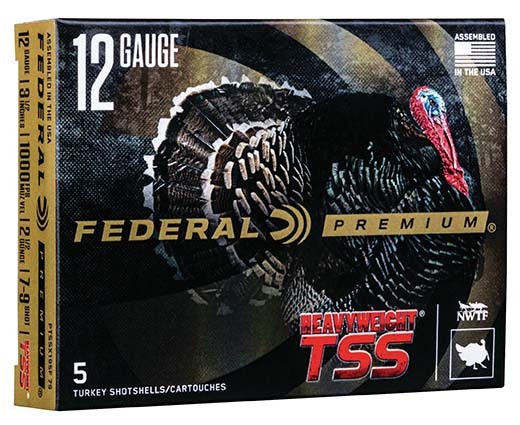
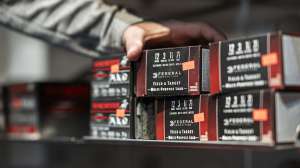
Federal Premium Heavyweight TSS
These are the shells that I was using in the Oklahoma turkey hunt mentioned above, and also my go-to turkey ammo when I’m looking for excellent performance — which is pretty much every time I set foot in the turkey woods. The tungsten-alloy material Federal uses to make the shot has a density of 18 gm/cc, 22% higher than standard tungsten and 56% more than the lead shot used by turkey hunters of yesteryear. The result is the most energy and highest velocities at extreme ranges, allowing hunters to take long-distance birds that in the past would have been impossible to accomplish.
Additionally, the rear-braking FLITECONTROL FLEX wad used in this ammo is designed to perform flawlessly through ported and standard turkey chokes, yielding the most consistent, deadliest patterns possible. The full-length wads also prevent direct contact between the extra-hard pellets and the bore, thereby protecting the barrel from damage. What’s not to like about that?!
Most TSS shells utilize small shots in sizes 7 to 9, maximizing the number of pellets in each round and allowing for far more hole-making potential downrange than shells using larger shot sizes. For example, the No. 9, 3.5-inch 12-gauge round sends a payload of 815 pellets right toward your targeted gobbler’s noggin. I’ve used these shells to take gobblers from 10 paces to 55 paces, and wouldn’t shy away from using them at even a little further distance.
They are available in 12- and 20-gauge and .410 bore, in about a dozen different loads. Here’s a fair warning to squeamish customers, though: These babies aren’t cheap. At around $10 to $15 per shell, the price is quite high. But what cost can you put on a clean, one-shot kill when a big gobbler struts in and the chips are down? Customers who buy once, cry once will likely have most of their round-round box left when they’re toting their tom back to the truck.
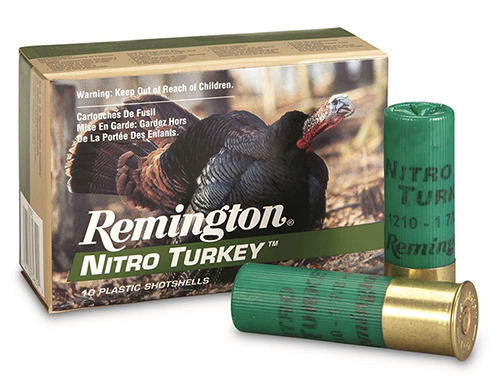
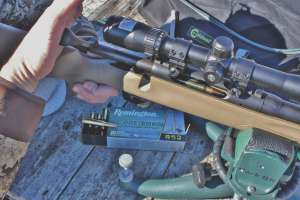
Remington Nitro Turkey Extended Range Magnum
For your turkey-hunting customers on a little tighter budget, look no further than Remington’s fantastic Nitro Turkey loads. One reason for the more reasonable price is that these shells use spherical, extra hard lead shot instead of tungsten or some other lead substitute.
And that’s not a bad thing, as hunters have been killing turkeys with lead shot since long before anyone ever considered loading a shell with tungsten, bismuth or any other material. The key in these loads is that the lead pellets are harder and more consistently round than those of yesteryear, leading to better patterns at somewhat longer rangers.
Full disclosure: I’ve swatted my share of gobblers with Remington Nitros, too, and always found them to be up to the task. And if I had to pay for my own shells (perc or the job), I’d likely still be shooting them.
As mentioned earlier, the Nitro Turkey loads are available for a fraction of the cost of some of the other rounds discussed here. A box of 10 will cost customers about $15 to $20, which comes out to about $1.50 to $2 per shell. They are available in both 12 and 20 gauge, with shot sizes of 4, 5, or 6 and four payloads ranging from 1.5 to 2 ounces. Depending on the load selected, muzzle velocity ranges from 1,185 to 1,300 feet per second (fps).
Full disclosure: I’ve swatted my share of gobblers out to 40 yards with Remington Nitros, too, and always found them to be up to the task. If I had to pay for my own shells (perc of the job), I’d likely still be shooting them. For an “old-fashioned” lead load, they pattern well and hit toms extremely hard.
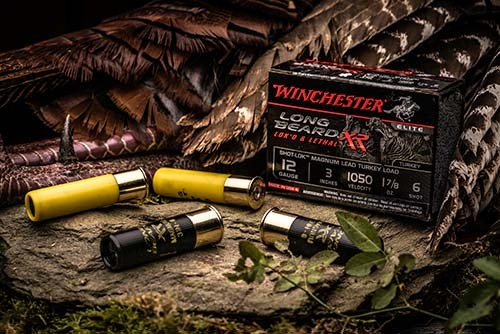
Winchester Long Beard XR
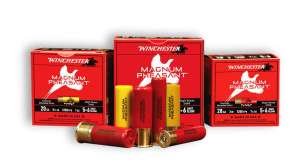
Winchester has been making top-quality turkey shells since hunters have hauled scatterguns to the woods in search of old Mr. Longbeard. While those older loads have killed a ton of gobblers over the years, the company’s Long Beard XR ammo is nothing short of outstanding. And with a tagline of “Lok’d and Lethal,” they had better produce results!
According to the manufacturer, Long Beard XR ammo features innovative Shot-Lok Technology, which completely encapsulates the shot and keeps it together after ignition. This resin eliminates air space around the pellets, preventing movement, which ultimately leads to virtually no pellet deformation during in-bore acceleration.
As the shot is charged, the resin fractures, forming a micro-buffer as the shot pattern leaves the gun barrel. This buffer helps the pellets stay round to fly straighter and tighter, resulting in highly consistent payloads and devastating knockdown at longer ranges. The result, according to the manufacturer, is the tightest patterns and longest shot capability of any traditional turkey load. In fact, Winchester’s research shows twice the pellets of most others in a 10-inch circle out to 60 yards.
Long Beard XR is available in 14 different 12-gauge and two 20-gauge loads. The 3-inch 12-gauge load launches 1.75 ounces of No. 5 shot at 1,200 fps.
While not as budget-friendly as the Remington load discussed previously, Long Beard XR is still well within reach of most turkey hunters’ budgets. A 10-round box averages about $28, still under $3 a round.