
If you're like me, you've probably spent countless hours in the field, dealing with the ear-ringing blast of a rifle shot or watching a whole herd scatter after one loud “crack” from the property next door.
The solutions to this dilemma were not always convenient. Wearing earplugs means you can’t hear the crunching of leaves or whispered instructions of companions. Carrying plugs or muffs and putting them on or in takes time — something that you might not always have if you want to make that shot while your quarry stands still for 2 or 3 seconds.
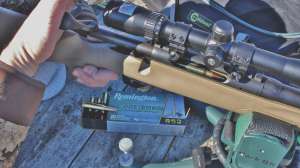
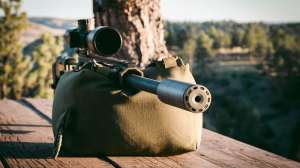
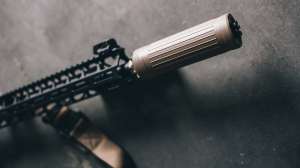
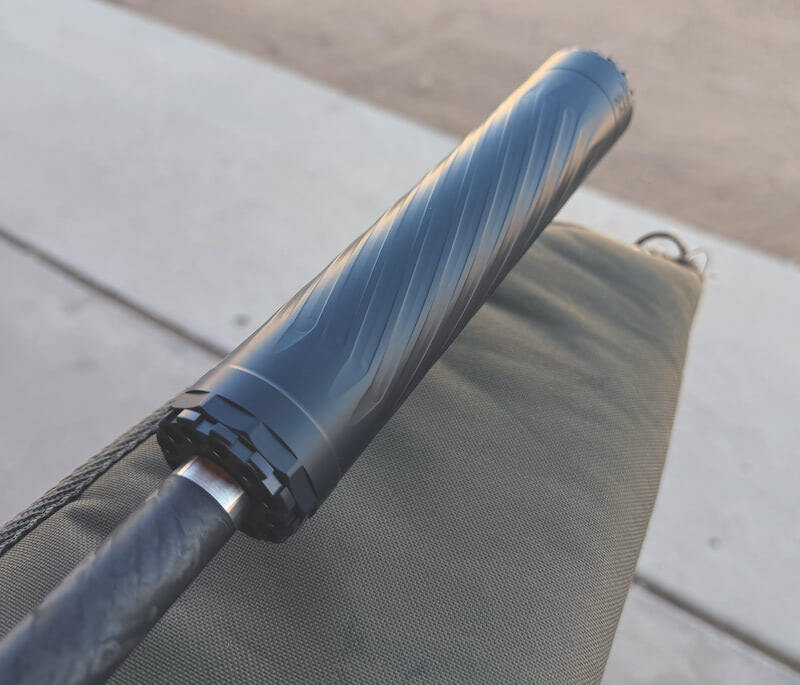
An effective solution to this is to decrease the sound of the shot at the barrel by using a suppressor.
Ownership
You can now legally own a suppressor in 42 states.
If you live in California, Delaware, Hawaii, Illinois, Massachusetts, New Jersey, New York, or Rhode Island, you can’t own a suppressor. If you live in Connecticut, you can own one, but you can’t hunt with it.
Suppressors have always been a bit of a legal hassle because they're regulated under the old National Firearms Act from way back in 1934. That means jumping through hoops like background checks, fingerprints, and forking over a $200 tax stamp every time you wanted one. But here's the game-changer: As of this year, Congress slipped a provision into H.R.1 — the so-called “One Big Beautiful Bill” — that drops that tax stamp down to zero dollars starting January 1, 2026. You read that right — no more $200 hit for suppressors, short-barreled rifles, shotguns, or those “any other weapons” categories.
It's all part of a push to treat these as hearing protection devices rather than some shady spy gear. While this is a great step, suppressors are still under NFA rules and your customers will still need to file that ATF Form 4, pass the background check, and maybe even notify your local sheriff depending on where you live.
As you’ve likely already noticed, there’s more good news: Processing now takes a couple of days compared to the 12-18 months of the past. Customers buying before the new year are still stuck with the old tax, but many dealers and manufacturers that are offering to pay it for the customer if they buy now. And come 2026, it's tax-free, which could save the market millions and open the floodgates for more people to try them out.
Win for Hunters
This change is a huge win for everyday hunters who want to protect their ears without breaking the bank, and that’s probably the biggest reason to consider a suppressor for hunting.
The typical hunt used to follow this path: You're out in the woods at dawn, heart pounding as the buck you’ve scouted for weeks steps into view. You line up the shot, squeeze the trigger, and Bang! — your ears are now ringing for hours, and you’ve definitely done permanent damage to your hearing.
Rifle shots can hit as much as 170 decibels, which is way over the safe limit of 85 dB where damage starts kicking in. One unprotected blast could leave you with permanent hearing loss or that annoying tinnitus buzz. Throw a suppressor on the end of your rifle barrel and it shaves off 25 to even more than 35 dB, dropping most hunting rounds to around or below the 130 dB mark — think jackhammer level, but without the pain. The best part? You likely don’t need those clunky earmuffs or constantly misplaced earplugs anymore. You can also hear everything around you — the crunch of leaves, a distant gobble, or your buddy whispering about the wind direction. If you're hunting with kids or introducing someone new to the sport, this makes it both less intimidating and a whole lot safer for whomever is sitting next to them in the blind.
I've heard from professional hunters in Africa that suppressors let you pick up on the thump of a bullet hitting home, helping you confirm a solid hit without the rifle blast drowning it out. Suppressors are so common in Africa that you can buy them at the local hardware store. Using a suppressor for hunting is also about the stealth factor — reducing how much you spook game.
We've all been there: You take a shot at one deer, and the echo sends the rest of the herd hightailing it for the hills. With a suppressor, that sharp report turns into a muffled pop that doesn't carry as far or sound as alarming. Animals might perk up for a minute, but they're less likely to bolt in panic, giving you a chance for a follow-up shot if needed — or just keeping the area calmer overall.
Other Benefits
Suppressors cut recoil 20 to 30% by redirecting gases, making a rifle feel smoother and easier to handle. That means quicker recovery for second shots, less flinch, and better accuracy overall — especially if you're shooting offhand or in awkward positions. Now younger shooters might not have to shoot a .243 and can move up to a .308 or .30-06. They also tame muzzle flash, which can be a lifesaver (or, more accurately, a “Vision-saver”) during low-light dawn or dusk hunts.
On the flip side, you're looking at a bit of extra length (between 4 to 10 inches) and some maintenance to keep them clean, but honestly, the upsides far outweigh those minor hassles. Plus, less noise means you're not bugging non-hunters nearby or stressing out other wildlife, which can help with land access and overall “neighborliness.”
Price Ranges
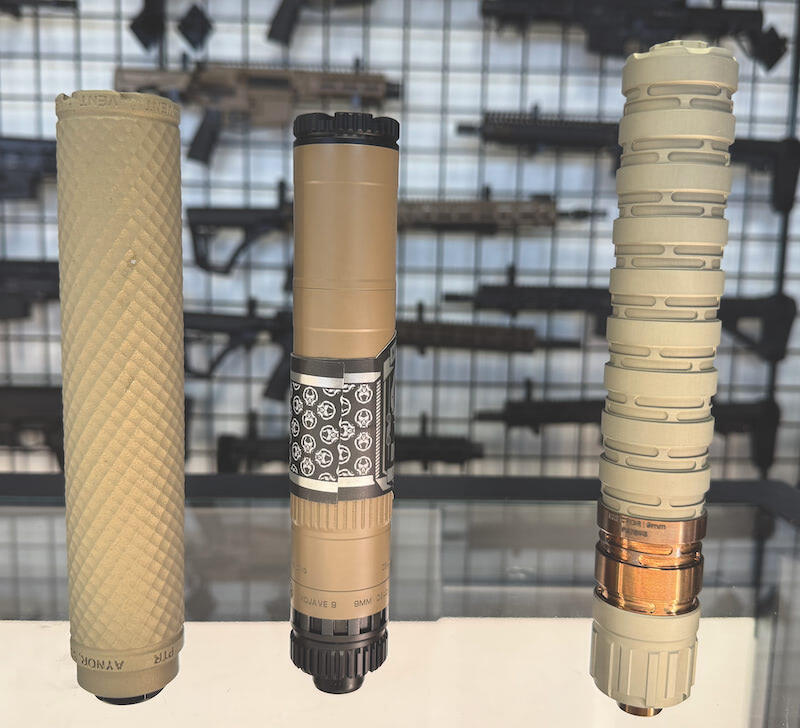
With the tax stamp going away soon, suppressors are getting more affordable, but prices still vary based on quality and features. For a customer just dipping their toes in, something basic like the Witt Machine Canooter Valve might run around $225 on sale — great for lighter calibers or smaller game. Stepping up, the SilencerCo Sparrow 22 is about $300, perfect for rimfire plinking or varmint control. For serious big-game hunting with centerfire rifles, your customers will be looking at anywhere from $450 to $1,500 or more. The Dead Air Nomad-30 is in the $800 to $1,000 ballpark, loved for its lightweight titanium build that's ideal for long hikes. For top-shelf performance, check out the HUXWRX FLOW 556 Ti at $1,300 to $1,500; its advanced design cuts backpressure, making it suppressor-friendly for semi-autos without gassing you out.
Budget models start low, but factor in extras like mounts ($50 to $200) and maybe a threaded barrel if your rifle isn't ready. The good news for those with multiple hunting rifles is they can buy one suppressor and use it on all of them. For example, I use my Anechoic .30 caliber on my .223, my .243. my and my 6.5 PRC, while my Dead Air Nomad 30 is on my 7mm Backcountry, 7mm Rem Mag and my .300 WSM.
Post-2026, prices might also dip further as more makers jump in and competition heats up.
Designed for Suppressors
There was lots of excitement early this year about Federal’s new 7mm Backcountry. If you've ever grumbled about lugging a long-barreled magnum rifle just to get decent velocity, this one's for you — especially with a suppressor attached. Traditional magnums like the 7mm Remington Magnum or .300 Win Mag need 24-26 inch barrels to really hit their stride, but add a suppressor to that and suddenly your setup's as long as a broomstick and tough to maneuver in brush or an enclosed deer blind.
The 7mm Backcountry flips the script on this. It's built on a beefed-up .280 Remington/.30-06 base diameter with a steel alloy case to handle sky-high pressures — up to 80,000 psi — which lets it push a 170-grain bullet to 3,000 fps out of a compact 20-inch barrel. Crank it up to a 24-inch tube, and you're looking at a bit over 3,300 fps, with flat trajectories and killer energy retention past 500 yards. That's magnum performance without the magnum hassle, thanks to fancy propellants and engineering that maximizes efficiency in shorter setups. Pair it with a 6- to 8-inch suppressor, and your total length stays under 30 inches — light, handy, and quiet for backcountry treks.
Ballistically, it's a beast: more punch than a 7mm-08, on par with the 7mm PRC in speed but with milder recoil and less barrel wear. Federal's Terminal Ascent bullets deliver deep penetration and expansion for everything from whitetail to moose, and the high pressure keeps gas flowing nicely for top-notch suppression. Some folks call it a gimmick, worrying about ammo availability since Federal's the only maker right now, but early adopters swear it's a revolution for suppressed hunting. If it catches on, expect more companies to jump in and ammo to become even more affordable.
As for rifles chambered in this hot new round, several big names are already on board. Christensen Arms, Savage, Weatherby, Geissele and others have made big bets on this caliber. Ruger, Proof Research, Gunwerks, Seekins Precision, and Pure Precision are either confirmed or rumored to be rolling out models soon, focusing on modular designs and long-range accuracy. With nearly a dozen manufacturers involved, it's gaining traction fast.