
Precision shooting is one of — if not the — biggest trends in shooting sports, which means that it affects shooting sports retailers regardless of whether they recognize and focus on that segment of the market.
The reason precision shooting affects all retailers is that precision shooting is now a significant factor in the industry, which means that it represents a measurable amount of the money spent by all shooters across all segments, which further means that there is a potential for added sales for retailers who are in the game, so to speak.
The concept of precision shooting is simple: put every shot precisely on target every time, regardless of distance or atmospheric conditions (wind, light, etc.). As simple as the concept is, getting from Square One to success is mind-bogglingly complex, which means there is a seemingly endless array of guns, ammo and gear needed for the customers to live their precision shooting dreams. Helping customers realize their dreams is what keeps the cash register ringing, so to speak.
But how precise is “precise” in precision shooting? It depends on the shooting discipline. Traditionally, the concept of precision shooting was embodied in benchrest shooting, where the object is to put successive bullets literally through the same hole.
Benchrest competitions are shot at various distances, ranging from 50 yards for rimfire to 1,000 yards for centerfire rifles. A record group at 1,000 yards is 3 inches. That’s precise.
More recently, there has been a trend in what is generally referred to as long-range shooting. This often differs from benchrest in a number of ways, not the least of which is that long-ranging can involve shooting from various kinds of rests, not simply from a bench. But the object is the same – putting the bullet precisely on target at distance.

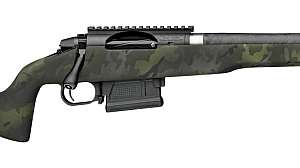
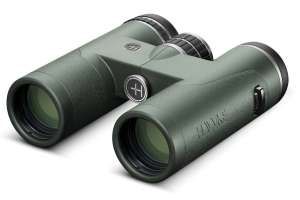
The beauty of all this to retailers is that it takes a lot of specialized gear for their customers to shoot precisely. Think guns, sights, ammo, etc. And the more serious the long-range shooter, the more high-performance equipment it takes to be successful.
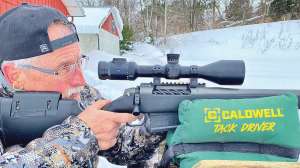
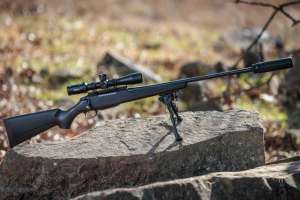
Although it all starts with a precision rifle, it takes precision sights (scopes in most instances) and the highest quality ammo as a bare minimum.
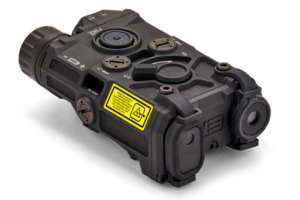
Things like wind meters, bipods and laser rangefinders are used commonly among long-range shooters. And in recent times, some telescopic scopes “talk” to cell phones or tablets to provide all the “dope” (distance, wind, etc. measurement information) necessary to make successful shots regardless of distance and atmospheric conditions.
Handloading is common among precision shooters as they fine-tune loads for specific rifles. Hence, there’s an expanded market for reloading presses, dies, calipers and scales, as well as powder, primers and premium bullets to say nothing of bullet comparators and those kinds of things.
The point in all of this is that there are significant additional sales and many repeat visits to the store by customers who want to be precision shooters. And the operative question for the store is just how involved to get in this trend.
The more esoteric any shooting discipline or trend is, the greater the need for in-store expertise if that potential is to be realized to its fullest extent. This, of course, can range from tacit recognition and incidental sales, all the way to shops whose primary focus is on precision shooting.
Most shops probably fall somewhere between the extremes. One strategy for those in the middle of the spectrum is to consider what kinds of products make sense, both for precision shooting and more general shooting. For example, if the shop primarily serves a general shooting and/or defense clientele, it’s logical to offer at least some of the more entry level precision products and market them in more of a crossover mode. That’s the equivalent of dipping a toe in the water to judge the temperature.
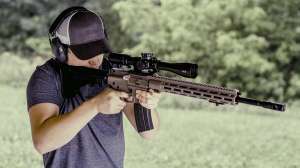
For shops that already focus heavily on AR/AK types of rifles, upselling to better barrels/uppers makes sense, as does stocking at least one or several higher-performance telescopic sight lines that incorporate reticles and adjustments that are designed for serious precision shooting, but which logically can be used on more universal rifle rigs.
The digital world has infiltrated the shooting sports generally and more heavily into the precision shooting arena. Depending on how invested a shop wants to be in the digital world, this is one area where sales can expand rapidly and widely for customers who use those devices to their maximum effectiveness, or to customers who want to use them, simply for the enjoyment of expanding the presence of electronics in their daily lives.
One thing is certain when it comes to precision shooting: It’s here to stay. There is no looking back.
Hence, the question is whether the individual retailer wants to capitalize on the trend and if so, at what speed and at what level?
There is no right or wrong answer universally. Such decisions depend on the clientele of individual shops — both the current clientele as well as the potential clientele.
The good news is that a shop can increase focus on precision shooting without sacrificing any other areas of focus that might already exist. In other words, if the focus is on tactical, the store doesn’t have to drop tactical to increase focus on precision tactical.
With that in mind, there is no logical reason not to give a shot at retailing precision shooting gear. And there also is no logical reason for shops that are already in that space not to increase their presence there.
In the end, it’s about riding the wave to higher sales. The industry has given shooters the ability to be more precise. Why not take advantage of it?