
Near the end of 2024, Fusion Thermal announced a new brand under its corporate umbrella, WAVE Infrared, providing thermal units at a lower price point than the Fusion models.
WAVE thermals are composed of two separate lines. The Advanced Thermal Rifle Scope or ATRIS models are tube-designed for a more traditional scope appearance. The ATRIS 335 features a 384x288 thermal sensor and 12 Micron pixel size, while the ATRIS 650 is built around a new 12-micron, and a 640 resolution sensor with advanced sub-18mK NETD performance.
Both feature 30mm main tubes.
The Tempest line of dedicated weapon sights feature a blockier look, and each unit incorporates a laser rangefinder. The units are the Tempest 335 LRF, the Tempest 650 LRF and the Tempest 660D LRF, the latter featuring a dual objective lens system.
The ATRIS 335 and ATRIS 650 do not have a similar product in the Fusion Thermal line. But the Tempest are Fusion comparable and carry an MSRP of anywhere from 6 to 20% less than similar Fusion models.
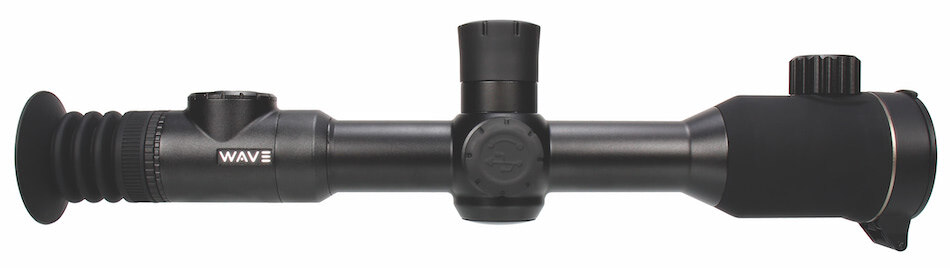
ATRIS 335
WAVE sent me a new ATRIS 335 thermal scope for testing and review.
As noted, the ATRIS 335 features a 384x288 sensor, 12-micron pixel size and sub-18mK NETD. WAVE rates the unit as providing heat detection at up to 2,000 yards. With a base magnification of 3.3x and digital zoom up to 16.5x, the ATRIS 335 also offers hot tracking, recoil-activated recording, and eight reticle design options, including illumination and color choices.
Images are viewed through an HD AMOLED display. The ATRIS 335 is also Wi-Fi-enabled for easy file management. The unit records photos, videos and audio with a simple ON/OFF button, is nitrogen-purged, and carries a IP67 waterproof rating. The ATRIS package includes two scope rings, a soft case and a start-up manual.
Like all WAVE thermals, the ATRIS 335 includes a 5-year transferable warranty.
Impressive
While using the ATRIS 335, a couple of impressive features stood out.
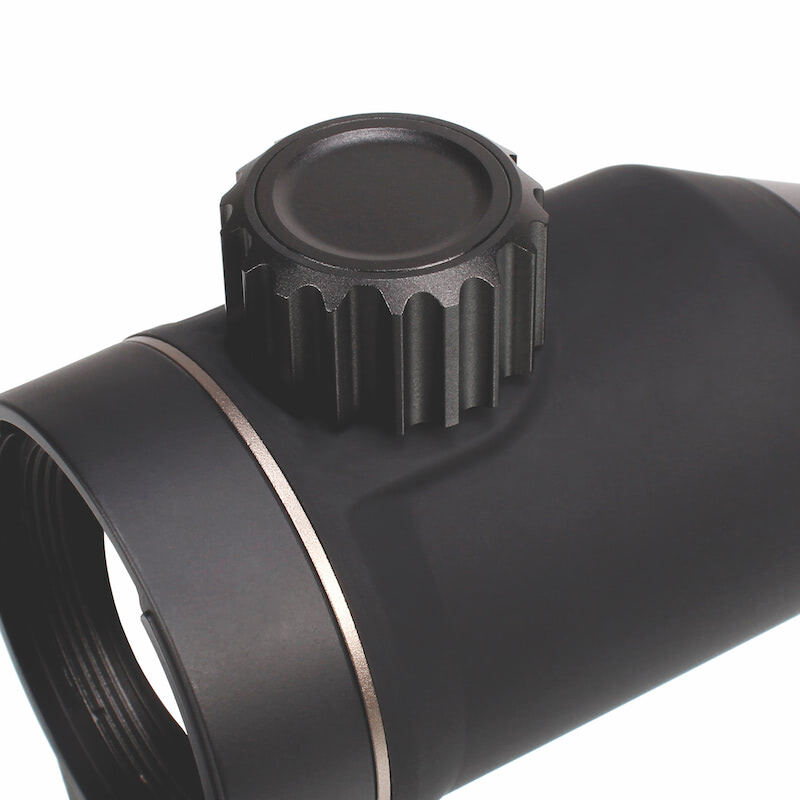
This thermal runs on a two-battery system I’ve not seen previously. One battery, and the longer of the two, is an 18650 lithium, the other an 18500 lithium. Both are rechargeable and a charging station is included with the purchase of the scope. Either battery fits into the top turret battery compartment, and each battery has its own screw-down turret cap to secure it in place.
Here’s the cool and very useful part. The shorter 18500 is rated at three hours of power when fully charged, the longer 18650 at seven hours. So, a quick change out of batteries will give the night hunter 10 hours of run time with the ATRIS 335.
And if that hunter purchases extra batteries? He or she can run the unit even longer.
Brilliant.
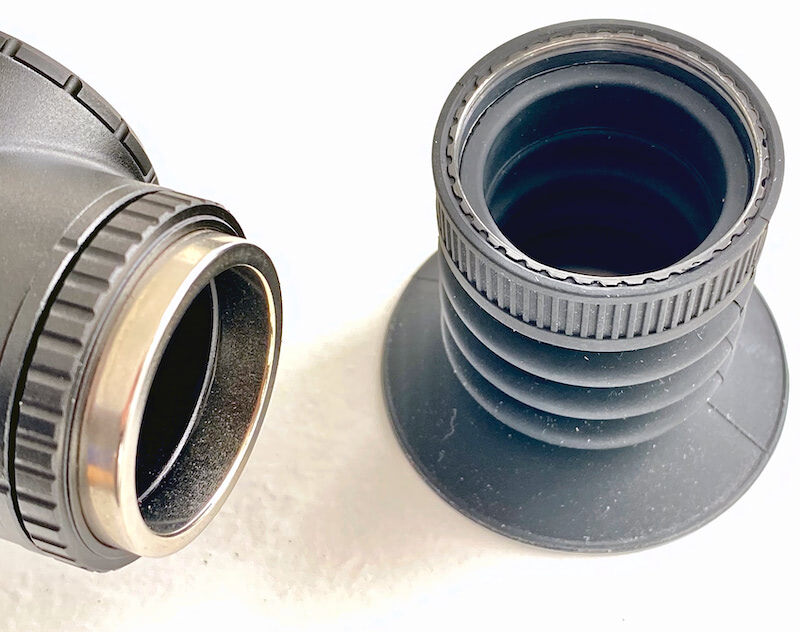
The second feature I really appreciated was the magnetic eye piece setup. Many thermals, of course, have a rubberized eye piece that fits over the rear display screen. Some units, though, do not allow the user to remove the eye piece, which can be a problem for those of us who wear glasses. That rubber eye piece smudges the eye glass lens and can really get in the way of a good sight picture.
Depending on the recoil of the rifle being used, getting the eye into the eye piece can be a great way to get the thermal jammed right back into the eye socket, too. Which hurts even worse when the shooter is wearing glasses — to which I can attest — and is a fine way to bend the frames.
Not a problem with the ATRIS 335.
The eye piece is removable by simply pulling back on it to disengage the metal inside the eye circle from the magnetized ring surrounding the display screen. Reverse the process to re-attach.
Genius.
Other Features
The ATRIS 335 controls are very straightforward and quite intuitive.
At the very front and top of the unit is a knob that adjusts the unit’s focus.
At the top rear sits a three-part control pad with ON/OFF at the front, the media button to the right and low, and the C button to the left for changing color palettes.
The last control is a knob along the middle and left of the scope. Turn the knob forward to increase the digital zoom, and back to decrease it.
To enter the various menus, long press the button at the center of this knob. This brings up the various menus along the left side of the screen. Use the knob to scroll to the menu needed, Gun Profile, for example, or PIP (Picture in Picture), and then short press to enter that menu. Then, turn and press accordingly to move within the selected menu.
Various icons populate the very bottom of the screen, and show the scope’s current magnification level, the Gun Profile in use, WI-FI status, the level of battery charge and the time of day.
At The Range
I outfitted the thermal with the two scope rings included and then mounted the ATRIS 335 onto a Ruger SFAR rifle chambered in .308 Win. For ammunition, I used Becks Ammunition’s .308 Win. loaded with a 145-grain Controlled Chaos bullet made by Lehigh Defense.
It was one of those relatively rare days at my outdoor range, north-central Wisconsin in February. Rare, as it was nearly 30 degrees and sunny. So, instead of using my usual heat packs taped as my heat signature targets, I opted for black duct tape strips on cardboard. I set my targets in the sun for several minutes, black tape heating up, and then affixed the targets to my range’s 50- and 100-yard backboards.
At my 50-yard zero, my first two shots hit low a foot and left another foot, just clipping the corner of my cardboard. My zoom was set at 5.3x.
In the menu, I selected “Zeroing,” and accessed the one-shot zero system. This system froze the reticle. Next, I moved the secondary zeroing reticle to the spot of the initial shots. I saved this setting and shot two more times and was right on target.
I moved to my 100-yard setup and increased my zoom to 8x, and adjusted the front focus. The double strips of back tape measured just 4 x 3.75 inches yet were easy to spot. The ATRIS even showed sharp edges to the tape and the cardboard.
My first shots were high. So, I re-zeroed. The ATRIS 335 proved itself a high-quality unit and helped me place three shot groups of 1.5 inches and better a half dozen times.
My two best groups were .90 and 1.0 inches.
And this was shooting strips of warm tape. A hot-bodied hog or coyote? It would almost be unfair.
Almost.
Selling ATRIS
The ATRIS 335 has so many features, especially for a thermal with an MSRP significantly under $3,000, that it can be tough to even know where to start a sales pitch.
“It is truly feature rich and with functionality not typically observed at this price point,” says Todd Bailey, national sales manager for WAVE Infrared and Fusion Thermal. “Point out such items as the unit’s recoil-activated video recording and 80 GB of video recording memory onboard. The 335 has eight reticle options, too, and six color palettes and five gun profiles with custom naming and zeroing yardage.”
Stress the one-shot zero function as well as the traditional zeroing mode of the scope.
But how to actually relay the many features to customers?
“I always suggest having a scope available to demo in the store,” Bailey says. “When doing so, we recommend the best practice of helping the customer adjust the diopter (display focus) for their eye. This ensures they achieve the best possible image quality and eye relief during their intro to the unit.”
It really helps to mount the ATRIS (or any thermal) onto an actual rifle chassis and then set up the chassis with scope onto a tripod. The set up keeps the unit steady while the customer operates the controls, while also replicating a hunting rig.
Once the ATRIS is configured to the customer’s eye, have the customer adjust the digital zoom (left side knob). Then, go over the rear control pad and let the customer change out color palettes.
At this point, the customer should be ready to move around within the various menus.
Don’t forget to mention that, as WAVE products are a brand that lives under the Fusion Thermal umbrella, all WAVE units share the same five-year warranty that is transferable. First-rate customer (and dealer) service is standard, too.
In-Store Help
“We have printed product specification sheets for each item available for dealers,” Bailey notes. “Additionally, we have a number of ready-to-go promotional video clips for dealers to loop on in-store TVs or monitors. Other materials are planned for 2025 including a planogramed display.”
WAVE sales reps prioritize counter team training sessions, too.
“When conducting training in store or through a zoom-type call, we make sure to bring or ship printed collateral for sales support,” Bailey adds. “Our training regimen is comprehensive. We try to not only create device fluency, but also thermal optics fluency in general, including familiarization with the terms and basic operational principles.
WAVE also offers a sales staff incentive option termed the Bounty Hunter program. Once counter team members are enrolled, they simply upload a picture of the sales receipt and serial number of the device sold through the Bounty Hunter site and they receive a cash incentive for each device sold.
Dealer Notes
For dealers, WAVE Infrared products are available direct from the company or through distribution. Currently, WAVE units are re-distributed through Sports South; WAVE is in talks with several other distributors as well.
Prospective dealers may reach out to their Sports South representative or to Bailey directly at tbailey@fusionthermal.com.
Media
“We have been fortunate to have the support of several social media influencers as well as podcasts,” Bailey says. “We launched the product line in November [2024], so it’s still early, but we were able to complete some interviews at SHOT.
“We have some notable influencers running our gear such as Clay Reid and Matt Salaskey, both popular hunters with YouTube channels. Additionally, Fusion Thermal has launched our own professionally produced podcast/vlog, Thermal Thugs.”
Media and marketing plans for 2025 include WAVE and its products making a big push into the competitive coyote hunting scene.
Expect more WAVE to come. Bailey notes that new WAVE units will launch this year, and the company plans increased marketing and media efforts.