
Spotting scopes provide a means for hunters (or animal watchers or stargazers) to enjoy a clearer and closer-up view of objects than what may be offered by binoculars or a rifle-mounted scope. Depending on features, spotting scopes can also be a significant investment for your customer, so it’s important to be able to provide reasonable recommendations on what to purchase — always keeping in mind the customer’s goals. Whether they’re trying to have a more successful hunt or simply experience nature more up close and personal, do what you can to educate them on new gear and neat features, and try to be a trusted resource who’s more than willing to help them with their experience.
Here are five tips to keep in mind to help you and your customers focus on their actual needs.
1: Provide a Basic Resource
Provide a simple, printed resource to your customers — especially those new to spotting scopes — to keep the basics in mind.
Spotting scopes come in various shapes and sizes and can run a broad price spectrum. And they can be used for a variety of purposes. In order to help your customers not only understand the basics but also learn what factors may affect their use and ultimately their buying decision, create a one-pager that captures some of this information. Yes, you can have this information on your website and available as a PDF, but having actual printouts will allow for far greater focus on the all-important basics. A printed document may sound old-school, and in some senses it is, but providing a printed document provides the ability for both you and your customer to focus on one thing at a time, without the distraction of finding something on a phone or a website. Make sure your one-pager is literally one page — front and back is okay — and the writing is simple and the graphics are clear.
The one-pager can provide links to other resources, but should be a sort of one-stop shop for understanding the main ideas with regard to spotting scopes. Of course, there’s far more information about spotting scopes available, but the point of the one-pager is to help set a customer up well for evaluating everything that’s next — a comparison of products, features, prices, and more.
2: Let Them Compare
Provide a means of comparing one spotting scope to another — an on-site range or nearby outdoor space.
A hands-on (and eyes-on) experience will do more to “sell” a customer on a spotting scope than anything. “See for yourself” can take on a whole new experience with this type of product and decision, so having products available for customers to experience for themselves is critical.
Have demo products on hand but keep them in their packaging as opposed to just sitting out. This will not only protect the product better but also give customers the opportunity to experience the unboxing and setup. Further, this gives the sense that the demo is an exclusive experience as opposed to something anyone in the store can experience. Consider the many times you’ve seen a demo telescope in a store — often it’s dirty, parts are missing, and customers are left to wonder how many germs are lingering on it, and more.
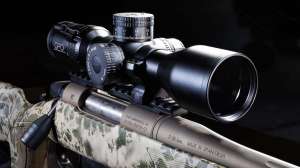
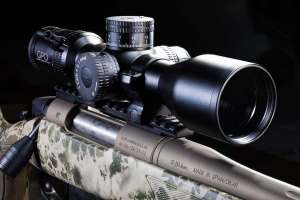
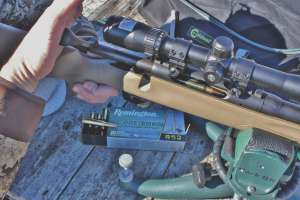
Do what you can to make the on-site experience as “real life” as possible — perhaps by setting up an outdoor space where spotting scopes can be tested either individually or compared to one another. Place relevant “spottable” objects at various distances to show features such as magnification and clarity. Show how the external controls work, demonstrate the stability of the image when using a tripod, and include a riflescope for hunters who need to know how to manage sighting between two optics. This should emphasize the advantage of using a spotting scope of some kind while helpfully demonstrating the logistics of spotting and then aiming.
3: Consider Use and Budget
Try to determine the customer’s level of actual use and financial capability.
In other words, sales staff need to remember that making the sale should be more a matter of listening and learning and applying than just merely pushing a product. In fact, using a simple one-pager and providing some hands-on, eyes-on range experience may be so instructive for your customer that they question what type of spotting scope they need or even if they need one at all. In the long view, this needs to be seen as a win for the customer, even if in the short view it results in the sale of a less profitable product or no sale at all. A customer that learns, in your store, from your staff, how a product actually affects their time in the field, is a customer that will grow in their trust of your store and staff. In all likelihood, they’ll be back, and even more dialed in to your advice.
Moreover, help customers stay within their stated price range, showing them products that meet their criteria in one way or another. As they see what’s available for what prices, then you can introduce the idea of other products that may cost more but add significant value. One of the most repeated phrases for any sales staff should be, “Let me show you the difference between a product that costs X and a similar product that costs more. And here’s what ‘more’ brings in terms of value.”
In other words, don’t always go for an upsell; rather, always portray your business as willing to listen and help the customer figure it out. This builds trust and trust keeps customers coming back. You can always try for an upsell later.
4: Bring in an Expert
Put on a spotting scope clinic with a local hunting or optics expert.
Every customer interaction should be a type of event where the customer and the sales staff engage together on the nuances of a particular product. These reactive, off-the-cuff interactions are typical and necessary. The next level for this type of interaction is a planned event where your store publicizes a designated date and time to provide some instruction on a particular product. Of course it’s a sales opportunity. But it is couched in providing helpful instruction — how to’s, tips, etc., to help customers think through and decide on a purchase.
For an event on spotting scopes, besides publicizing a date/time for a clinic on some of the nuances of choosing and using a spotting scope, try to invite a hunting or optics expert to your store. This can provide less of a sales atmosphere and more of an opportunity for customers to hear from a more objective third party, lending more credibility to the event.
Events also include opportunities to collect customer contact information, offer a limited-time deal or coupon, create community for other hunters in the area, introduce customers to your staff, and, of course, simply get them in the store. Plenty of benefits for a relatively small investment of time and money.
Ask spotting scope representatives what resources they offer for your store. Obviously they’ll be interested in selling their brand, but often they’ll gladly speak about tips and tricks related to hunting or using hunting-related products, offering that third-party or expert opinion that can prove to be foundational for building customer trust.
5: Don’t Forget Accessories
Help your customer remember accessories related to spotting scopes.
These include protective, padded cases for transport; additional eyepieces; lens filters; cleaning kits; smartphone adaptors; and tripods. Probably the most important are the padded case and a decent tripod (or whatever other stabilizing mount would suit your customer’s needs).
Tripods
Any optic providing high magnification will benefit from resting on or being mounted to a stabilizing base. Otherwise, you’ll look through the lens and what you see will be bouncing around with every heartbeat. A full-sized tripod is suitable for a straight scope, while a short tripod is suitable for an angled scope. Look for a tripod that offers a secure and balanced mounting location for a spotting scope, easily adjustable but with secure legs and feet. Some spotting scopes come with a tripod and/or a car window mount.
Made from carbon fiber (and thus strong and lightweight), the Gitzo Tripod Systematic Series 3 offers significant support for large spotting scopes or other mountable gear. Easily adjusted leg locks and modular accessories offer versatility while the wider feet provide more stability.
Consider the Celestron Ultima 20-60X80MM Angled Zoom Spotting Scope with Smartphone Adapter. This highly-rated, entry-level spotting scope includes a rugged build to withstand the elements along with a smartphone adapter to record images on your mobile device through the scope. A 45-degree viewing angle combined with 20-60x magnification provides comfort and versatility.
Also take a look at the Bushnell Trophy Xtreme 20-60x65 Spotting Scope. This spotting scope comes with hard case, strap, and tripod (with vehicle window mount). Measuring 15 inches in length, the scope weighs in at 36.5 ounces.