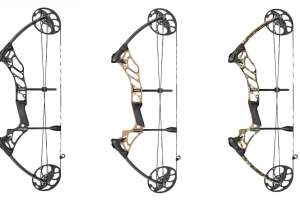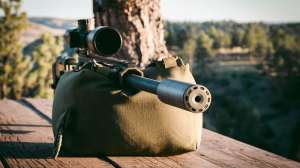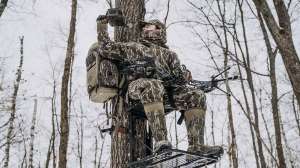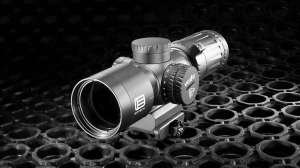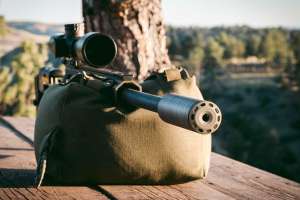

Long-range hunting has become increasingly popular among a growing number of sportsmen. And there’s no doubt that assembling a shooting system that enables a hunter to accurately place a bullet on target at distances that seemed ridiculous just a decade or so ago can be done relatively easily, if the hunter has pockets deep enough and is ready, willing and able to put in the time on the practice range. Entire companies have been built on the premise, and retailers can make a nice dime selling the rifles, scopes, rangefinders, ammunition and related accessories required to make shots at half a mile or more.
However, as the potential for long-range shots expands, and as more and more hunters are heading afield in areas conducive to shots “way out there” with low-draw-odds big-game tags in their pockets, so does the need for ethical and responsible hunting practices. And while I am an enthusiastic supporter of extreme-range target shooting — did you know that in 2022 a Wyoming rifle team set a world record by hitting an 8-inch bull’s-eye at a distance of 4.4 miles? — questions have begun to arise as to how such technology will affect the future of hunting in myriad ways.
To make this incredible shot, the shooter had to take into account the Coriolis effect (the rotation of the earth), among other environmental factors, with the bullet in the air for more than 20 seconds. It also took 69 shots to make the hit on the 8-inch orange circle bull’s-eye. And while shooting at game at this extreme a range probably won’t happen, in 2018 a Wyoming hunter was videoed using a .50-caliber rifle to shoot a pronghorn at 1,954 yards. Would you consider this fair chase hunting?
That question has begun cropping up in legislative circles. In an article in the June 6, 2025, Cowboy State Daily, reporter Mark Heinz discusses the “hotly-debated hunting matter of how far is too far for ethical rifle shots” during a meeting of the Wyoming Legislature’s Travel, Recreation, Wildlife and Cultural Resources Committee, who noted that “extremely long-range hunting shots are a growing concern, as they relate to hunting ethics. But they questioned whether there’s any practical way to regulate the practice without trying to legislate ethics and morals.”
Beyond the ethical questions that revolve around the need for a ton of pre-hunt practice — which, as we all know, some simply won’t do — questions surrounding fair chase and how the non-hunting public might perceive the practice become paramount.
On one side of the equation, some believe that even if a hunter is skilled enough to shoot accurately at extreme distances, it still would not be ethical because from the get-go the animals don’t have a reasonable chance of escape. All things being equal, most big-game animals (pronghorn excluded) cannot detect hunters more than a quarter mile away, and thus, shooting at one from half a mile would not be fair chase since they do not have a reasonable chance of avoiding detection and escaping. They say if you want to shoot at 1,000 yards, shoot at targets, not game.
On the other side, proponents of long-range hunting say that avid long-range shooters know their equipment and its capabilities, practice diligently, and sometimes use that equipment and skillset to make a clean kill regardless of distance. They ask, “Isn’t that the point, to dispatch an animal as humanly as possible?”
Both make valid arguments. At the end of the day, it will be difficult for legislatures to make judgments on long-range hunting and its ethics. It is up to the individual hunter to decide if hiking to the top of a ridge overlooking miles of steep canyons or wide-open prairies, setting up a sniper’s nest, then shooting at an animal at long range rather than using their skills as a hunter and woodsman to try to sneak in closer before shooting floats their boat.
But state game departments can, and should. Two issues will drive future discussions. One is whether or not long-range hunters will experience higher success rates than in seasons past, which might result in the need to issue fewer tags and/or alter the amount of days a season is open. One way to address higher success rates but not reduce hunter participation is to introduce special hunting seasons for shorter-range weapons, including rifles with open sights or zero power scopes, handguns, etc., in lieu of general seasons with no restrictions. This has already been done in some states that restrict muzzleloaders to those with open sights, non-pelletized propellants, and an open breach.
The other is public perception. Sy Gilliland, past president of the Wyoming Guides and Outfitters Association, told the Cowboy State Daily in a 2022 article that “Hunters and guides must be mindful of their reputation with the general public. Having nationwide public opinion turn against hunting could spell the end of it. The average suburban housewife might not understand much about hunting,” he said. “But she understands that shooting an animal behind a fence isn’t ethical. She understands that shooting an animal from 800 yards away isn’t ethical.”
Another question is, of course, whether or not long-range shooting increases the odds of wounding an animal, and even whether or not a fatally hit animal would be recovered. If you’ve never shot across a wide, brushy and timbered canyon out West, then tried to locate the downed animal after a long, arduous up-and-down hike, you don’t know how difficult this can be.
What’s your take? Drop me a note at editor@grandviewoutdoors.com and let me know. I’d love to hear from you.