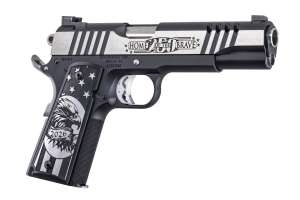

A semi-automatic pistol’s reliability depends on an intricate balance of precise parts moving in harmony at high speed. Small degradations in ammunition or magazine performance can push a system out of that tight timing window and produce a malfunction.
Every firearms-handling class I’ve taken or taught includes drills designed to clear common semi-automatic pistol malfunctions. We load magazines with dummy rounds to create random stoppages, then practice clearing them until the response is automatic.
The premise is simple and immutable: malfunctions will happen. Knowing the type of failure and the corresponding corrective action will help you teach your customers what they need to know to get back into the fight — fast.
Make sure your staff and customers are all familiar with the common failures and corrective actions.
Failure to Fire — Tap, Rack
Failure to Feed — Strip, Racks, Load, Rack
Failure to Extract — Sweep, Strip, Racks, Load, Rack
Double Feed — Strip, Racks, Load, Rack
The goal of these drills is to get fresh, functional ammunition into the gun quickly. Below I’ll describe each malfunction, the typical root causes, the emergency drills used to clear them, and practical steps to reduce the chances of recurrence.
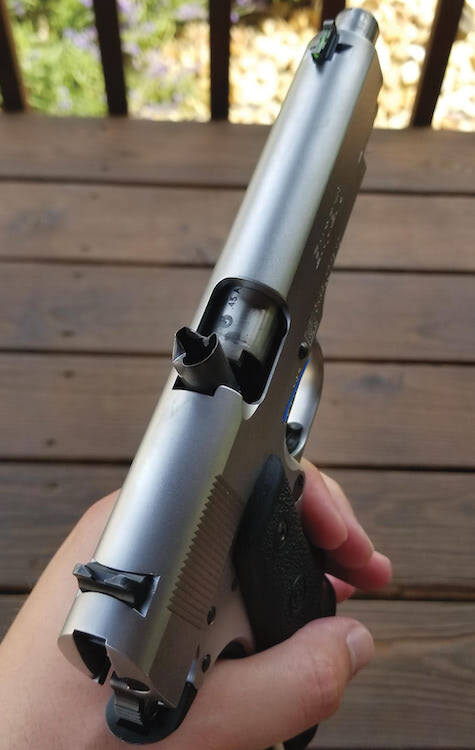
Failure to Fire
A “click” instead of a “bang” is the classic failure to fire. In almost every case the culprit is bad ammunition. The immediate drill is the Tap‑Rack: firmly tap the magazine base to ensure it is seated, rack the slide to extract the round, and try again. If the pistol fires, you were likely dealing with a bad cartridge — rare with modern factory ammo, but not impossible.
If repeating Tap‑Rack fails to produce a discharge, escalate. The next likely cause is a magazine problem: a weak spring, damaged feed lips, or a poorly seated magazine can prevent proper chambering. Eject the magazine, insert a fresh one, and rack another round. In a defensive encounter you don’t have time for repairs; discriminating between bad ammo and a failing magazine may mean the difference between life and death.
Less common causes include light primer strikes, broken firing pins, or weak striker springs. Those are not fixable on-scene and should trigger an immediate disengagement plan. Be mindful of hang-fires and squib loads: a hang-fire is a delayed ignition and a squib load can leave the bullet lodged in the barrel. At the range, a suspected squib requires keeping the muzzle pointed in a safe direction and calling a range officer; do not fire another round until the obstruction is cleared.
Failure to Feed
Failure to feed happens when the slide strips the top round but the cartridge does not seat in the chamber — the slide remains partially out of battery and the round looks tilted or jammed. This is among the most common stoppages and is usually magazine-related: weak springs, uneven followers, or damaged feed lips are frequent offenders. Some firearms are picky about ammunition profiles; what feeds perfectly in one gun may stutter in another.
Clearing a failure to feed typically requires stripping the magazine from the pistol (sometimes it must be pulled manually if it’s jammed), cycling the slide to clear the stuck round, inserting a fresh magazine, and racking a new round. Training with the specific gun/ammunition combination you plan to carry is essential: test magazines and loads to establish reliable pairings.
A brief historical aside: when Glock introduced the G17 in the U.S., its polymer magazines didn’t always fall free — they often required a manual pull to remove. Americans preferred magazines that dropped free when the release was pressed, so Glock revised the design and added steel inserts that corrected the issue. It’s a practical example of user expectations shaping magazine design.
Failure to Eject
A failure to eject occurs when a spent casing extracts but does not clear the ejection port, leaving brass hung up between slide and barrel — commonly called a “stovepipe.” Clearing this mirrors the failure-to-feed procedure: sweep the support hand down the slide to knock the casing free, strip the magazine, cycle the slide several times to confirm the chamber is clear, insert a fresh magazine, and rack to chamber a new round.
Low-power or underloaded ammunition is a common cause — the slide simply lacks sufficient energy to cycle fully. Mechanical causes include a damaged extractor, weak ejector, or debris in the chamber. Regular inspection and cleaning reduce the risk of these mechanical problems.
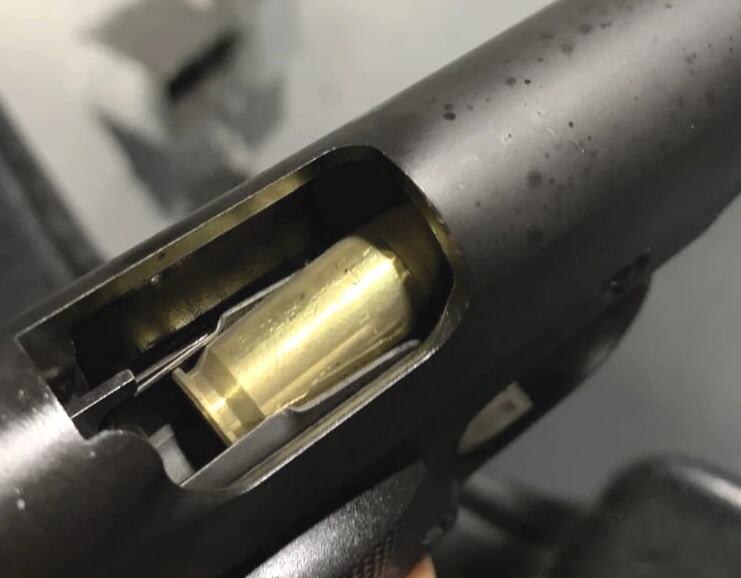
Double Feed
A double feed is the most stubborn stoppage: a live round is pushed forward by the slide while a spent casing remains in the chamber, effectively locking the slide in the open or partially closed position. It’s usually a magazine issue — two rounds attempting to occupy the same space — and clearing it requires stripping the magazine, cycling the slide to dislodge both round and case, then inserting a fresh magazine and racking a round.
Don’t waste time fiddling with the offending magazine during a defensive encounter. Discard the problematic magazine, and continue the engagement with fresh gear. The cost of a cheap magazine pales in comparison to the cost of a disabled handgun in a self-defense scenario.
Ammo and Magazines
Prevention comes down to two things: quality ammunition and well‑maintained magazines. Factory ammunition from reputable makers (Hornady, Federal, Remington, Winchester, etc.) has an extremely low failure rate. Buy new, store it properly, and cycle through your carry stock regularly.
Magazines are slightly more complex but still straightforward to maintain. Clean and inspect magazines regularly — ideal practice is a quick inspection each time you clean the firearm, and a full disassembly/cleaning on a schedule (or whenever you notice feeding issues). Use a cleaner that leaves no residue and treat metal parts with a light dry lubricant designed for firearms; avoid heavy or wet oils that attract grit. OEM magazines are a solid baseline for reliability; test aftermarket options thoroughly before trusting them for duty or carry.
It’s helpful to follow these practical maintenance tips:
• Inspect feed lips for burrs, dents, or deformation.
• Confirm follower movement is smooth and the spring has good tension.
• Clean magazine bodies and spring areas with solvent and a brush; dry thoroughly.
• Lightly coat metal surfaces with a dry film lubricant — do not use petroleum-based wet oils.
• Rotate magazines and replace springs after heavy use or if reliability drops.
Human Factors
After mechanical reliability, the single biggest factor is the human operator. Regular, realistic training under stress conditions builds the reflexes to perform emergency drills quickly and correctly. Routine practice should include malfunction drills, reloads, and transitions to secondary weapons so that, under pressure, the correct actions become automatic.
Focus on quality components, consistent maintenance, and regular training. If you control those variables, malfunctions become rare events rather than inevitabilities. When stoppages do happen, have the practiced drills and the muscle memory to clear them fast — and always pair competence with a plan: Your safety may depend on it.