
Keeping a firearm rust-free is a top priority for every one of your customers. It’s easy for EDC guns. They handle them daily and can detect any signs of corrosion before it causes major damage. Rust doesn’t have a chance.
It’s different, however, for guns that are in storage. They sit in a gun safe without being seen. If they haven’t been protected, moisture and oxygen can get to them, and it’s only a matter of time before they start to rust. That’s why annual inspection and cleaning is a must. I rotate through my stored guns on a regular basis, staggering the dates. My handguns are inspected and protected in October, rifles in February, and shotguns in June. When I am working with handguns, I’ll do a quick inspection and wipe-down of my rifles and shotguns, ensuring that none of them are unseen for more than four months at a time.
That’s adequate for my storage needs. But what if your customer needs to store a gun for an extended period that spans years rather than weeks or months? Can you guide them through the necessary steps and recommend the right products? Let’s talk about long-term storage.
Anyone who has ever reclaimed a WWII military surplus rifle from storage has likely encountered Cosmoline – the military’s then-preferred method of protecting tools, weapons, and even stored artillery. Cosmoline is a mixture of wax and a petroleum-based lubricant with the consistency of grease. It is easily applied and just as easily wiped clean when first used, and it effectively seals the equipment in a moisture-repellant barrier, preserving it in new condition. The problem, as many soldiers and collectors have discovered, is the volatile petroleum compounds evaporate over time, leaving behind a hardened, waxy coating that takes considerable effort to remove.
Fortunately, new methods of storage have emerged, providing the same or better protection without all the mess and frustration.
The Enemy
Whether short or long-term storage, the enemy is the same – rust. Oxygen molecules penetrate unprotected iron alloys, such as steel, and cause oxidation. Once started, the process continues for as long as oxygen is available. To make matters worse, sometimes moisture also exposes metals to other chemicals which accelerates the process by forming acids and other harmful compounds. Protecting guns from corrosion requires that we all take active measures to protect against contaminants. It requires familiarity with the methods as well as the dos and don’ts of storage.
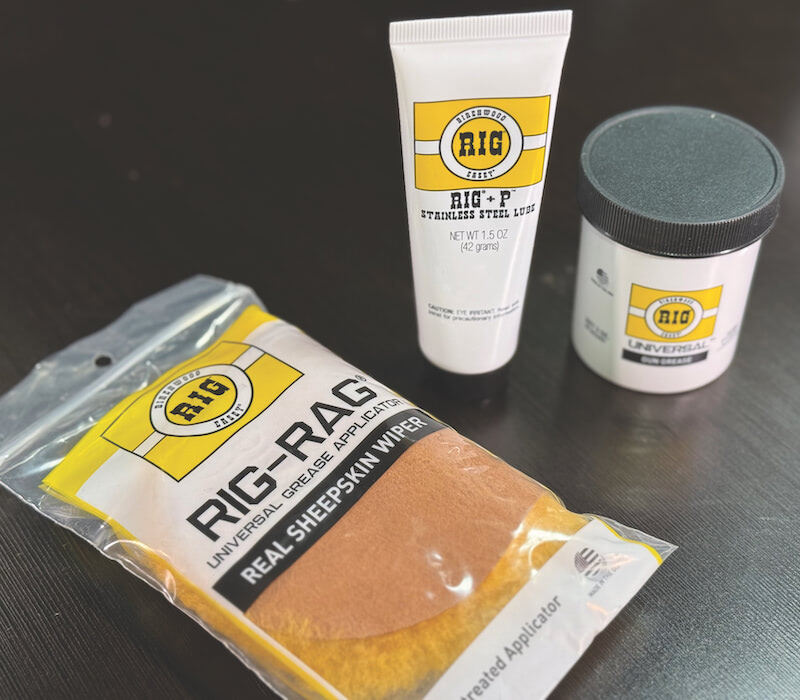
Although the enemy hasn’t changed, technology has. Firearms still need to be cleaned, lubricated, and protected with quality products. I’ve had great success with Birchwood Casey +P Stainless Steel Lube and their RIG Universal Gun Grease. Another is Break Free Collectors Long-Term Protectant. They have helped protect millions of firearms and should occupy space among your gun care offerings.
A Good Solution
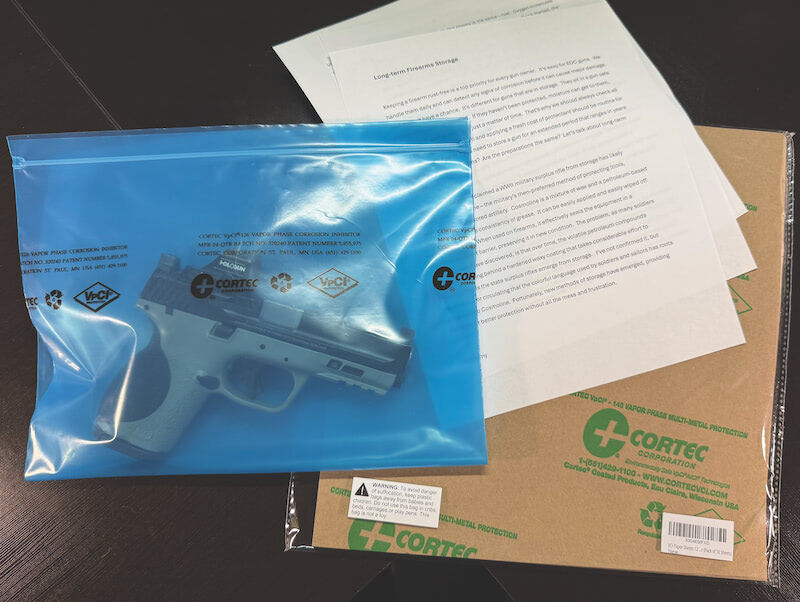
Some products gradually improve over time. Others innovate. A great example of the latter is another of my favorites, VCI sheets and storage bags. VCI is the abbreviation for “Volatile Corrosion Inhibitor.” They are chemical compounds that can be impregnated in paper sheets and storage bags designed for storing metal items over extended periods. When a metal item is wrapped in VCI paper or placed in a VCI bag and sealed, the volatile compounds evaporate and fill the enclosed space. The gas molecules float around and eventually condense on metal parts, providing a chemical layer that not only provides a protective barrier but also displaces any moisture that happens to be present. VCIs are not exclusive to guns. In fact, their first use was for protecting freshly machined metal surfaces for industry. If you’ve ever purchased an automotive bearing, U-Joint, or even brake rotors, then you’ve encountered VCI-coated paper as part of the packaging. It looks like thick brown paper that can be bought in craft or hardware stores. VCI sheets are wrapped around parts or simply thrown into the packaging with them. This ease of use is one of VCIs major benefits. Another is that the gasses can penetrate through the smallest of openings and provide as much protection for concealed or inaccessible places as they do the external surfaces. The sheets are perfect for wrapping guns before placing them into their case for storage.
As useful as the VCI sheets are, gun owners will likely be more excited over VCI plastic bags. These are like food storage bags but come in various sizes small enough to fit handguns or long enough to hold rifles. Some of them seal like Ziplock bags. Others have an open end and can be folded then taped, stapled, or heat sealed. The VCI compounds evaporate, fill the enclosed space, and protect the metals within. VCI products are now the military’s preferred method of protecting tools, guns and other metal components partly because they are so simple to use. The expected life of VCI products varies by manufacturer but they can last as long as 10 years.
One of the most significant advantages of VCI products isn’t placing items in storage but rather restoring them to service afterward. The VCI particles remain volatile and simply evaporate from the metal surfaces and dissipate when exposed to the atmosphere. Tools can be instantly used, and firearms can be loaded and fired immediately after they are pulled from storage.
Placing guns in long-term storage doesn’t have to be a hassle and doesn’t take much more effort than should ordinarily apply to storing them. They should be cleaned and inspected as usual, then have a protective coating of quality oil applied to all metal surfaces. If a gun has wooden handles or stocks, it’s recommended to apply a wax to keep it from drying out. Afterward, the gun can be wrapped in VCI paper and returned to its storage container or it can be placed in a VCI bag and sealed. That’s how the military handles them, so we can be confident the process has been thoroughly tested and provides the best protection available.
VCI products are important components for long-term storage, though are likely not in as high demand as the other products mentioned. As such, it’s not recommended that stores keep them on-hand. A wise move would be to secure a source and make them available as special order items for those who want them. If you do see a need, they are not very expensive. Just remember that they must be stored in airtight packaging to prevent the VCI from evaporating. They should also be stored in a dark location.