
In my years working within the archery industry, I dedicated myself to developing and implementing a vision I called Community Archery. This innovative approach aimed to integrate archery and bowhunting as a lifestyle into the heart of communities, utilizing industry retailers as central hubs for archery activities and equipment.
The illustration below highlights an equal emphasis on both target archery (on the left side of the image) and bowhunting (on the right).

Throughout each state, I imagined a handful of larger “destination archery parks” where large state, national and international events could be held. Complementing these, smaller local community practice parks were strategically distributed, ensuring convenient access for enthusiasts. Each park was associated with either a parks and recreation program or an archery club to facilitate education, competition, recruitment, and retention of archers. The good news is that park construction, maintenance education, and training are done without reliance on a volunteer base.
Each community with an archery facility would also offer school programs and beginning archery programs at the local recreational facilities. Everyone exposed to the sport would be provided information about competitive and hunting opportunities and/or the Explore Bowhunting program.
Beginning and continuing education for archery instructors, coaches, and mentors would be available regularly through a partnership with state and local agencies. Archery programs would continue throughout collegiate and local archery clubs.
Together, this approach was meant to foster a comprehensive archery culture from the grassroots through higher education and professional.
This concept was my dream — my vision for archery while I worked in the industry.

Barriers to Overcome
Several challenges impeded the realization of this vision.
One of the first things we had to do was shift what we called these facilities. Shifting the terminology from “range” to “park” was necessary to align with recreational facilities and dispel safety fears associated with the term “range.” Plus, if our mindset shifted to what parks should look like, that helped us in the design phase to be more user-friendly for all sorts of users.
Second, overcoming the perception that archery was a sport confined to remote areas required active dialogue with parks and recreation professionals. Because of safety concerns, those not familiar with archery believed it could be located only on remote lands, which I call “the back 40” and not inside any community’s recreational hub.
We had to work hard to change this perception. We had to educate local archers and retailers, many of whom also had “back 40” mentalities and limited knowledge of what it takes to welcome everyone to the sport. Sometimes club members or retailers would speak to parks and recreation staff with this old mentality, which made it confusing to know who to believe/trust.
Safety was always the biggest concern, and justifiably. I had already helped develop and publish the Archery Trade Association’s Safety Brochure and had that available every time I spoke.
Design Challenges and Solutions
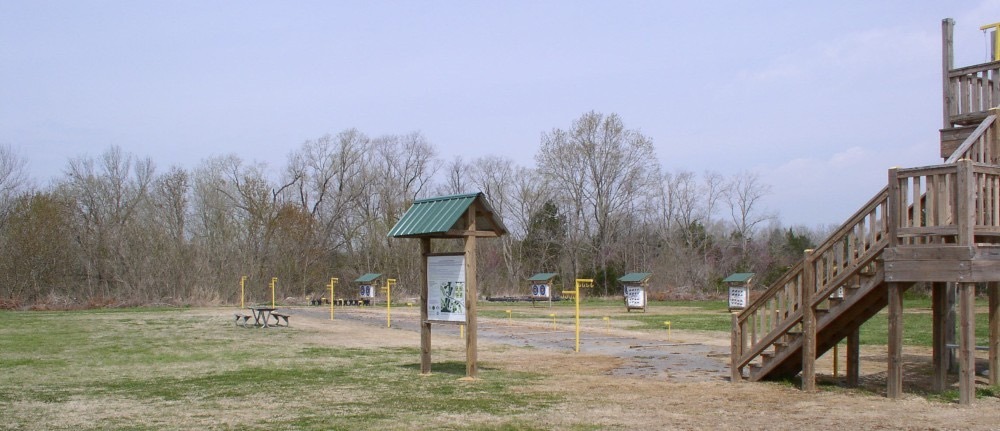
A notable challenge was the lack of detailed design documents. To address this, I developed case studies and design guidelines, enabling parks and recreation departments to create Requests for Proposals for facility builders. The goal was to create visually appealing, user-friendly, and community-acceptable archery parks that integrated seamlessly with existing recreational spaces. An Archery Park Guide was developed and widely distributed so parks and recreation departments had designs as well as case studies in hand.
We suggested risk management through safety distances and buffers, both manufactured and natural. The guide suggested access considerations. We also provided suggested rules, shooting guidelines, and facility amenities for safety and comfort. Range etiquette and additional ideas for risk management were provided.

The Evolution of Strategy in Alabama
Implementing the Community Archery Strategy found its first testing ground in Alabama, where the Alabama Department of Wildlife and Freshwater Fisheries signed a memorandum of understanding with the archery industry. This partnership, initiated in 2004, led to the establishment of the first archery park in Athens in 2008. Presentations and demonstrations at the annual meetings of the Alabama Recreations and Parks Association (ARPA) which led to successive parks in Cullman and beyond showcased the potential for the strategy to transform communities and bring archery into the mainstream. The strategy included providing funds to help build archery parks, as well as provide equipment and training for schools and parks and recreation professionals.
The National Archery in the Schools Program had recently been introduced in the state when we started this partnership back in 2004. The first archery park was built in Athens, Alabama. It is a small park with four targets from an elevated platform and a standard 12-target range out to 50 yards located behind Athens High School. We held a grand opening like one would do for any new facility and invited school children to attend and shoot with local instructors and dignitaries. Schools within a 20-mile radius of the park could apply for an equipment grant to get archery programs in their schools.
The next park and implementation of the Community Archery Strategy took place in Cullman, Alabama in 2009. This facility set a new standard and was located next to the golf course and included beginner and advanced practice areas as well as a large walking course. Easton Foundation provided $50,000 for an open-air pavilion with storage and restrooms. More schools in the area were provided with equipment, as was the city’s recreation department. The Bowhunters of Alabama began using the facility as part of their sponsored archery competitions. The local club and archery retailer were huge supporters and started seeing the value of what we were trying to do in the state.
The city of Cullman became so enamored with archery that they began finding ways to expand by building a small indoor facility for programs, and eventually, using other lands for national and international tournaments. Several tournaments have been held, bringing tourist income into the city.
Within a few short years, several more facilities were built, and community archery programs developed. Eventually, the state agency no longer had to approach cities to develop these facilities, parks and recreation professionals began talking amongst themselves and more interest developed. Archery was on the agenda during state parks and recreation meetings, and now the cities are coming to the state agency to ask for help, and sometimes not even asking for funds. There are now 19 archery parks across the state of Alabama. In addition, there are a growing number of clubs, archery programs, and competitions of all kinds.
Community Testimonials: Voices of Impact
- Kenny Thompson, Assistant Director for Programs for the City of Dothan, said “Anytime you can introduce people to a new activity, one that most people can do, is a good thing.” Since the opening of the archery park, the city has hosted several state parks and recreation archery tournaments, holds classes at the park and sends students to the local Junior Olympic Archery Development Program (JOAD) as they advance.
- Mathew Burns from Van’s Sporting Goods in Cullman, Alabama, said, “We gain more customers each year from the events that are held there [at the park]. The park gives our shooting staff an opportunity to help promote the sport and our business in an open environment. The park is a great benefit for our business and many other businesses in the community. We appreciate having the park in Cullman.”
- Nathan Purvis, also from Van’s Sporting Goods, said, “The archery park and the events it hosts, in combination with the school NASP archers are the reason our archery department continues to grow every single year as well as a very welcome boost to the local economy.”
- Toni Leo of Hoover Parks and Recreation says their program just keeps growing. When I spoke to Toni, she attributed the success of their JOAD program to several factors. The first is that archery can be done by anyone. Second, instructors are consistent in training and are great communicators (they use GROUPME app). Third, they have a reputation for creating competitive archers and encourage tournament practice (including attending the tournament at Dothan each year). Finally, they have a great partnership with a local retailer, Hoover Tactical Firearms, where classes are held in winter. Several archers from this program have now competed, with some ranked, at the national level. “We could fill classes 4 days a week, if we wanted.”
Success Stories and Kudos
The success in Alabama continues to hinge on collaboration with the state agency, cities, schools, and organizations such as the Bowhunters of Alabama. Key individuals played pivotal roles in overcoming challenges while remaining dedicated to the effort.
The Bowhunters of Alabama, which serves as the state’s largest archery and bowhunting organization, fosters community support and prevents competition between facilities. They encourage members to support as many of the facilities as possible. They did not see these archery parks as a threat but as more opportunities for their members to have local places to shoot. This is a rare mentality in the industry that is to be commended.
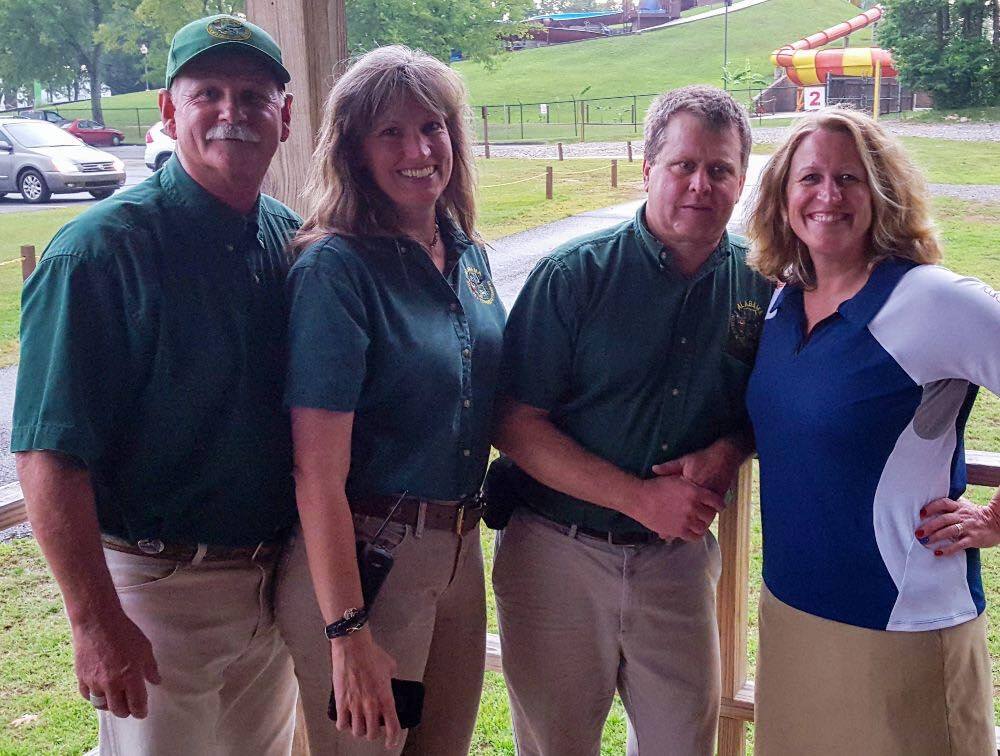
This work also takes highly dedicated individuals such as Ray Metzler, Stuart Goldsby, and the late Marisa Futral. Each played a pivotal role in communicating and working closely with early adopters to make this happen. They helped us experiment with designs, risk management, rules, and events. Without their willingness to try new things, make mistakes, and keep learning, this community archery concept would never have happened. They did not just work on facilities, they helped grow archery programs in schools, in parks and recreation departments without facilities, and by working with local clubs and retailers.
I had to change my thinking along the way as well. After we had built the Athens and then Cullman facilities, which are about 45 minutes apart, both the cities of Decatur and Huntsville (less than 30 minutes from either facility) expressed interest. I was concerned that too many facilities close to each other could not be supported. I was wrong.
Final Thoughts
The community archery concept has flourished in Alabama, demonstrating its potential for success. While attempts have been made in other states, the key to replicating this triumph lies in a willingness to experiment, collaborative mindsets, and a shift in perception of archery as a mainstream community sport. The success in Alabama serves as a blueprint for transforming archery from a niche hobby to an integral part of community sports culture.
For more information: Michelle Doerr can be reached at michelle@anavahconsulting.com. Most of her work today is in leadership and personal development, and you can find more information at anavahconsulting.com.