
Doug Easton began making wooden arrows and longbows in his California archery shop in 1922, having no idea his venture would still be going strong more than 100 years later.
Officially known today as Easton Technical Products and headquartered in Salt Lake City, Utah, what archers worldwide know simply as “Easton” was born in that small shop. The founder’s determination to provide quality, service and innovation was a foundation the company still stands on today.
Doug Easton began making his cedar-shaft arrows in 1922, adding his signature fletching to the best shafts he could source. He also made longbows. Archery hunting was in its earliest days, but was gaining interest, along with that in the competition world. Two decades later, Easton’s next step was developing consistently straight aluminum arrows. From there, the company’s fortunes began soaring and haven’t slowed down.
In this month’s spotlight, we’re checking in with Gary Cornum, Easton’s director of marketing, to get some insight on this legacy company and the future.
AB: Thanks for taking the time to talk with Archery Business this month. We really appreciate it, as it’s a busy time with hunting seasons and the upcoming shows. Between those things and the target-competition scene, how does Easton manage to stay ahead of the game?
GC: In a competitive business environment, it’s oftentimes tempting to react too quickly. So, it takes discipline to keep from becoming distracted. We come to work each day and put our heads down and go to work. We plan a strategy and stick with it, and we stay ahead by continuously innovating. Our commitment to quality and performance keeps us at the forefront of the archery industry. We listen to our customers and adapt to their needs, ensuring we provide the best products for both hunting and target archery.
AB: Easton is 102 years old. That’s incredible for a company — any company — to have a century of manufacturing and working with consumers around the world. More than 1,000 companies in the United States are 100-plus years old, but that’s just a half of a percent of all American businesses. What factors have contributed to Easton’s ability to sustain this legacy?
GC: When I contemplate the longevity of Easton, I realize that few brands ever will make it this far. To be able to accomplish more than 100 years of servicing the market, you quickly realize you have to provide the utmost to fulfill the customers’ needs. Without that you will drop by the wayside very quickly.
Our longevity is rooted in a few key factors. First, constant innovation of products that are relevant to the current needs of archers. Doug Easton started by making wooden arrows in the 1920s. Later, we innovated with aluminum products, then carbon, and aluminum-carbon hybrids. Innovation is in the DNA of the company, and it’s allowed us to provide a cutting-edge product throughout the decades and for all disciplines of archery.
I also think we’ve benefited by keeping a singular focus on our core product line. I’ve seen a lot of brands disappear from the industry, perhaps by trying to cover too many product categories. I think that can be distracting and may cause you to lose sight of what made you successful in the first place. At Easton, we come to work each day focused on arrows and arrow accessories. It allows us to not only have the industry’s premier products, but also provide an option for every type of archery from the treestand, to the backyard beginner, and all the way to the Olympic podium. We have always prioritized the needs of archers dedicated to quality and service excellence. This has enabled our success over the decades.
AB: It’s easy for big business management to say, “we have a family culture” or “we’re proactive for our employees.” But the bottom line is to grow, reach consumers and be profitable. How does Easton maintain its worldwide influence in the archery industry while keeping some semblance of a down-home family business started in 1922 with handmade wooden arrows?
GC: I think our unique situation allows us to be a big company, but operate with some of the benefits that small family owned businesses enjoy. We balance our global influence with a strong internal culture that values every employee's contribution. Our heritage as a family business instills a sense of pride and responsibility not only to be over 100 years in business, but to be made in the USA for more than a century, as well.
AB: How important is employee engagement and feedback to help Easton succeed?
GC: We strive to be better day after day. Without that, you can’t keep manufacturing in the United States, and you stay at the forefront of the industry. To do this, employee engagement and feedback are crucial. We believe our employees are our greatest asset, and their insights help drive innovation and improvement. We foster an open environment where feedback is encouraged and valued, leading to better products, processes and ultimately longevity of success.
AB: What are the biggest challenges to Easton’s success? Changing political winds? Apathy among hunters? Onerous regulations or other changes by state or federal agencies?
GC: Oftentimes, challenges are a way to adapt and find new opportunities to grow. To do that, it’s important to foster an environment where you have strong professionals in every role within the company. That way, we are in the best position to adjust to the market changes we see, and those that we anticipate. Changing markets are an opportunity to grow a business, either by gaining market share or by fresh categories offering additional sales.
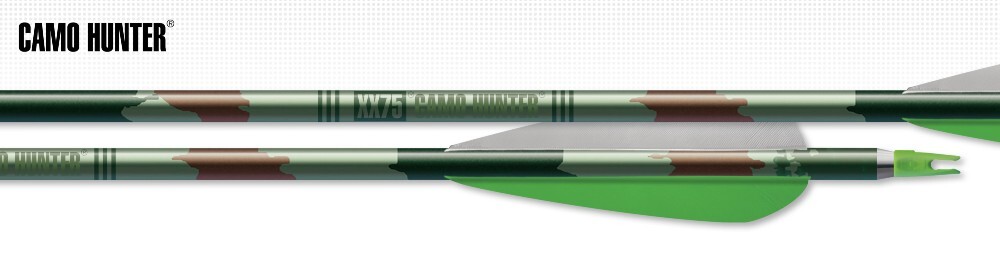
AB: The Camo Hunter and Autumn Orange definitely are nostalgic Easton arrows. My father would pretend to get upset when I would Robin Hood one of his in the target. That was many years ago. Are those two styles popular among hunters of, ahem, a certain age?
GC: Many legacy products, such as the Camo Hunter, are milestones of our 100-year history. They certainly have a nostalgic appeal and remain popular among some hunters. It’s fun to think that these heritage Easton products from different eras rekindle recollections of families hunting together or celebratory moments on the field of play. It’s also inspiring to know those products evoke fond memories, and some continue to be a part of our product lineup due to their enduring popularity.
AB: Easton is known for its arrows, of course, but you have myriad product lines including stabilizers, accessories, tools, adhesives and more. How do you stay on top of changing interests from consumers and keep the various product lines updated? Is that challenging?
GC: We strive to develop products that tie to our core competencies. That has allowed us to develop a line of archery accessories that complement and enhance our arrow product offering. Also, as a USA company, Easton draws a huge benefit by having so many archery enthusiasts in our employee workforce. These team members include our engineers and product development group. We also frequently engage our pro staff and advertising partners that include the best archers and bowhunters in the world. That pool of knowledge and experience gives us a huge head start as we draw on personal experience and translate that knowledge into better products and new innovations.
AB: On your website — www.eastonarchery.com — you have a section devoted to F.O.C and KE calculations. Both have been trendy the last 5 or so years, coming to the fore with different arrow shafts, weights, ideas, arguments and more among hunters and shooters. Do you see this continuing to evolve and if so, how might it change going forward?
GC: As archers seek to optimize their setups for better performance, we anticipate further advancements in arrow technology and materials. Many of our newer products include lighter weight shafts and Match Grade component options that give archers more flexibility in arrow build options than they’ve ever had before. We are committed to leading these innovations and providing our customers with the most advanced shaft and component combinations as that trend continues to change and evolve.

AB: I’m a dealer and haven’t lived in a cave, so I know about Easton’s products. But give me the elevator pitch about why I should carry them in my shop or online store, instead of some of the other brands.
GC: At Easton, we understand the critical role the dealer plays in giving customers a positive experience in archery. The dealer provides archers with critical technical know-how, especially when it comes to the selection and fitment of our products. Innovation, quality and service are the hallmark of the Easton brand, and we strive for excellence every day. We offer support to the dealer with in-store branding and promotional programs. This century-long legacy of innovation and USA-made quality ensures our dealers have the best and most comprehensive product offering in the industry and an arrow for every archer; from a bowhunter just starting out, all the way to the Olympic field of play.
AB: The Olympic Games in Paris concluded earlier this summer. Does Easton, and other archery companies, see a bump during an Olympic year in the target segment? If so, how do you capitalize on that through NASP or other programs to foster more interest in the sport? GC: Olympic years do see increased interest in archery, and many new eyes saw archery for the first time while watching the Games. We use the opportunity to promote the sport ourselves and through partnerships with programs like NASP, USA Archery, S3DA and others. These grassroots initiatives encourage new participants to visit the local archery dealerships. Archery is quite popular in France and with the 2024 Games being in Paris, we expect an increase in archery interest in the European market, as well.

AB: Overall, where do you think the archery industry is trending in the next 5-10 years with bows, arrows and components? Anything faster, smaller, more innovative? How about overseas, for hunting? Several European countries allow bowhunting for various big game animals. What’s coming in the next 5-10 years?
GC: We’ll continue to innovate in design and components leading to better accuracy, performance and additional opportunities for individual archers to modify their setups. This will likely lead to a greater emphasis on customization and performance. Internationally, we’re already seeing increased interest in bowhunting in specific markets such as France, South Africa and Australia. We anticipate some growth in those markets as regulations evolve and more people discover the thrill of hunting with archery equipment.
AB: Thanks for talking with us this month. Do you have anything else you’d like to add for dealers interested in Easton Archery?
GC: We appreciate the opportunity to connect with retailers through Archery Business and also the many partnerships we’ve fostered with our archery dealers over the past 100 years. We fortunately enjoy a tight-knit industry and deeply appreciate the countless associations we’ve been able to develop over the years. Thanks again!