
Like many innovators, Don Burris was working at a company and believed he could make a better product. Don left his job and in 1971 founded The Burris Company, which for 4 years made scope rings, bases and open sights for rifles.
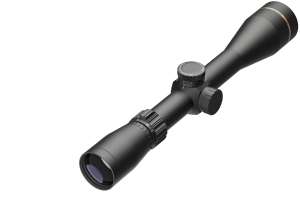
It wasn’t long before Don put his design engineering skills to use making riflescopes, which he had done for 12 years with Redfield, a well-known legacy brand with several popular products. But now it was time for Don to make his own mark. He did with the first Burris scope, the Fullfield, which entered the market in 1975. Fifty years later, it’s still in production with the Fullfield IV and Fullfield E1.
Don Burris died in 1987, but his innovative spark and determination lives on. Today, Burris Optics continues to produce optics for the firearms market, and also for bowhunters. The Oracle and Oracle X sights for bows and crossbows made waves when introduced, leaning on the popular Burris Eliminator riflescope. More innovation is on the way, too.
For this issue, we’re talking with Jordan Egli, director of marketing for Burris Optics, about the company and products.
AB: Thanks for taking the time to talk with us for the January/February 2025 issue of Archery Business. Burris was founded in 1971 when design engineer Don Burris left Redfield optics company to start his own. It’s been a success ever since, and now includes optics for bowhunters. Can you give us a little overview of how Burris got into the archery market?
JE: Burris has been reaching archers through its binocular and spotting scope lines for a while. It wasn’t until we built the Oracle bowsight that we fully jumped into the category, though. The Burris Eliminator riflescope had been a wild success for years. The Eliminator uses a built-in rangefinder to provide, with a simple push of a button, an accurate aiming dot in the scope. With a team full of passionate bowhunters, it was only a matter of time before we had the wild idea to use that technology in a bowsight. This is how the Oracle was born. The Oracle X crossbow sight quickly followed.
AB: Aside from the obvious differences between archery and firearms, what are some challenges Burris has overcome to be successful in both markets?
JE: We focus primarily on our technology in the archery space. We don’t have standard fiber-optic bowsights, so our footprint is very small. Our products aren’t cheap, either, and require the customer to be educated on the advantages before committing to a purchase. Once they understand how the sights work, they are hooked for life. Technology also can be scary. But when you understand how simple these sights are, and that they have built-in redundancies, the hesitation goes away.
AB: How have the Oracle and Oracle X been received by the industry, meaning retailers and distributors?
JE: The Oracle X is one of our top-selling products and has been considered one of our biggest success stories. The Oracle has also been successful, but state legislation has certainly limited its success. We aren’t sure why states want to make ethical, confident shooting illegal?
AB: As well, how have the Oracle and Oracle X been received by hunters? Technology changes so quickly, and now bowhunters have more possibilities to consider.
JE: As mentioned above, once they understand how the sights work, they are hooked for life. We have customers who have bought multiples of each sight, and say they will never use anything else.
AB: Have you seen any trends with hunters in regard to use of the Oracle and Oracle X? More use with vertical bows, or more with crossbows? Are sales, i.e. use, higher in one region more than others?
JE: The Oracle X has followed the crossbow boom. It’s hard to keep up with the demand! A lot of rifle guys who understand the Eliminator quickly adopted the Oracle X when they got into archery. The Oracle has been slightly slower in its success, although I can say we have sold more this year than ever before. (Author note: The original Oracle has been replaced by the Oracle 2.)

AB: Burris has a long history of innovation. The first American-made riflescopes with multi-coated lenses for optimal light transmission were offered in 1980. LaserScope was introduced in 2006, and the Eliminator in 2010 with its laser rangefinder and auto BDC capabilities. Without giving away any secrets, what might we see in the future from Burris with its bow and crossbow scopes? Smaller size? More capabilities?
JE: I’ll just say we are here to stay, and we have a track record in being innovative.
AB: Some hunters will say the Oracle 2 and Oracle X are too big or bulky for their bow and crossbow. How do you respond to that, and how can dealers respond to help customers?
JE: Put one on a bow and try it out. They truly aren’t as big as you think, and any tradeoff in weight is well worth it. The extra couple of ounces versus the distraction of pulling out a rangefinder or the risk of making a bad shot, absolutely is worth it.
AB: Do a lot of your employees hunt and provide feedback? Burris has a strong ambassador program, as well, so the input from the field likely is varied and continuous.
JE: Almost all of us hunt, and the ones who don’t currently would like to, or have family members who do. Our product ideation team is the entire company. We have a lot of fun in those meetings! If you are curious about how well these sights work, check out Deer Meat for Dinner, Major League Bow Hunter, Halo Hunting, Gerald Swindle, Bow Hunter Planet, Growing Deer TV, and on and on. My only complaint is they keep asking for more of them for friends and family!
AB: How is Burris positioned for the coming years, considering the public concern about the economy and other factors such as the election, overseas labor situations and the dockworkers strike last fall?
JE: I think our entire nation is at risk from the issues you mentioned. Burris is in the process of bringing much of its manufacturing and assembly back to the United States. We have a fully operational plant and build a lot of things in house, which is rare for an optics company nowadays.

AB: I’m a retailer, so give me the elevator pitch about why I should have Burris Oracle 2 and Oracle X rangefinding bowsight and crossbow scope in my store. Go!
JE: If you already carry the Oracle 2 or Oracle X, thank you! These products are an absolute game-changer. No longer guess the distance to the target or scare off your game by pulling out a rangefinder. No longer let the bow down to re-range if the animal moves off a bit. Simply push the rangefinder button, get your distance and an aiming point … ensuring a confident shot and an ethical kill. On the Oracle 2, there is a backup 20-yard pin and no glass to fog or get condensation on. Visit our website, burrisoptics.com, for all the details.
AB: Thanks again for taking time to talk with us. Is there anything else you’d like to add about Burris archery products that we didn’t discuss?
JE: Thank you for your business!