
By thinking beyond the immediate sale over the counter, retailers can enhance their bottom lines while performing important customer services in the process.
But this requires at least some degree of in-store expertise. Otherwise, the store is banking on items jumping off the shelves all by themselves – something that is rarer in slow years.
Understanding exactly where retailers fit into the customers’ worlds (retailers know well where they fit into their own worlds) can be key to expanding sales to customers who likely may not have known that they both want and need handy things to enhance their experiences at the range and in the field. By making a few suggestions via innocuous questions across the counter, added sales can be made and the customers enhance their dreams when they go to the range or when they are in the field.
Retailers may think they know where they fit in, and in many ways that perception is true. But in some ways, it can be easy to miss the boat by casting a blind eye to seeing and understanding things from the perspective of the customer.
The Field & Range category is so immense that it is easy to get lost in the sheer numbers of SKUs. Hence, it might be better to break it down into bite-size, logical groupings.
The concept is that the basic shooting sports hardware consists of guns and ammo, bows and arrows. Field & Range includes everything that goes with those items when customers go to the range or into the field. This includes everything from casual range shooting to plinking to hunting to any of the organized shooting sports like 3-Gun or practical pistol shooting, bullseye target shooting, trap, skeet and sporting clays.
That’s a whole lot of ways customers shoot, which means they need a lot of stuff to enjoy their sports. Each type of activity calls for a wide range of equipment. Knowing the local customer base is crucial in the sense that it dictates many of the things that need to be stocked, as well as the kinds of things that likely will gather dust on the shelves.
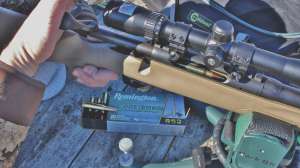
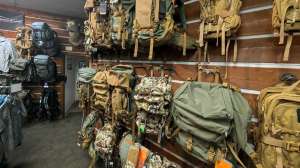
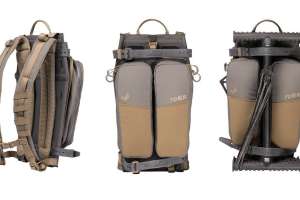
For example, for guns and ammo, there needs to be some kind of case or holster for the gun and some kind of bag or box for the ammo. Fortunately, there are range bags for trips to the range. Backpacks serve the same purposes in the field, and they also work at the range.
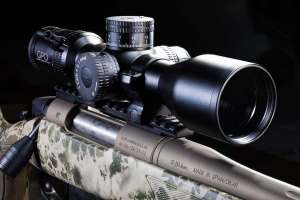
Whether the hardware is a gun or bow, sights come into the picture, and this category goes all the way from red-dots and riflescopes to pins for bow sights.
Then, on the accessory front, items range from bipods and shooting gloves to rangefinders and target dots, from rifle rests for use on the bench to game bags and shell holders.
What all of this means is that for each sub-category, there exists a long list of items that logically fit into the use of items in those various categories. Hence, when customers choose any of the items, it is logical to ask whether one or more of the other articles might help to further enhance performance and enjoyment when the initial item is put into use at the bench or in the field.
When done artfully, one or two questions can trigger an avalanche of responses and an awakening for the customers about items that can make their experiences more successful and more fulfilling.
While all of these items can be on display in the shop and sell OK on their own, a little upselling and cross-selling from across the counter can dramatically increase the volume of adjunctive sales.
Face it, many customers know what they want when it comes to guns and ammo. But few think much about the accessories for the range and the field. In fact, most of them likely don’t know that they actually need some particular accessory. Here is where the difference between selling and serving the customer becomes important.
Yet the delicious thing in this sense is that it isn’t an either/or situation. It can, and should be, both. It can be viewed from either perspective. In one way, the act of customer service results in an additional sale. Or, from the other direction, the act of performing an additional sale results in a service to the customer.
Whenever the retailer can help customers realize dreams, everyone wins.
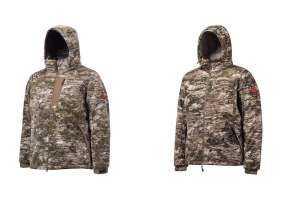
But back to range and field. There are many items that make sense for both. These include things like eye and ear protection or any of the many kinds of hats, shirts, pants, shoes and boots. These kinds of accessories, gadgets and goodies can offer a level of sales that can be of great significance in years when the overall sales of guns and ammo are not ideal – like this year.
And it’s never a bad time to talk about gun and ammo sales for field and range, or even for competition or defense. It’s always a good day to include them and to have at least part of the focus to be on one or both of them.
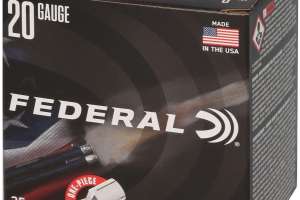
For example, recently I went to a local retailer, wanting to get a bag of 12-gauge wads for Federal empties. The retailer didn’t have those particular wads, but when the retailer asked if I was planning to shoot clays or game birds, I noticed a bag of .410 wads and visions of upland bird hunting entered my mind, so I grabbed that bag.
And his question about clays shooting resonated, so since he had a good price on some 12-gauge target ammo, I bought a couple of cases.
As I was putting those items in the basket, we talked about pistols, and the next thing I knew, I added 200 rounds of 9mmP ammo to the basket.
Bottom line: I was planning to spend around $12 but dropped more than $200 before I got out the door, just because the retailer asked a couple of questions about stuff for the field and range.