
Once the decoy was up, I knew something was about to happen.
For several days I had crawled around the windswept plains of northern Arizona attempting to arrow a prized pronghorn. Yet, every time, my effort was torn to shreds. The landscape was simply too open and the pronghorn’s eyes too sharp to let this overzealous bow-bender in close enough to do damage.
But this particular stalk seemed different. After sneaking within 150 yards, I clung to the only shrub in sight and unfolded and positioned the Montana Decoy. I caught the wandering pronghorn’s attention just in time, and he began moving my way.
Meanwhile, I took a gander at my bowsight to check its yardage setting. It was a five-pin sight with a built-in slider. After an entire summer of drilling foam targets at extreme distances using this setup – delivering arrow-slapping accuracy along the way – I felt completely ready for action.
Once the buck stepped inside solid shooting range, I acquired the distance: 61 yards. I began tugging on the bowstring, but then the buck suddenly began backstepping. I quickly brought up the rangefinder, clicked the distance again, and hurriedly adjusted the sight’s yardage knob to the exact distance. Unfortunately, by the time I snugged the sight down and hit anchor, the buck began running, and just like that, another half-day’s worth of energy was blown.
There’s no question. Shooting precision is important in bowhunting. After all, a slightly misguided arrow could produce a non-vital hit and a lost trophy. But how precise do you need to be?
Unlike target archery, where hair-splitting accuracy is oftentimes crucial for winning a match, bowhunting doesn’t require the same measure of precision. The goal is to put the arrow through the boiler room and that’s it. There are no lines to cut on a target face, only a fairly large vital zone measuring anywhere from 8 to 10 inches in diameter for a deer-sized critter.
In the months leading up to my pronghorn hunt, my focus was to improve my effective shooting range. I knew the hunting country would be incredibly open and relatively void of hiding cover, meaning my shooting would be stretched to the max. So, in preparation, I rigged my bow with as much precision-based gear as I could, including a slider-type sight. This way I could dial the bottom sight pin to match any shooting distance — and shoot with laser-like exactness.
While hunting, however, readjusting the sight to correspond to a particular shooting distance proved somewhat time-consuming and distracting. After several more stalks on decent-size pronghorn, with similar results, I came to the conclusion that added precision is good as long as it doesn’t get in the way of shooting fast and smooth. Otherwise, you could miss out on some great opportunities.
With that in mind, let’s review the pros and cons to each style of bowhunting sight while identifying some key traits to help distinguish which one may be best for a particular hunting archer.

Fixed Multi-Pin: Versatile and Strong
The most common sight in bowhunting is a fixed design with three, four or five fiber-optic pins. You sight in each pin for a particular distance (usually 20, 30, 40 … yards) and then lock down all the settings.
When using a fixed-pin sight, if the target (or deer) is 34 yards away, you aim with the second pin and hold slightly high to compensate for the arrow’s drop. Note: Some hunters when faced with this situation, including Archery Business Editor Dave Maas, will bracket the target between the 30 and 40 yard pins; this is sometimes referred to as gap-shooting. Either method makes aiming precision not as exact compared to a single-pin sight where you hold dead on for the exact shooting distance: a perceived downside.
But in fast-moving bowhunting conditions, multiple aiming beads can be a godsend. Instead of readjusting a single sight in the heat of the moment, you just need the distance to the target and you can spend the rest of the time getting to full draw and aiming. This can improve lethality in challenging shooting scenarios.
This sight’s simple, lightweight construction is another key benefit. With few moving parts and screws, fixed, multi-pin sights are tough and made for the worst bowhunting conditions. For this reason, they hold a bow’s zero exceedingly well — despite lots of abuse from heavy brush crawling, wilderness backpacking, and off-roading with the bow strapped to your ATV.
A fully outfitted bowhunting rig — with sight, arrow rest, loaded quiver, and stabilizer — can easily tip the scales at more than 8 pounds. A fixed multi-pin sight usually weighs under 8 ounces, whereas other sights could weigh in excess of 14 ounces, due to additional parts and a slider mechanism. This adds a lot of weight to the overall bow package, not to mention a big, beefy sight can make your bow feel extremely “top heavy,” prompting an awkward feel unless you add a backbar to help neutralize the load. This makes the fixed multi-pin sight a great addition to any bowhunting setup — keeping it lean and mean for serious hunting.
Single-Pin Slider: Ultra-Precise, Easy to Aim
This sight is built just like a 3-D or indoor tournament sight, but with scaled-down features more appropriate for hunting use. Aiming is simple and uncluttered because it has only one aiming pin. By turning a knob, the sight pin moves easily up or down, and once the exact shooting distance is selected, you tighten and then shoot. With some practice, the entire process of moving the sight and locking it in takes about 2 or 3 seconds.
Due to its single-pin design, this style of sight is extremely easy to aim and get on target. At the moment of truth, when buck fever is in full swing, you can’t choose the wrong pin! This is a huge benefit and translates into improved accuracy under pressure.
Of course, the downside is less flexibility in real bowhunting situations. For example, let’s say the sight is set for a 20-yard hold and a big whitetail buck walks into view at exactly 20 yards. You’re about to take the shot but, suddenly, the deer sprints to chase a doe, stopping broadside at 40 yards. You're now in a very bad position to shoot.
Readjusting the yardage wheel on this sight may be quick and easy or it can be slow and difficult, depending on how well the animal can see you, and how much noise and movement you can get away with. Some well-practiced archers are good at improvising and aiming low or high as needed to make the shot. But most of the time this aiming compensation goes beyond what is comfortable, especially if the shot distance has changed significantly, such as 20 to 40 yards.
Multi-Pin Slider: A Do-All Option
With a fixed multi-pin slider, you can use the top or bottom pin as your “floater,” then aim dead on after dialing in the yardage mechanism. This can be done for all shooting distances, close or far, adding precision to your shooting.
In those fast-moving bowhunting scenarios, you bypass the micro-adjustability and use the sight just like an ordinary fixed-pin sight. Simply range or estimate the shooting distance, select the right sight pin, and then aim accordingly. In this regard, it gives you the best of all worlds.
Of course, the sight still produces a degree of pin clutter, but there’s no getting around that, unless you reduce the number of sight pins by switching from a five-pin to a three-pin setup.
Selecting the Right Sight
Obviously, the best bowsight choice for any customer who walks through your door is never an easy one. That said, probing the archer on personal preferences in gear, and where and how they hunt often proves helpful for steering the conversation in the right direction. Here are some questions to consider along with a few suggestions on why a particular sight might be ideal for a certain type of bowhunter:
*Do you prefer simplicity, or more adjustability and precision in a hunting setup? Do you shoot at extreme distances when practicing?
If the archer values simplicity over precision, suggest a fixed multi-pin sight. If they often practice at longer distances, have them consider a slider-sight, a single-pin or multi-pin version, depending on their tolerance of pin clutter.
Regardless of model, suggest a sight with third-axis leveling capabilities, to ensure top accuracy when shooting up or downhill. Perhaps “simplicity” to them is seeing only one aiming pin in the sight window. If so, the choice is obvious – a single-pin slider. But instead of an elaborate model with every micro-adjustable bell and whistle, suggest a simpler version, with basic functionality.
*Do you prefer a rugged bow setup? Do you hate adjusting archery equipment?
If you get a sense that your customer is hard on his or her equipment, and doesn’t like to mess with adjustment knobs and micro settings, then steer them away from a slider-type sight. This could complicate things, causing undue headaches in the field. Instead, suggest a fixed multi-pin sight with bombproof construction.
*Is pin clutter a problem for you? Do you spot-and-stalk and backpack out West?
If a customer says they’ve been shooting a fixed five-pin bowhunting sight for years with no issues, suggest the same sight, or perhaps a seven-pin model if they want to stretch their shooting distance. If they do a lot of stalking and crawling out West, this same fixed multi-pin sight is a great choice. But if they desire more adjustability and extreme accuracy downrange, suggest a durable slider with three to five pins.
*Do you prefer a lightweight bow setup? Does your bow arm get tired and weak after shooting?
Female archers (and young adults) often require lightweight compounds — otherwise they become tired and weak after shooting. This can cause accuracy problems and even sore muscles after a long day of carrying the bow around the woods. If your customer desires a lightweight rig, suggest a bowsight that weighs 7 ounces or less, like a fixed multi-pin or simple slider-type sight.
*Do you enjoy tinkering with archery equipment and achieving the highest amount of accuracy from your setup? Do you frequently shoot long distances? Are you a target archer as well as a bowhunter?
A “yes” response to all of these questions suggests a single-pin slider is probably the perfect match for this customer, one that comes loaded with micro-adjust features, too.
Final Thoughts
Choosing the right bowhunting sight doesn’t have to be difficult, but it’s also not a decision to take lightly. By using the tips and suggestions in this article, you can steer every customer into the right aiming system for them, so they become more effective on targets and game.

Sidebar: Simplicity and Versatility All in One!
The key disadvantage to using a single-pin slider sight is it limits versatility in fast-moving bowhunting situations. If the shooting distance suddenly changes — for example, when a buck or bull dashes away but presents another high-percentage shot — is the distance still close enough for a slightly high or low aim in order to make the shot? If the answer is no, then you must readjust the sight, requiring additional time and movement, which could ruin the moment.
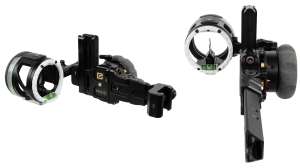
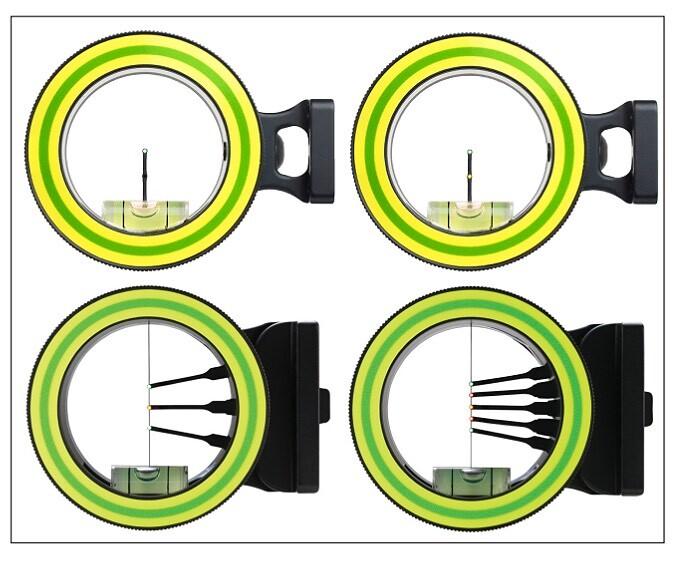
As a way to solve this problem, bowsight manufacturers have created special vertical single-pin slider sights with additional aiming beads. At full draw, this type of sight looks no different than a standard vertical single-pin setup — so it presents a clean, uncluttered look. But built into this vertical stem are additional aiming beads, giving the archer aiming options no different than a fixed multi-pin sight.
These new sights include yardage wheels that come with additional yardage “markers” or “needles” to indicate sight-in distances for each aiming bead. Pictured above is Spot Hogg’s Fast Eddie with the Triple Stack option. For the hunter who demands precision and versatility, this new aiming system could present the ultimate choice.