
Kevin Brittingham was still in school when he started his first company. His entrepreneurial spirit and desire to innovate launched a career in the firearms industry that continues on today with Q, LLC.
The company was founded in 2016 and offers full lines of firearms, silencers and accessories. We recently caught up with Brittingham to talk about Q and what goes into building a brand and a product line from the ground up.
SSR: Tell me a little bit about your background and how the company got started.
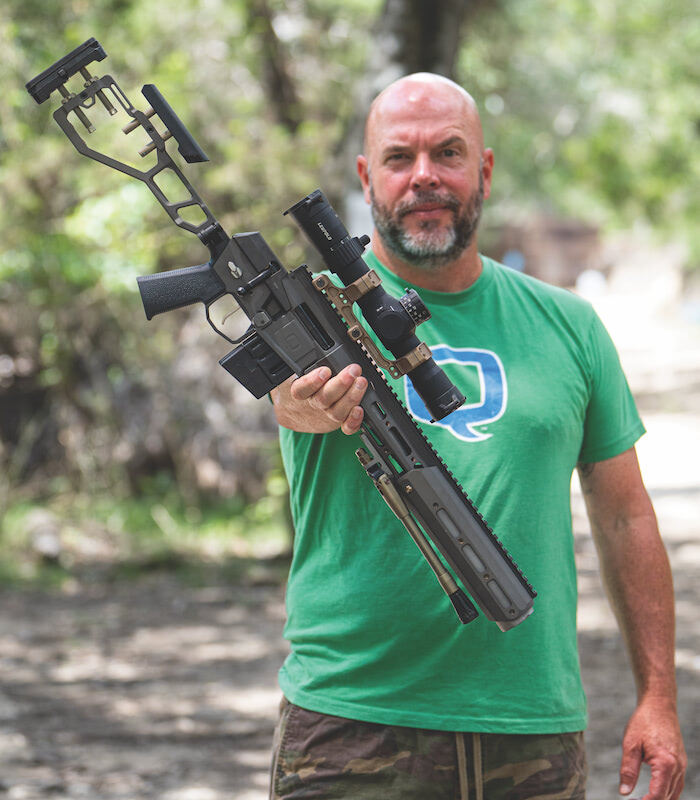
KB: I started my first silencer company, Advanced Armament, while in college. What began as a side hustle quickly turned into a full-time career, and after 9/11, it grew into a defense contractor making products for special operations. As silencers became more popular commercially and in the military, big firearm companies took notice. Eventually, we were approached about selling, and in 2009, I sold Advanced Armament to Remington. I stayed on for a couple of years and later worked for another large company, thinking I didn’t want the responsibility of ownership again. But I quickly realized big corporate environments weren’t for me, they moved too slowly and were content with mediocrity. I wanted to focus on true innovation without cutting corners or answering corporate bureaucracy. So, with a team of brilliant engineers who shared that vision, we started Q to push boundaries and develop new capabilities. And that’s where we are today.
SSR: Your website states that you’re not here to compete. You’re here to change the world. How are you doing that?
KB: We focus on identifying gaps in capability — things the military and commercial markets don’t even know to ask for — and developing innovative solutions that make them more efficient. Whether it’s for hunters, general consumers, or the military, we prioritize lighter, faster, and more effective designs rather than just making another AR or Remington 700 clone. Our approach is rooted in modern manufacturing and material sciences, not just riding industry trends or political waves. We aim to separate ourselves between mainstream and niche by pushing real innovation — doing the R&D, testing, and development to lead the industry rather than being just another “me too” company.
SSR: Q has been around for nearly a decade now. What have been the biggest challenges in building the company and brand?
KB: Our biggest challenge is educating the public because what we do is often ahead of its time. Communicating the differences in our products and marketing them effectively can be tough. Innovation, new technology, and developing new capabilities are expensive, which is why our products come at a higher cost. It’s the price of true advancement.
But expensive isn’t about price; it’s when something costs a lot and fails to meet expectations. What drives me is ensuring that every time someone picks up our product for the first time, it exceeds their expectations. The biggest challenge is building the right team — people who believe in the vision, are motivated, and are willing to sacrifice for greatness. Q isn’t just a job; it’s a lifestyle. We don’t suffocate progress with dumb rules, and we don’t settle for mediocrity. Our goal isn’t small improvements — we aim to double or triple capabilities, to dominate, not compete.
SSR: Are you more focused on silencers or firearms?
KB: It’s a tough balance, but I’m focused on both. Years ago, I played a role in making silencers mainstream, both commercially and in the military. When we started Q, we wanted to push firearms innovation, but guns are far more complex — more parts, higher costs, and bigger risks. Q has led the industry in innovation — our designs get imitated constantly — but we neglected production and lost market share. Now, we’ve hired dedicated silencer engineers and are ramping up production to reclaim our place. This year, we’re launching a full silencer line and pressing hard. My focus now is on three areas: guns, silencers, and accessories. We’re all in.
SSR: Tell me about the 8.6 BLK. Why should retailers be paying attention?
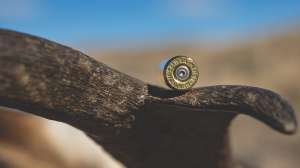
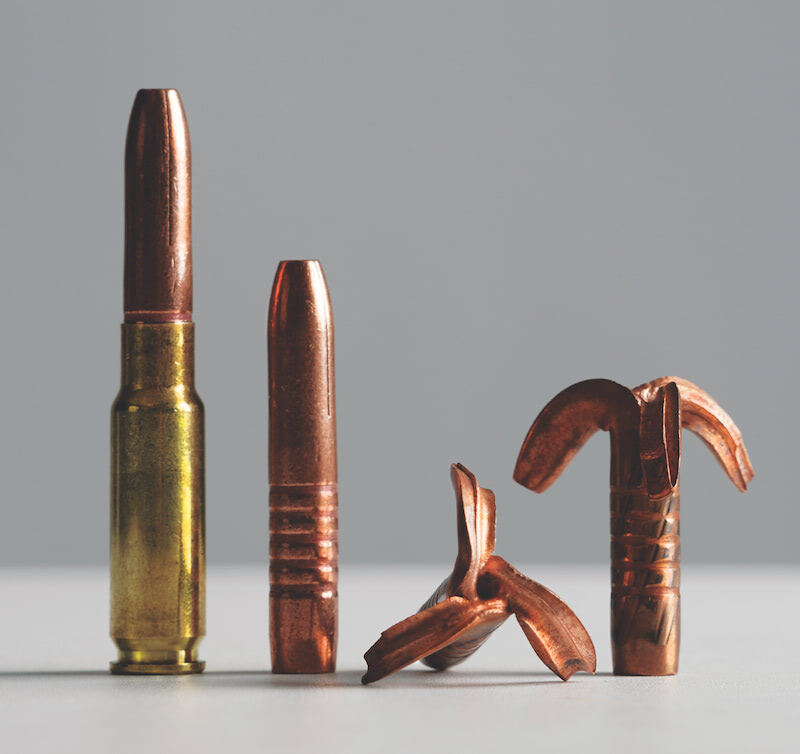
KB: 8.6 Blackout is the biggest new capability in ammo in a long time. It’s essentially .300 Blackout with three times the energy and range — everything we’ve learned over 15 years, refined and improved. The fast twist rate allows for shorter barrels while still delivering magnum energy, better accuracy with subsonic, and increased penetration and expansion on impact. With a 12-inch barrel, a 5-pound rifle shooting subsonic can be effective at 300 meters, while supersonic reaches 600 meters — unheard of before. It follows the .300 Blackout philosophy: a simple barrel swap, no mag or bolt changes, making it easy for manufacturers to adopt. It delivers magnum rifle performance in a compact, lightweight package, ideal for both hunting and combat.
SSR: What’s the company philosophy behind research and development?
KB: Research and development at Q is about doing the whole job — no half measures, no cutting corners. We don’t assume the industry has already figured it out; we start from scratch, follow the scientific method, and see it through to the end. Whether it’s an idea, a solicitation, or a goal, we map out the entire process and execute it fully. That’s how we ensure we know exactly how a product will perform, where it can fail, and what needs improvement. Simply put — do the whole job.
SSR: What’s your company culture like?
KB: Our company culture is built on high expectations, high rewards, and the freedom to be great. We remove hurdles so that anyone willing to put in the effort can make an impact and grow with the company. It’s a positive, motivating environment where you're surrounded by all-stars, and work is fulfilling at every level. I don’t want employees to just have a job — I want them to have a career, to be part of something groundbreaking, and to take pride in what we create. Work should be fun, and our team should feel like a family. I talk to everyone daily because every role — whether it’s QC, engineering, shipping, or assembly — is vital. Everyone deserves to be valued and treated as an essential part of what we do. Most visitors say Q feels more like Google than a gun company, and that’s exactly the culture we strive for.

SSR: The firearms market has gotten more crowded over the past couple decades. Has that created more challenges or opportunities?
KB. I see the challenge as an opportunity to prove we’re better — to outwork, outthink, and push innovation forward. We don’t chase trends or copy others; we focus on advancing technology and capabilities. The market doesn’t tell us what to build, we anticipate what people will want before they know it. The .300 Blackout was a perfect example — no ammo company believed in it, but now it’s a top-five cartridge. I see 8.6 Blackout as an even bigger leap. In five years, I expect it to stand alongside .300 Blackout and 6.5 Creedmoor as one of the most successful cartridge launches ever. Market conditions don’t concern me, there’s always room for the best. While the firearms industry declined 20% last year, we grew 37%. That’s because we build products people must have. The Honey Badger, Sugar Weasel, Fix, and Boombox prove that. The Fix was a decade ahead of its time, and now it’s taking off. If Mauser, Stoner, or Browning had today’s technology, they would have designed products like ours. Taking risks is scary, but that’s what separates innovators from everyone else. After 32 years in this industry, I’m more passionate than ever. I don’t care what the rest of the industry is doing; we’re here to lead.
SSR: What separates Q from all your competitors?
KB: We identify missing capabilities, invest in developing them, and bring them to life. Then, we educate consumers and dealers on why they matter. Our products aren’t cheap, but they deliver real value — innovation, quality, and performance. Expensive is when you pay a lot for something that doesn’t meet expectations. We make sure ours exceed them.
SSR: Are you manufacturing in-house or relying on components from other manufacturers?
KB: We manufacture most of our critical components in-house, especially the more complex parts, but at our growth rate, we can’t build everything ourselves. We work with specialized strategic partners for machining, 3D printing, and other manufacturing methods while minimizing reliance on off-the-shelf parts because they generally don’t meet our quality standards.
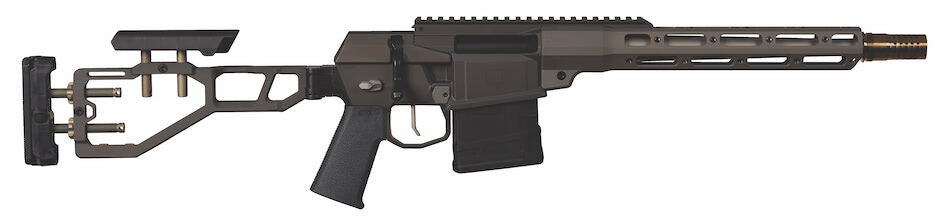
Guns like the Sugar Weasel or Honey Badger, which resemble an AR-15, the only shared components are small details like pins and springs. Everything else is built to our own higher standards, ensuring superior performance and reliability. The Fix rifle, with over 100 parts, only shares a mag catch spring and pistol grip with other firearms. What might look familiar externally is entirely different internally — built from the ground up to deliver improved performance and capabilities.
SSR: What do you want retailers to know about your company? Are there any dealer incentives or programs for new partners?
KB: We’re committed to delivering the most innovative, highest-quality products with top-tier customer service. Jordan Porter, our director of marketing, and I both began our careers in retail gun stores, so we understand how crucial brick-and-mortar shops are for educating customers and standing behind the products they sell.
We want retailers to have complete confidence in us — we’ll deliver the best products and stand behind them when needed. We’re here to be the best partner for retailers, working with knowledgeable, passionate people who share our commitment to the industry. We often run new dealer promotions to help onboard retailers. For more details, please reach out to sales@liveqordie.com.
SSR: What does the future look like for Q? Are there new offerings in the pipeline
KB: The future is all about continued growth and improvement. The only cap on that growth is my insistence that quality improves as production scales — a difficult goal, but essential. We have silencers, accessories, the Sugar Weasel (AR platform), Honey Badger, Boombox, and the Fix platform (Mini Fix, Fix, and Mega Fix). We’ll continue expanding these lines with new barrel lengths, calibers, and SKUs before moving on to the next big thing.
We have five or six new firearms in mind, but timing will depend on market demand, military needs, political factors, and available talent. Our roadmap is flexible, allowing us to pivot when needed. Silencers will be a major focus moving forward. Now that we’re established, we have the resources to expand production and hire top talent. We’ve even added a third building to accommodate silencer growth. Historically, most engineers at gun companies want to design firearms, but by prioritizing silencers with dedicated engineers, we’re going to push innovation in that space. The silencer market is crowded, but only a handful of companies are serious about real innovation. Over the next 5 to 10 years, I expect Q to be at the forefront, driving the industry forward.
SSR: Anything else you’d like to add?
KB: We’re incredibly grateful for the support and belief in our products. The industry's response is humbling, but not surprising — this success wasn’t accidental. We’ve worked relentlessly, made sacrifices, and built something we’re truly proud of.
Q is all about the team. We have dedicated people who believe in what we’re doing, making it a great place to work and do business. That’s everything to me.