
I’ve grown to admire a perfectly balanced bow, mainly due to shooting precision. There are two reasons for this. One, a perfectly balanced bow aims and holds better. This means, you can acquire your target faster and, once the sight pin is settled on the spot, it tends to float smoothly inside the bull’s-eye. There’s less dipping of the sight pin in and out of the aiming zone, so your nerves stay calm, improving focus and shooting consistency.
Secondly, a bow tends to recoil abruptly at the shot — this is well illustrated in slow-motion video. These slight oscillations can cause different sensations in how you grip the bow during the shooting of an arrow. Ideally, you want the bow to oscillate the same way on each and every shot. If not, there will be slight changes in hand torque and most likely how the arrow impacts the target.
For these reasons, I keep my hunting rig as balanced as possible — so I can drive arrows into the kill zone with as much precision as humanly possible, particularly with broadheads.
Over the years, I’ve tinkered with bow balance to extreme levels, trying all sorts of quiver designs, stabilizers and counterweights. Overall, I can no longer tolerate systems that “pull” the bow drastically to one side, nor models that create excessive shooting noise. For example, some quivers have flimsy, poorly engineered hoods and grippers. This can cause arrows to vibrate incessantly during the shot — tainting that dull, quiet thud I demand in a hunting setup.
With all that in mind, here is some solid advice for helping a customer select a top-notch bow quiver so their setup shoots super-sweet and persistently accurate.
One-Piece or Two?
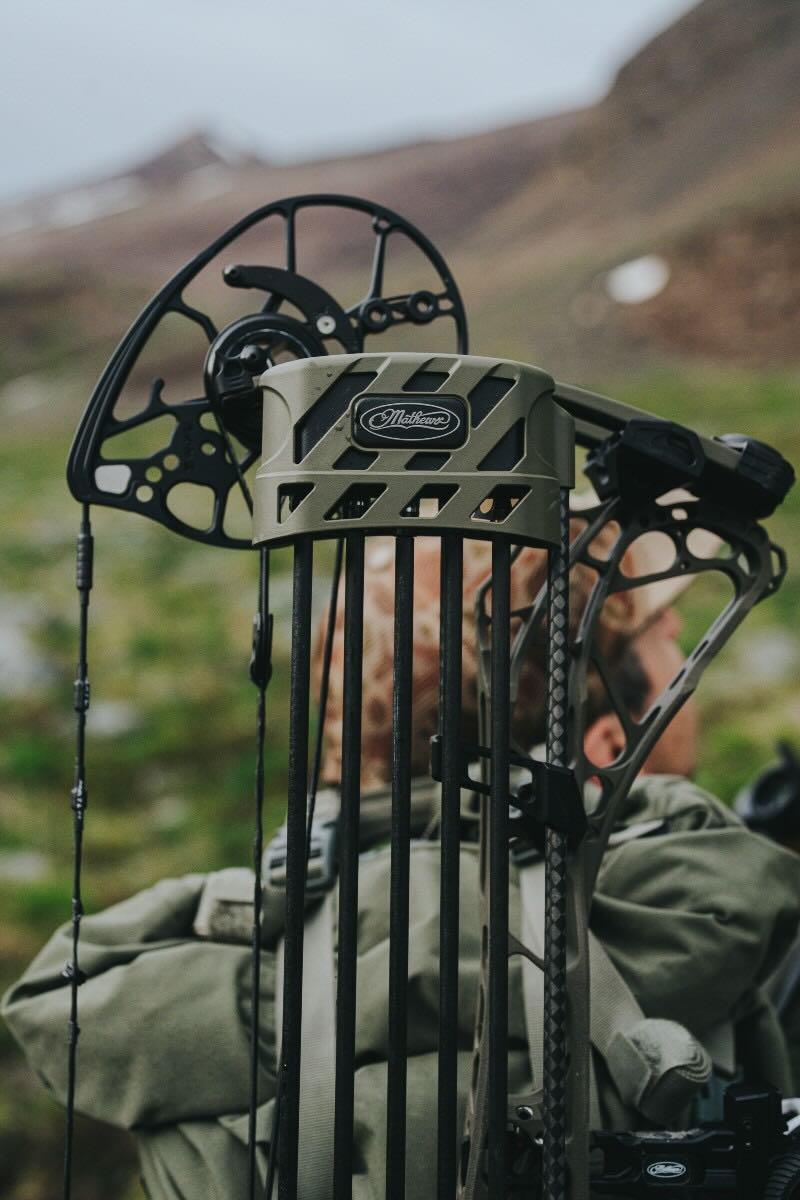
Back in the day, if you wanted a rock-solid quiver, a two-piece model was the optimum choice compared to a one-piece model — mainly because it fastened to the riser at each end. This not only improved rigidity but it extended the distance from the hood to the gripper, greatly reducing arrow flex and vibration to produce a quieter shot. These quivers were ideal for western bowhunters who hunted and shot with the quiver on the bow. Sagittarius produced the highest quality, two-piece quivers back in those days.
Today, both one-piece and two-piece quivers make great options for hard-core bowhunters. The newest two-piece quivers are ultra lightweight, adjustable, and in some cases, quieter than their predecessors. Bow-specific models hug the bow ultra snuggly, whereas other models come with adjustable support stems, so you can dial the quiver closer and closer to the bow's riser until you find the exact sweet spot.
The latest one-piece detachable quivers are truly state of the art — boasting superior strength, fit, and shooting quietness. Such quivers seem to do it all — making them perfect for archers who like to remove their quiver once in a treestand or in a ground blind. They also make it easy to detach the quiver before putting the bow into a protective case for storage or transport. Really, with such great quivers on the market, the decision of what's best truly comes down to personal preference and hunting style.
I’ve used a number of two-piece and one-piece quivers over the years — all for serious hunting. I came away quite impressed with Hoyt’s SuperLite 2-piece, Mathews’ LowPro 2-piece, and TightSpot’s 5-arrow quiver. All of these quivers were rock-solid, quiet and bolted tight to the bow. I’ve also begun experimenting with Mathews’ LowPro 1-piece detachable quiver, and so far I’m impressed by its strength and rigidity. It is essentially a two-piece quiver system with a long carbon attachment rod that keeps the hood and gripper connected — so it can be removed when desired.
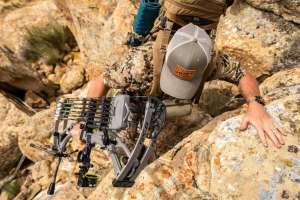
No matter what type of quiver you hunt with, examine it closely for torsional strength. A great way to do this is to put it on the bow, load it with arrows, and then grab the gripper bar and attempt to move it side to side, and in and out. If the system flexes easily, then it will most likely vibrate and produce noise at the shot — a bad deal for shooting stealth and hunting. It will also prove less durable. This can be a major problem if you strap your bow to a backpack. Flimsy, poorly engineered quivers can break when jostling around on a backpack or when strapped tightly. I’ve seen it happen, so a bowhunter must choose his or her quiver with care.
Optimizing Balance
If you want to ruin a perfectly good shot, try this: twitch your fingers abruptly on the bow’s grip at exactly the moment of the arrow’s release. The results won’t be pretty. Why? Because any type of hand movement (otherwise known as torque) applied to the bow handle will disrupt arrow tuning and/or flight. A bow quiver, if it’s quite heavy and unwieldy, can cause a similar effect, since it will force the bow to twist minutely at the shot, causing accuracy issues.
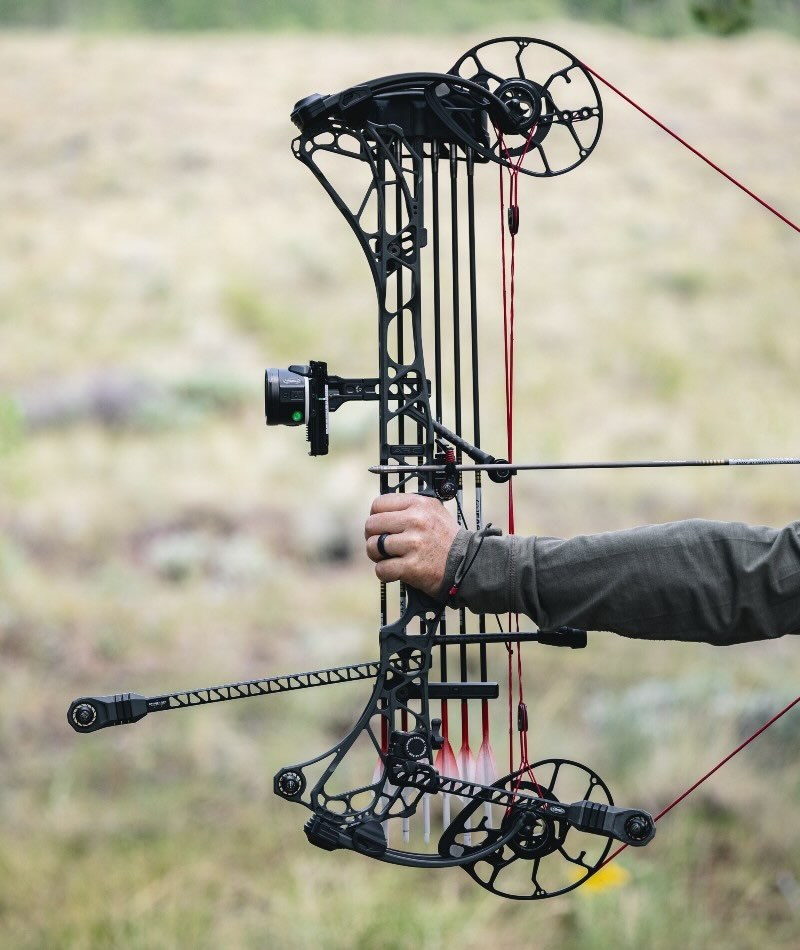
For this reason, do all you can to neutralize the weight of the quiver so it doesn’t hold so lopsided. Every bow setup is different, so you’ll have to experiment with counterweights threaded into the side of the riser or use some sort of offset bracket to attach a short stabilizer to help counteract the quiver’s weight.
Another method is to use one of today’s back-bar systems. Fortunately, today’s bow companies are designing couplers that attach directly to the lower section of their bow’s riser. This makes it easy to thread in a back-bar stabilizer, then rotate it until the perfect balance point is found.
Some bowhunters find back-bars a bit too cumbersome for their hunting style. If this is the case, a shorter back-bar is still effective without sticking too far out from the bow — a system I tend to favor for my personal setups.
Keep in mind, a balanced rig aims a whole lot better, too. With an imbalanced bow, you may have to re-bubble or re-level the bow once or twice while aiming, causing distraction and a loss of focus. With a plumb-holding bow, you can quickly level it and then glide into the aiming spot, focusing intensely on letting the sight pin roll until the shot is off.

Arrow-Holding Details
Broadhead Style and Security: I use fixed-blade broadheads with my hunting setups, but occasionally I’ll use mechanical heads as well. Quite often, I’ll have to optimize my quiver to hold these arrows securely so the movable blades don’t pop out inside the quiver’s hood. This can be challenging, depending on the quiver setup.
Most two-piece quivers will have a foam insert inside the hood. These are ideal for fixed heads. Simply push the broadhead-tipped arrow into the hood until the razor edges are fully seated, then snap the arrow shaft securely into the rubber gripper.
But with a mechanical head, you may have to strip away part of the foam or use a special foam insert with large openings to allow the arrow shaft to seat securely, without the expanding-blade area coming into contact with the foam. This will prevent blades from popping open while slipping the broadhead in or out of the protective hood.
Some quivers don’t use foam, only a rubber-type broadhead holder. With this system, you may find that broadheads don’t always secure into the holder as well as you’d like, causing added vibration and sometimes premature deployment of a mechanical broadhead’s blades. Not good! If this is the case, you may need to use an extra shaft-gripper that positions close to the protective hood to keep the broadheads seated more firmly.
For example, a TightSpot quiver comes standard with a rubber-hood insert, designed to hold any type of broadhead. There is no foam to contact the bladed portion of the broadhead. However, you can purchase a secondary gripper that fastens to the carbon connecting rods so it holds each arrow and broadhead more securely. TightSpot also makes an optional foam insert for the quiver hood, designed specifically for fixed-blade broadheads.
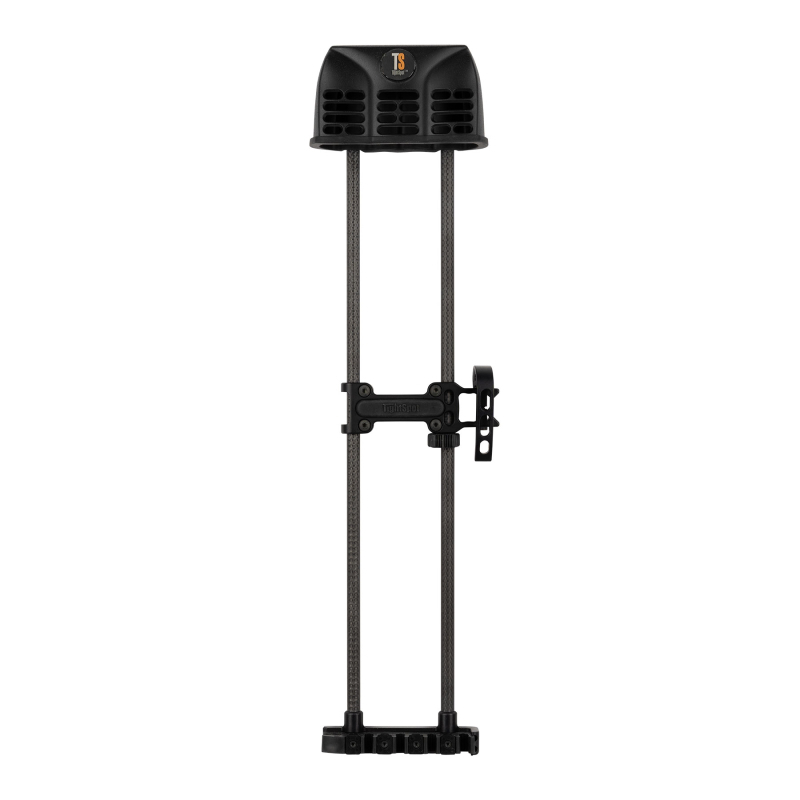
Gripper Tightness: This may seem trivial at first but it’s not. If the shaft fits too loose inside the gripper it can dislodge, either from shooting vibration, or perhaps when pushing through brush or while hoisting the bow up to a treestand. In any case, a loose broadhead-tipped arrow can become a huge safety concern!
On the other hand, if it grips the arrow shaft too tightly, it can make extracting or inserting the arrow a major pain — and a problem when you have to pull an arrow out for a fast shot.
Over the years I’ve acquired a number of different gripper bars and I sometimes swap out the gripper to best fit the shafts I’m using. If this doesn’t work, or not possible, then I’ll resort to other measures. For small-diameter arrows — ones that fit too loose — I’ll use moleskin or fleece taped across the gripper bar. This often allows for a proper snug fit. In all, do whatever it takes to get the shafts to snap in place with a firm feel and also so they don’t slide easily up and down the gripper bar.
Improving Quiver Accuracy
To optimize shooting forgiveness with a bow-mounted quiver, be sure to tune and sight-in the bow with the quiver in place. Load the quiver with the select number of arrows but pull one arrow from the mix. That one arrow is to account for the arrow you’ll actually be shooting in a hunting situation. This will keep the weight of the bow perfectly consistent for precise tuning and shooting.
If you prefer to remove your one-piece detachable quiver prior to shooting, i.e., when sitting on stand or in a ground blind, tune and sight-in the bow without the quiver in place. Again, you want to mimic exactly how you’ll shoot in a hunting scenario.
If you want to take your accuracy tuning to the next level when shooting with an attached quiver, consider experimenting with different broadhead and fletching combinations. But be sure to do this well before hunting season, such as during the spring or early summer, just to examine if your bow can shoot even better with the quiver in place.
Sometimes by switching to a slightly different broadhead style or weight, or a different fletching configuration, you dial in shooting consistency a little bit more with a quiver attached. These small tuning touches can truly boost your shooting precision and confidence.
For example, with a quiver attached to my bow, last year I switched from a 3-inch low-profile vane to a 2-inch high-profile vane and found my long-range groups becoming tighter and tighter, despite shooting in a slight crosswind using fixed-blade broadheads. Remember, a wad of fletching on the side of your bow in a quiver acts like a sail. So, if you can reduce this sail by switching to a smaller wad of fletching, like I did last summer, then it can possibly give you an accuracy edge.
Final Thoughts
Bow quivers are undoubtedly the most convenient way to tote arrows in the woods. A top-quality model is not only safe, but it’s ruggedly built and lightweight. It also hugs the bow as close as possible, to prevent that accuracy-robbing lopsided feel. With today’s supreme quiver options, your bowhunting customers really can have it all — convenience, dependability and accuracy all in one compact package.
Sidebar: Quiver Knickknacks
If you hunt primarily from a treestand, chances are you detach your one-piece quiver from the bow once you’re settled on stand. However, strapping it to a tree limb, daypack, or bow holder isn’t always the best idea, unless it stays within easy reach and doesn’t flop around a lot when you must grab an arrow. Remember, you just might need to grab another arrow for a quick follow-up shot — so don't risk it.
A better setup is to use one of today’s handy accessories for keeping your quiver close at hand and securely fastened to the tree. Below are three great options:
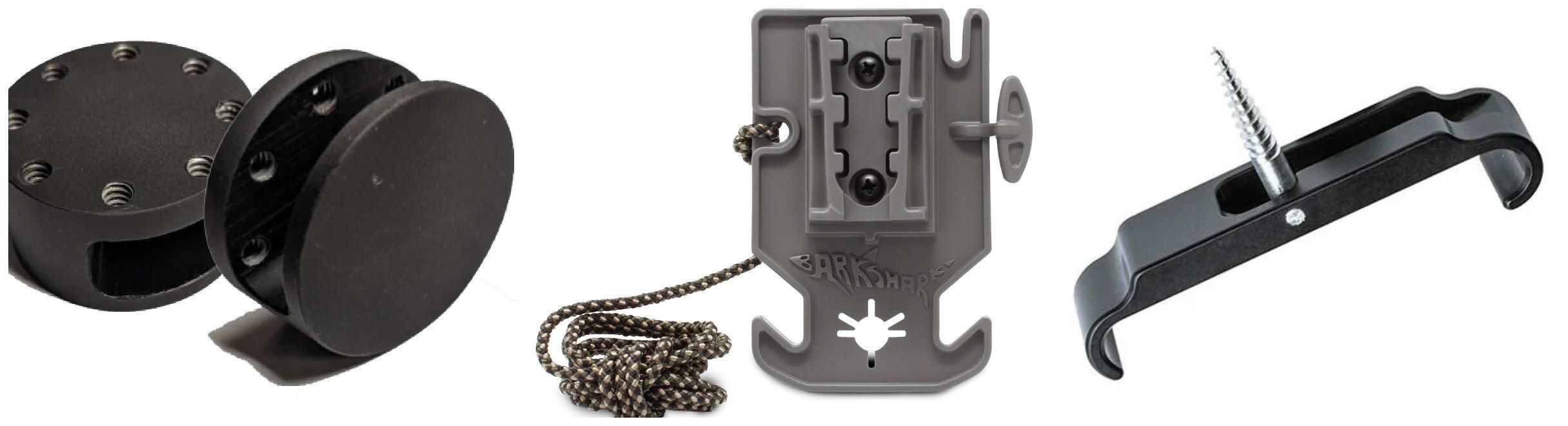
The Sparrow Quiver Mount is a handy accessory that fastens to the treestand’s frame or tube, allowing a quiver bracket to be attached to it. This accessory is super simple, ingenious, and keeps your quiver close at hand yet totally secure, as if it were attached to your bow.
Bark Shark makes a solid quiver-attachment system that straps easily to the tree in seconds — via a small-diameter rope — and is designed to hold the quiver securely in place using the quiver’s mount. There are three models available to accommodate the Kwikee Kwiver, Mathews T Series/Arrow Web HD, and Bohning Lever Lock quiver brackets.
TightSpot Treestand Bracket: TightSpot quivers are insanely popular, so this accessory can make all the difference for a lot of bowhunters out there. Simply screw in the unit to the tree and then snap your TightSpot quiver in place using the two carbon retaining bars. That’s it. It’s simple and quiet.