
In 1961, when the Outdoor Recreation Resources Review Commission conducted a study of outdoor recreation in America, they found almost 90 percent of Americans participated in at least one outdoor recreation activity. Today, the percentage of Americans who say they participate in an outdoor recreation activity is about 50 percent.
There are approximately 60 million anglers in the U.S. of which 46 million are estimated to fish in a given year. Those numbers are growing. However, a recent U.S. Fish and Wildlife Service report found hunting participation nationwide has declined 16 percent from 2011 to 2016, dropping from 13.7 million to 11.5 million.
The number of sport shooters nationwide has slightly increased. In 2017, the number of participants (aged 6 years and older) in shooting sports with firearms amounted to approximately 9.38 million. This is up from 2006, when it was 7.08 million, but there could be a lot more.
All across the US, people are coming together in the R3 movement that aims to pump new life into hunting, fishing and sport shooting. Great idea. There are some very good hands-on programs to help kids and adults get outdoors more often and participate in hunting, fishing and sport shooting. Imagine what participation would be like without these programs!
But there’s something else that needs to be considered in our efforts to support outdoor recreation activities. We live in the Information Age when the average person spends 7 hours a day looking at electronic screens, and many pay for it psychologically and physically. A recent Pew Research Center survey reports 68 percent of U.S. adults believe fake news is a more serious problem than sexism, racism, illegal immigration or terrorism.
Mainstream media isn’t going away. With Netflix, Amazon and Hulu joining the potential film and TV shows available, there literally are hundreds program now available to the viewer, many airing world-wide. So, we need to find ways of taking advantage of mainstream media to help encourage more people to get outdoors and enjoy fishing, hunting and sport shooting, including archery.
Making the Most of Mainstream Media
What I think should be done is based on my own background. I’m a former college professor of environmental studies and psychology who has been involved with film production since l970. I chose to create a Ph.D. combing ecology and psychology when I read Aldo Leopold’s classic conservation treatise, “A Sand County Almanac,” where he said, “The real substance of conservation lies not in the physical processes of government, but in the mental processes of its citizens.”
I started out as a college professor, helping create the fields of environmental psychology and environmental education. Today, I’m a writer, TV and film producer and an actor (www.jamesswan.com). I work in mainstream media. Based on the reality of life today, we need to recruit people to let go of their electronic devises and get outdoors more often, and to do this we must work with mainstream media as well as offering introductory hands-on programs.
There used to be feature films and TV shows on network channels where hunters and fishermen were heroes, and they had influence. One example of their power is 2 years after the 1992 debut of the feature film “A River Runs Through It,” there were 100,000 more fly anglers nationwide, the number of times people went fly fishing doubled, and so did the fly fishing industry’s business.
Another example: In 2007 California game wardens asked my son and me to produce a documentary about the shortage of wardens in California – 192 in the field. For 2 years we rode along with wardens on land, water, in the air and in very wild places where there was no back-up. The resulting film, “Endangered Species: California Fish and Game Wardens,” was shown all around the state, and copies were given to all CA lawmakers. Thanks to Hollywood, the documentary inspired the docu-reality show “Wild Justice,” which ran for 3 years on National Geographic Channel. By the end of that time, there were 364 wardens in the field in California.
Some of my favorite feature films show hunters as heroes. In recent years, the number of films and TV shows that show hunters as heroes has declined. The films that do deal with hunting recently are when father and son go hunting, and the son accidentally shoots someone.
In “Walking Out,” a father talks his son into coming along with him on a moose hunt in Montana. Reluctantly, the boy agrees. They venture off into the woods. When they come to where the moose has been seen, it’s been poached and a grizzly bear has taken up residence on the dead moose. The bear charges. The boy climbs a tree and his rifle goes off, accidentally shooting his father. The rest of the film is about the boy trying to carry his badly wounded father out of the woods. This film got some good reviews, and it’s very professional, but it didn’t draw many to the box office. It’s domestic box office was only $101, 947.
More recently, Josh Brolin starred in “The Legacy of the Whitetail Deer Hunter.” Father and mother spilt up. The father has his own hunting TV show. Father wants the son to come on a hunt. Reluctantly, the boy comes along, and the father has his cameraman shoot video about his son’s first hunt. The boy spends more time on his cell phone talking to his girlfriend, but finally he does some target shooting with his father and they enjoy it. They chase a huge buck and finally get close to it. The boy struggles with buck fever. Finally he shoots, misses the buck, but wounds the cameraman. The rest of the film is about father and son getting the wounded cameraman back to a hospital.
Considering the fact that thanks to Hunter Education requirements, hunting is now as safe as ping pong, and the biggest danger is falling from a treestand, these films are not helping with R3.
Millions of Americans are watching wildlife, a 20 percent jump from 2011. Some schools and youth groups offer field trips, etc. but a lot of environmental education today is focused on crises. However, if you ask why the numbers have been increasing, people thank David Attenborough, PBS, National Geographic, Animal Planet, Discovery, Netflix, etc. because their shows are very entertaining. Some of these folks will hunt and fish inspired by these shows, but others may form different attitudes toward hunting, fishing and sport shooting.
As the readers of Archery Business know, in recent times there’s been a significant increase interest in archery. One reason is the National Archery in the Schools Program. Since being founded in 2002 in Kentucky, NASP has involved more than 18 million students in over 14,000 schools in 47 states, nearly all Canadian provinces, and in 10 different other countries including Africa and Australia. Currently, more than 2 million 4th-12th grade kids participate in NASP every year. It’s the largest youth archery program in history, and it’s growing at 9.3 percent per year – about 1,000 new schools join every year.
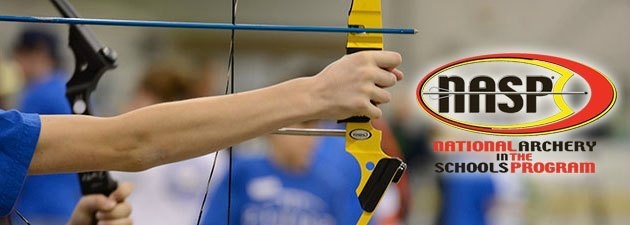
Some NASP kids continue shooting archery in college, as well as in recreational teams, and even make the Olympic team. Some become professionals. Archery is a life-long sport and it’s very safe. Soccer, baseball and basketball have injury rates 15 to 25 times that of archery. There’s never been a serious accident in NASP events. And studies show that kids who participate in NASP feel better about themselves and life itself.
NASP and other R3 programs are providing people a chance to try archery. But, what’s getting them interested in archery in the first place? To quote Forbes magazine, it’s mainstream media.

Since the early 1900s, there have been many onscreen archers. This began with the 1922 silent film "Robin Hood" starring Douglas Fairbanks. That was followed by another “Robin Hood” starring Erroll Flynn in 1938, thanks in part to Howard Hill who appeared in documentaries, as well being a stunt archer in movies and TV. (Hill also got some help from Fred Bear.)
Since then, heroic archers in feature films have been played by many actors, including Sean Connery, Russell Crowe, Kevin Costner, Geena Davis, Jennifer Lawrence, Orlando Bloom, Sylvester Stallone, Nicolas Cage, Burt Reynolds, Cary Elwes, Dwayne “The Rock” Johnson, Jeremy Renner, William Shatner, Soirse Ronan, Chris Pratt, and many, many others. Currently, “Hawkeye” — one of the “Avengers” played by Jeremy Renner — is being seen by millions of moviegoers around the world.
A popular modern TV dramatic series with the lead character as a heroic archer on a quest for justice is “Arrow,” played by Stephen Amell. Other popular TV shows with positive depictions of archery include “Game of Thrones” and “Atlantis.”
In the last decade, the number of archers in the U.S. has gone from 3 million to more than 23 million, and as many as 1/3 of American archers are women. NASP is definitely one factor, but another is the heroic archers appearing in TV and films. According to the Archery Trade Association, a big boost for women in archery came in 1999 when Oscar-winning actress Geena Davis became a semi-finalist for making the U.S. Olympic archery team. Davis says she was inspired to take up the sport by watching Olympic archers on TV. See Geena in action at this fun video.
A second major increase in women archers took place when the “Hunger Games” series starring Jennifer Lawrence, and “Lord of the Rings,” and “Brave” were on the big screens. USA Archery membership increased by 48 percent after “Hunger Games” was released.
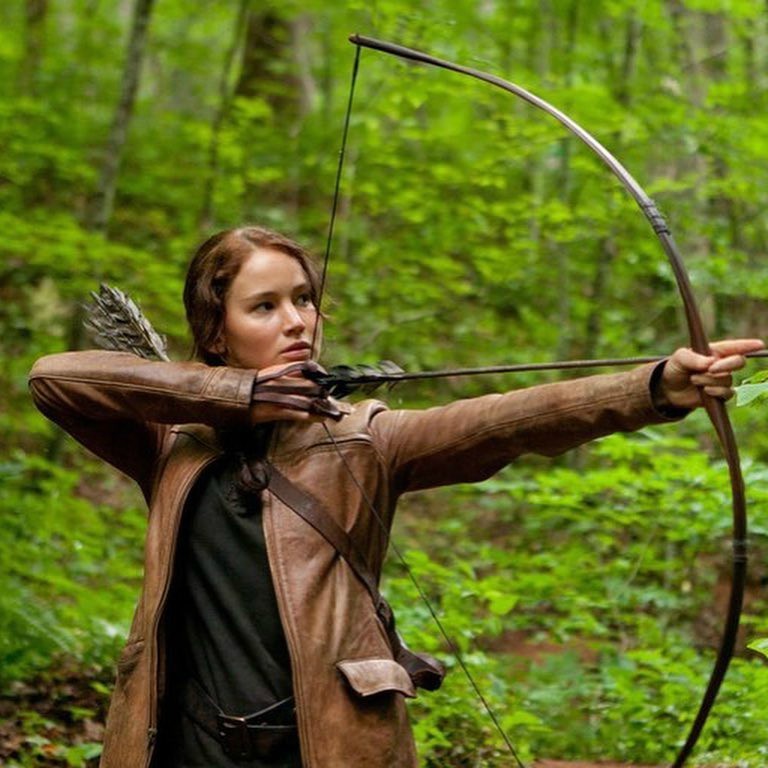
Almost a decade ago, Geena Davis began to sponsor research through her institute to help us understand the growth in archery. According to Davis, “Our study is the first to examine whether archers in popular film and television programs inspire people to take up the sport.” She says they find that, “Both ‘The Hunger Games’ and ‘Brave’ were released in 2012; participation in archery rose 86 percent from 2013 to 2014, with women’s participation increasing 105 percent during that period of time! It’s not surprising to me that Hollywood’s depiction of inspiring female archers has contributed to the sport’s phenomenal growth — it’s another demonstration of the powerful impact fictional characters can have on girls’ aspirations. As I always say, if she can see it, she can be it.”
For more about Davis’ research, click here.
How You Can Help the Cause
For the last couple years, I’ve been talking to people about what could be done to encourage mainstream media to produce more programs to show people that archers, hunters and fishermen can be heroes. One idea that comes from those discussions is that on November 16 of this year the first annual Hollywood Celebrity Archery Shoot will be held at Conjeo Valley Archers in Simi Valley, California.
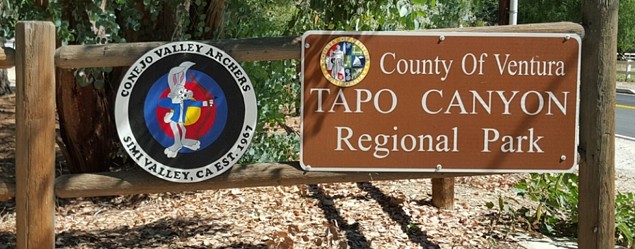
During the day teams will form with one celeb, one of the NASP kids, and two or three supporting shooters who will compete for prizes and pay a fee to help support NASP. A dozen Hollywood celebs who work both in front of and behind the cameras have already signed up. Our goal is for several times that many to participate.
The Weatherby Foundation has provided a grant to help get the basic costs covered. We welcome more sponsors to make this event a success and to establish it as an annual event that will build bridges with Hollywood so more great films and TV shows will show archers as heroes. For more details contact hwcelebarcheryshoot@gmail.com.